
About This Book
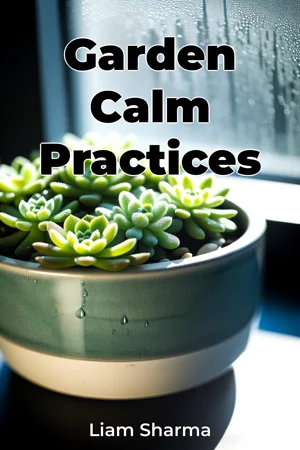
"Garden Calm Practices" explores the scientifically-documented connection between horticultural activities and stress reduction, presenting evidence that even minimal engagement with plants can significantly impact mental well-being. This practical guide combines research from environmental psychology, horticultural therapy, and traditional gardening wisdom to create an accessible approach to plant-based stress management. The book establishes three core principles: the physiological benefits of connecting with nature, the psychological rewards of nurturing living things, and the meditative aspects of routine plant care. These principles are supported by studies from institutions including the Royal Horticultural Society and various university research programs that demonstrate measurable reductions in cortisol levels and blood pressure among individuals who regularly engage in gardening activities. Drawing from both contemporary research and historical practices, the text examines how cultures worldwide have utilized gardening for mental wellness, from Japanese Zen gardens to European monastery gardens. This context provides readers with a foundation for understanding the time-tested relationship between human well-being and plant cultivation. The book is structured in three main sections. The first introduces fundamental horticultural skills, including soil composition, light requirements, and basic plant biology, written specifically for space-constrained environments. The second section focuses on mindful gardening practices, detailing specific techniques for combining stress-relief exercises with plant care routines. The final section provides a practical framework for creating and maintaining a stress-reduction garden, whether in a small outdoor plot or with indoor containers. Research evidence is presented through a combination of clinical studies, case histories, and horticultural research data. The book incorporates findings from environmental psychology regarding the impact of green spaces on mental health, alongside practical horticultural guidance based on agricultural extension research. The interdisciplinary approach connects traditional gardening with stress management, environmental psychology, and urban planning, particularly addressing the challenges of maintaining connection with nature in urban environments. The content bridges the gap between scientific research and practical application, making complex biological and psychological concepts accessible to general readers. Written in a clear, instructional style, the book maintains a balance between technical accuracy and accessibility, using precise terminology while providing clear explanations and practical examples. It's primarily designed for urban dwellers, apartment residents, and individuals with limited outdoor space who seek evidence-based methods for stress management through natural means. The scope focuses specifically on small-scale gardening activities that can be implemented in limited spaces, intentionally excluding large-scale landscaping or commercial cultivation. Each chapter includes practical exercises, plant selection guides, and troubleshooting tips, allowing readers to implement the techniques immediately. The book addresses current debates about nature-deficit disorder and the role of green spaces in urban mental health, while acknowledging the limitations of existing research and the need for longer-term studies. It provides specific guidance for creating stress-reduction gardens in various settings, from office desks to small balconies, with detailed plant lists and care instructions suitable for different skill levels and time commitments. Throughout, the emphasis remains on evidence-based practices and achievable goals, avoiding oversimplified solutions while maintaining an encouraging, practical approach to combining horticultural activity with stress management techniques.
"Garden Calm Practices" explores the scientifically-documented connection between horticultural activities and stress reduction, presenting evidence that even minimal engagement with plants can significantly impact mental well-being. This practical guide combines research from environmental psychology, horticultural therapy, and traditional gardening wisdom to create an accessible approach to plant-based stress management. The book establishes three core principles: the physiological benefits of connecting with nature, the psychological rewards of nurturing living things, and the meditative aspects of routine plant care. These principles are supported by studies from institutions including the Royal Horticultural Society and various university research programs that demonstrate measurable reductions in cortisol levels and blood pressure among individuals who regularly engage in gardening activities. Drawing from both contemporary research and historical practices, the text examines how cultures worldwide have utilized gardening for mental wellness, from Japanese Zen gardens to European monastery gardens. This context provides readers with a foundation for understanding the time-tested relationship between human well-being and plant cultivation. The book is structured in three main sections. The first introduces fundamental horticultural skills, including soil composition, light requirements, and basic plant biology, written specifically for space-constrained environments. The second section focuses on mindful gardening practices, detailing specific techniques for combining stress-relief exercises with plant care routines. The final section provides a practical framework for creating and maintaining a stress-reduction garden, whether in a small outdoor plot or with indoor containers. Research evidence is presented through a combination of clinical studies, case histories, and horticultural research data. The book incorporates findings from environmental psychology regarding the impact of green spaces on mental health, alongside practical horticultural guidance based on agricultural extension research. The interdisciplinary approach connects traditional gardening with stress management, environmental psychology, and urban planning, particularly addressing the challenges of maintaining connection with nature in urban environments. The content bridges the gap between scientific research and practical application, making complex biological and psychological concepts accessible to general readers. Written in a clear, instructional style, the book maintains a balance between technical accuracy and accessibility, using precise terminology while providing clear explanations and practical examples. It's primarily designed for urban dwellers, apartment residents, and individuals with limited outdoor space who seek evidence-based methods for stress management through natural means. The scope focuses specifically on small-scale gardening activities that can be implemented in limited spaces, intentionally excluding large-scale landscaping or commercial cultivation. Each chapter includes practical exercises, plant selection guides, and troubleshooting tips, allowing readers to implement the techniques immediately. The book addresses current debates about nature-deficit disorder and the role of green spaces in urban mental health, while acknowledging the limitations of existing research and the need for longer-term studies. It provides specific guidance for creating stress-reduction gardens in various settings, from office desks to small balconies, with detailed plant lists and care instructions suitable for different skill levels and time commitments. Throughout, the emphasis remains on evidence-based practices and achievable goals, avoiding oversimplified solutions while maintaining an encouraging, practical approach to combining horticultural activity with stress management techniques.
"Garden Calm Practices" offers a groundbreaking exploration of the scientifically-proven connection between gardening and stress reduction, uniquely blending horticultural therapy with practical plant care techniques. The book presents compelling evidence that even minimal interaction with plants can significantly reduce cortisol levels and blood pressure, making it particularly valuable for urban dwellers and those with limited outdoor space. The text progresses thoughtfully through three main sections, beginning with essential horticultural skills tailored for small spaces, moving into mindful gardening practices, and culminating in practical frameworks for creating stress-reduction gardens. Drawing from both contemporary research and historical wisdom, including insights from Japanese Zen gardens and European monastery gardens, the book demonstrates how various cultures have harnessed the therapeutic potential of gardening for mental wellness. What sets this guide apart is its accessible approach to combining scientific research with hands-on application, featuring specific techniques for integrating stress-relief exercises with routine plant care. Whether working with indoor containers or small outdoor plots, readers receive detailed guidance supported by environmental psychology research and horticultural expertise. The book's practical exercises, plant selection guides, and troubleshooting tips make it an invaluable resource for anyone seeking natural stress management methods through the therapeutic practice of gardening.
Book Details
ISBN
9788233952136
Publisher
Publifye AS
Your Licenses
You don't own any licenses for this book
Purchase a license below to unlock this book and download the EPUB.
Purchase License
Select a tier to unlock this book
Need bulk licensing?
Contact us for enterprise agreements.