
About This Book
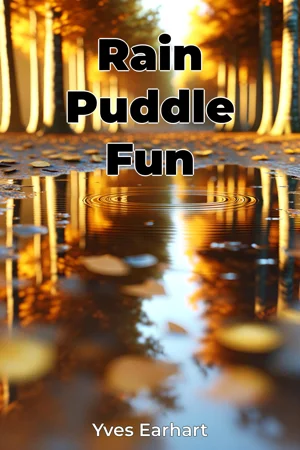
"Rain Puddle Fun" explores the intersection of natural phenomena and physical activity through the lens of one of nature's most basic occurrences: puddle formation and play. The book presents scientific research alongside practical observations to demonstrate how engaging with rainwater supports both environmental understanding and physical wellness. The text begins by examining the formation of rain puddles as microecosystems, introducing readers to fundamental concepts of the water cycle, surface tension, and basic hydrology. Through detailed illustrations and accessible explanations, readers learn how puddles serve as temporary habitats and demonstrate key principles of water collection and evaporation. Central to the book's thesis is the connection between natural play environments and human development. Research from pediatric studies shows that unstructured outdoor play, including puddle interaction, contributes to improved motor skills, spatial awareness, and cardiovascular health. The text cites specific data from multiple longitudinal studies tracking children's outdoor activity levels and their corresponding health outcomes. The content is structured in three main sections. The first examines the science of puddle formation, including factors such as surface composition, temperature effects, and weather patterns. The second section details the biomechanics of puddle play, analyzing movements like jumping, splashing, and walking through water. The final section synthesizes this information by presenting the documented benefits of such activity, supported by research from environmental education and public health sectors. Supporting evidence includes data from meteorological institutes, childhood development research, and public health studies. The book incorporates findings from recent investigations into the relationship between natural play environments and physical development, while also featuring original research on puddle formation patterns in various geographic locations. The interdisciplinary approach connects environmental science with physical education and public health, creating a comprehensive understanding of how simple natural phenomena influence human activity and development. The text maintains a factual, research-based tone while remaining accessible to general readers interested in environmental education or childhood development. Written for educators, parents, and environmental enthusiasts, the book provides practical applications for both structured learning environments and casual outdoor activities. It includes detailed observations of puddle characteristics, suggested activities for different age groups, and safety considerations for water play. The scope focuses specifically on temperate climate zones and urban/suburban environments, acknowledging variations in precipitation patterns and surface types. While the book primarily addresses recreational and educational aspects, it also touches on broader implications for urban planning and green space development. The text presents objective analysis of common misconceptions about outdoor play in wet conditions, addressing concerns about health risks while providing evidence-based recommendations for safe engagement. It maintains a balanced perspective, acknowledging both benefits and necessary precautions. Throughout its chapters, the book emphasizes practical application, offering readers specific tools for observing and understanding puddle formation while suggesting methods for incorporating this knowledge into educational or recreational activities. This approach allows readers to transform common weather occurrences into opportunities for learning and physical activity, supported by current scientific understanding and research-based evidence.
"Rain Puddle Fun" explores the intersection of natural phenomena and physical activity through the lens of one of nature's most basic occurrences: puddle formation and play. The book presents scientific research alongside practical observations to demonstrate how engaging with rainwater supports both environmental understanding and physical wellness. The text begins by examining the formation of rain puddles as microecosystems, introducing readers to fundamental concepts of the water cycle, surface tension, and basic hydrology. Through detailed illustrations and accessible explanations, readers learn how puddles serve as temporary habitats and demonstrate key principles of water collection and evaporation. Central to the book's thesis is the connection between natural play environments and human development. Research from pediatric studies shows that unstructured outdoor play, including puddle interaction, contributes to improved motor skills, spatial awareness, and cardiovascular health. The text cites specific data from multiple longitudinal studies tracking children's outdoor activity levels and their corresponding health outcomes. The content is structured in three main sections. The first examines the science of puddle formation, including factors such as surface composition, temperature effects, and weather patterns. The second section details the biomechanics of puddle play, analyzing movements like jumping, splashing, and walking through water. The final section synthesizes this information by presenting the documented benefits of such activity, supported by research from environmental education and public health sectors. Supporting evidence includes data from meteorological institutes, childhood development research, and public health studies. The book incorporates findings from recent investigations into the relationship between natural play environments and physical development, while also featuring original research on puddle formation patterns in various geographic locations. The interdisciplinary approach connects environmental science with physical education and public health, creating a comprehensive understanding of how simple natural phenomena influence human activity and development. The text maintains a factual, research-based tone while remaining accessible to general readers interested in environmental education or childhood development. Written for educators, parents, and environmental enthusiasts, the book provides practical applications for both structured learning environments and casual outdoor activities. It includes detailed observations of puddle characteristics, suggested activities for different age groups, and safety considerations for water play. The scope focuses specifically on temperate climate zones and urban/suburban environments, acknowledging variations in precipitation patterns and surface types. While the book primarily addresses recreational and educational aspects, it also touches on broader implications for urban planning and green space development. The text presents objective analysis of common misconceptions about outdoor play in wet conditions, addressing concerns about health risks while providing evidence-based recommendations for safe engagement. It maintains a balanced perspective, acknowledging both benefits and necessary precautions. Throughout its chapters, the book emphasizes practical application, offering readers specific tools for observing and understanding puddle formation while suggesting methods for incorporating this knowledge into educational or recreational activities. This approach allows readers to transform common weather occurrences into opportunities for learning and physical activity, supported by current scientific understanding and research-based evidence.
"Rain Puddle Fun" offers a fascinating exploration of how simple rain puddles serve as both natural laboratories for environmental science and catalysts for physical development. This comprehensive guide bridges the gap between scientific understanding and practical outdoor engagement, presenting detailed research on puddle formation, water cycles, and the surprising benefits of unstructured water play in natural settings. The book progresses methodically through three main sections, beginning with the science behind puddle formation, including factors like surface composition and temperature effects. Moving through biomechanics of puddle play to documented health benefits, it weaves together findings from meteorological institutes and childhood development research. Readers discover how these temporary water features function as microecosystems while supporting crucial aspects of physical development, from motor skills to spatial awareness. What sets this book apart is its interdisciplinary approach, combining environmental science with public health insights to create a practical resource for educators, parents, and environmental enthusiasts. Through accessible explanations and detailed illustrations, it transforms common weather occurrences into opportunities for learning and physical activity. The text maintains scientific accuracy while remaining engaging, offering specific tools and evidence-based recommendations for safe engagement with natural water features in temperate urban and suburban environments.
Book Details
ISBN
9788233952068
Publisher
Publifye AS
Your Licenses
You don't own any licenses for this book
Purchase a license below to unlock this book and download the EPUB.
Purchase License
Select a tier to unlock this book
Need bulk licensing?
Contact us for enterprise agreements.