
About This Book
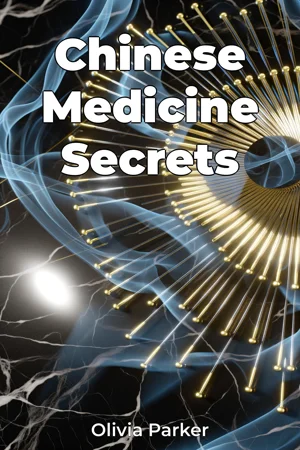
"Chinese Medicine Secrets" explores the sophisticated medical system that has sustained health and wellness across Asia for over two millennia. The book presents a comprehensive examination of Traditional Chinese Medicine (TCM), bridging ancient wisdom with modern scientific understanding. The work examines three foundational pillars: the concept of Qi (vital energy), the balance of Yin and Yang, and the Five Elements Theory. These principles form the theoretical framework through which TCM practitioners understand health, disease, and treatment. Readers learn how these concepts integrate into practical diagnostic methods and therapeutic approaches that remain relevant in contemporary healthcare. The book systematically details the primary treatment modalities of TCM. The first section covers acupuncture, explaining the meridian system, point locations, and specific applications for common conditions. The second explores Chinese herbal medicine, providing detailed profiles of essential herbs, their properties, and traditional formulations. The third section addresses complementary practices including moxibustion, cupping, and therapeutic massage (Tui Na). Drawing from both classical Chinese medical texts and current research, the book presents evidence supporting TCM's effectiveness. Clinical studies, case reports, and systematic reviews demonstrate how these ancient practices achieve measurable therapeutic outcomes. The work references contemporary research from institutions in China, Europe, and North America, offering a balanced perspective on traditional and modern validation methods. The content establishes important connections between TCM and modern biomedicine, psychology, and environmental science. These interdisciplinary links help readers understand how TCM's holistic approach aligns with current integrative medicine trends. The book explains how TCM's emphasis on prevention and lifestyle modification corresponds with modern public health objectives. Written in an academic yet accessible style, the text provides clear explanations of complex concepts without oversimplifying. Technical terms are carefully defined, and theoretical principles are illustrated through practical examples. The material progresses logically from basic concepts to advanced applications, making it suitable for both newcomers and healthcare professionals. The book addresses ongoing debates about TCM's place in modern healthcare systems. It examines regulatory challenges, quality control issues in herbal medicine, and the standardization of practices across cultures. The text maintains objectivity while discussing these controversial aspects, presenting various viewpoints and available evidence. Practical applications receive particular attention, with detailed protocols for common health conditions. Readers learn how to identify suitable TCM approaches for specific health concerns and when to seek professional care. The book includes guidance on finding qualified practitioners and evaluating treatment options. The target audience includes healthcare professionals seeking to understand TCM, students of complementary medicine, and individuals interested in alternative approaches to health maintenance. The content serves both as an academic reference and a practical guide, providing sufficient depth for professional use while remaining accessible to general readers. The work's scope encompasses both theoretical foundations and clinical applications, though it acknowledges certain limitations. While comprehensive in its coverage of major TCM components, it focuses primarily on practices with substantial research support and practical relevance for contemporary healthcare. Throughout, the book maintains a balanced perspective, neither overstating TCM's benefits nor dismissing its limitations. It presents this medical system as a valuable complement to modern healthcare, emphasizing the potential for integration rather than replacement of conventional medicine.
"Chinese Medicine Secrets" explores the sophisticated medical system that has sustained health and wellness across Asia for over two millennia. The book presents a comprehensive examination of Traditional Chinese Medicine (TCM), bridging ancient wisdom with modern scientific understanding. The work examines three foundational pillars: the concept of Qi (vital energy), the balance of Yin and Yang, and the Five Elements Theory. These principles form the theoretical framework through which TCM practitioners understand health, disease, and treatment. Readers learn how these concepts integrate into practical diagnostic methods and therapeutic approaches that remain relevant in contemporary healthcare. The book systematically details the primary treatment modalities of TCM. The first section covers acupuncture, explaining the meridian system, point locations, and specific applications for common conditions. The second explores Chinese herbal medicine, providing detailed profiles of essential herbs, their properties, and traditional formulations. The third section addresses complementary practices including moxibustion, cupping, and therapeutic massage (Tui Na). Drawing from both classical Chinese medical texts and current research, the book presents evidence supporting TCM's effectiveness. Clinical studies, case reports, and systematic reviews demonstrate how these ancient practices achieve measurable therapeutic outcomes. The work references contemporary research from institutions in China, Europe, and North America, offering a balanced perspective on traditional and modern validation methods. The content establishes important connections between TCM and modern biomedicine, psychology, and environmental science. These interdisciplinary links help readers understand how TCM's holistic approach aligns with current integrative medicine trends. The book explains how TCM's emphasis on prevention and lifestyle modification corresponds with modern public health objectives. Written in an academic yet accessible style, the text provides clear explanations of complex concepts without oversimplifying. Technical terms are carefully defined, and theoretical principles are illustrated through practical examples. The material progresses logically from basic concepts to advanced applications, making it suitable for both newcomers and healthcare professionals. The book addresses ongoing debates about TCM's place in modern healthcare systems. It examines regulatory challenges, quality control issues in herbal medicine, and the standardization of practices across cultures. The text maintains objectivity while discussing these controversial aspects, presenting various viewpoints and available evidence. Practical applications receive particular attention, with detailed protocols for common health conditions. Readers learn how to identify suitable TCM approaches for specific health concerns and when to seek professional care. The book includes guidance on finding qualified practitioners and evaluating treatment options. The target audience includes healthcare professionals seeking to understand TCM, students of complementary medicine, and individuals interested in alternative approaches to health maintenance. The content serves both as an academic reference and a practical guide, providing sufficient depth for professional use while remaining accessible to general readers. The work's scope encompasses both theoretical foundations and clinical applications, though it acknowledges certain limitations. While comprehensive in its coverage of major TCM components, it focuses primarily on practices with substantial research support and practical relevance for contemporary healthcare. Throughout, the book maintains a balanced perspective, neither overstating TCM's benefits nor dismissing its limitations. It presents this medical system as a valuable complement to modern healthcare, emphasizing the potential for integration rather than replacement of conventional medicine.
"Chinese Medicine Secrets" offers a comprehensive exploration of Traditional Chinese Medicine (TCM), illuminating a sophisticated healing system that has endured for over 2,000 years. The book masterfully bridges ancient wisdom with modern scientific understanding, focusing on three fundamental pillars: Qi (vital energy), Yin-Yang balance, and the Five Elements Theory. Through clear, accessible language, it demonstrates how these time-tested concepts continue to offer relevant solutions for contemporary health challenges. The text progresses systematically through TCM's primary treatment modalities, beginning with a detailed examination of acupuncture and meridian systems, followed by extensive coverage of Chinese herbal medicine and its applications. Readers gain practical insights into complementary practices such as moxibustion, cupping, and Tui Na massage, with each chapter building upon previous knowledge to create a comprehensive understanding of holistic healing approaches. What sets this book apart is its balanced integration of classical wisdom with modern research, incorporating clinical studies and systematic reviews from institutions worldwide. While maintaining academic rigor, it presents complex concepts through practical examples and clear explanations, making it valuable for both healthcare professionals and general readers interested in alternative medicine. The book effectively demonstrates how TCM's preventive approach and emphasis on lifestyle modification align with current trends in integrative medicine, while honestly addressing regulatory challenges and quality control considerations in modern healthcare contexts.
Book Details
ISBN
9788233951559
Publisher
Publifye AS
Your Licenses
You don't own any licenses for this book
Purchase a license below to unlock this book and download the EPUB.
Purchase License
Select a tier to unlock this book
Need bulk licensing?
Contact us for enterprise agreements.