
About This Book
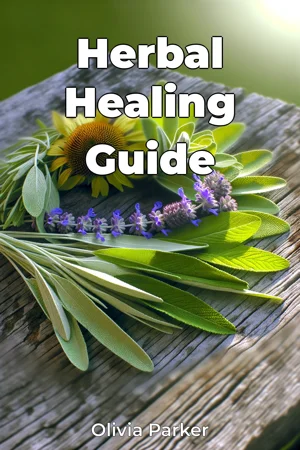
"Herbal Healing Guide" bridges the gap between ancient wisdom and modern understanding of medicinal plants, documenting how these natural remedies have shaped human health practices across civilizations. Drawing from both historical records and contemporary scientific research, this comprehensive guide presents a balanced examination of herbal medicine's role in healthcare. The book addresses three core areas: the biochemical properties of medicinal herbs, their historical applications across cultures, and evidence-based protocols for their safe, modern use. These interconnected themes provide readers with a foundation for understanding both the science and traditional knowledge behind herbal medicine. Beginning with an exploration of 50 essential healing herbs, the text examines their active compounds, therapeutic properties, and traditional uses. Each herb profile includes detailed information about cultivation, preparation methods, and specific applications, supported by ethnobotanical studies and current research findings. The second section delves into the historical context, tracing herbal medicine's evolution from ancient Egyptian papyri through Traditional Chinese Medicine and European botanical traditions to modern pharmacological studies. This historical perspective demonstrates how different cultures independently discovered and validated similar therapeutic properties in local plants. The final section focuses on practical applications, providing research-based protocols for using herbs to address common health conditions. It includes detailed guidelines for preparation methods, dosage considerations, and potential interactions with conventional medications. This section emphasizes safety and integrates current scientific understanding with traditional knowledge. The book's research foundation draws from multiple disciplines, including botany, biochemistry, anthropology, and clinical studies. It references peer-reviewed research, historical documents, and established herbal medicine systems to validate traditional uses and explain mechanisms of action. Interdisciplinary connections link herbal medicine to environmental conservation, highlighting the importance of sustainable harvesting practices and biodiversity preservation. The text also explores connections with modern pharmacology, showing how many conventional medicines originated from herbal sources. Written in an accessible academic style, the book maintains scientific rigor while remaining practical for both healthcare professionals and informed consumers. It addresses common misconceptions about herbal medicine while acknowledging areas where more research is needed. The target audience includes healthcare practitioners, herbalists, researchers, and individuals seeking evidence-based information about herbal medicine. The content is structured to serve both as a reference guide and as a practical manual for applying herbal knowledge. The book acknowledges ongoing debates in the field, particularly regarding standardization of herbal preparations and integration with conventional medicine. It presents multiple viewpoints while maintaining focus on documented evidence and established practices. Practical applications include detailed protocols for making tinctures, decoctions, and other preparations, along with specific guidelines for addressing common health concerns. Safety considerations, including potential herb-drug interactions and contraindications, are emphasized throughout. The scope encompasses both common and specialized herbs, focusing on those with substantial research support or well-documented traditional use. While comprehensive, it acknowledges that herbal medicine is an evolving field with continuing discoveries and research developments. This guide stands out through its integration of traditional knowledge with modern scientific understanding, providing readers with practical, evidence-based information while honoring the historical and cultural significance of herbal medicine.
"Herbal Healing Guide" bridges the gap between ancient wisdom and modern understanding of medicinal plants, documenting how these natural remedies have shaped human health practices across civilizations. Drawing from both historical records and contemporary scientific research, this comprehensive guide presents a balanced examination of herbal medicine's role in healthcare. The book addresses three core areas: the biochemical properties of medicinal herbs, their historical applications across cultures, and evidence-based protocols for their safe, modern use. These interconnected themes provide readers with a foundation for understanding both the science and traditional knowledge behind herbal medicine. Beginning with an exploration of 50 essential healing herbs, the text examines their active compounds, therapeutic properties, and traditional uses. Each herb profile includes detailed information about cultivation, preparation methods, and specific applications, supported by ethnobotanical studies and current research findings. The second section delves into the historical context, tracing herbal medicine's evolution from ancient Egyptian papyri through Traditional Chinese Medicine and European botanical traditions to modern pharmacological studies. This historical perspective demonstrates how different cultures independently discovered and validated similar therapeutic properties in local plants. The final section focuses on practical applications, providing research-based protocols for using herbs to address common health conditions. It includes detailed guidelines for preparation methods, dosage considerations, and potential interactions with conventional medications. This section emphasizes safety and integrates current scientific understanding with traditional knowledge. The book's research foundation draws from multiple disciplines, including botany, biochemistry, anthropology, and clinical studies. It references peer-reviewed research, historical documents, and established herbal medicine systems to validate traditional uses and explain mechanisms of action. Interdisciplinary connections link herbal medicine to environmental conservation, highlighting the importance of sustainable harvesting practices and biodiversity preservation. The text also explores connections with modern pharmacology, showing how many conventional medicines originated from herbal sources. Written in an accessible academic style, the book maintains scientific rigor while remaining practical for both healthcare professionals and informed consumers. It addresses common misconceptions about herbal medicine while acknowledging areas where more research is needed. The target audience includes healthcare practitioners, herbalists, researchers, and individuals seeking evidence-based information about herbal medicine. The content is structured to serve both as a reference guide and as a practical manual for applying herbal knowledge. The book acknowledges ongoing debates in the field, particularly regarding standardization of herbal preparations and integration with conventional medicine. It presents multiple viewpoints while maintaining focus on documented evidence and established practices. Practical applications include detailed protocols for making tinctures, decoctions, and other preparations, along with specific guidelines for addressing common health concerns. Safety considerations, including potential herb-drug interactions and contraindications, are emphasized throughout. The scope encompasses both common and specialized herbs, focusing on those with substantial research support or well-documented traditional use. While comprehensive, it acknowledges that herbal medicine is an evolving field with continuing discoveries and research developments. This guide stands out through its integration of traditional knowledge with modern scientific understanding, providing readers with practical, evidence-based information while honoring the historical and cultural significance of herbal medicine.
"Herbal Healing Guide" presents a comprehensive exploration of medicinal plants, masterfully bridging ancient healing traditions with modern scientific understanding. This authoritative work examines 50 essential healing herbs through three distinct lenses: their biochemical properties, historical significance across civilizations, and evidence-based applications in contemporary healthcare. The book's unique approach combines rigorous scientific research with time-tested traditional knowledge, making complex botanical concepts accessible to both healthcare professionals and interested individuals. The guide progresses systematically from detailed herb profiles, examining active compounds and therapeutic properties, to a fascinating journey through herbal medicine's evolution across different cultures. Each chapter builds upon this foundation, culminating in practical, research-based protocols for addressing common health conditions. Particularly valuable are the detailed guidelines for preparation methods, dosage considerations, and potential interactions with conventional medications, emphasizing safety and effectiveness in modern applications. What sets this book apart is its commitment to scientific rigor while maintaining respect for traditional wisdom. Drawing from multiple disciplines including botany, biochemistry, and anthropology, it presents verifiable evidence for herbal applications while acknowledging areas requiring further research. The inclusion of sustainable harvesting practices and biodiversity preservation considerations makes this more than just a healing guide – it's a comprehensive resource for understanding the integral role of medicinal plants in human health and environmental conservation.
Book Details
ISBN
9788233951504
Publisher
Publifye AS
Your Licenses
You don't own any licenses for this book
Purchase a license below to unlock this book and download the EPUB.
Purchase License
Select a tier to unlock this book
Need bulk licensing?
Contact us for enterprise agreements.