
About This Book
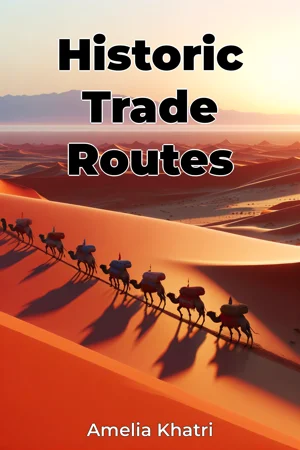
"Historic Trade Routes" examines how ancient commercial networks laid the groundwork for modern global interconnectivity, tracing the evolution of trade from isolated regional exchanges to complex international systems that shaped civilizations. The book presents three core themes: the physical development of major trade routes, the mechanisms of cross-cultural exchange, and the lasting economic frameworks these routes established. Through detailed analysis of archaeological evidence, historical documents, and economic data, readers discover how these ancient pathways created lasting patterns of commerce and cultural diffusion that continue to influence contemporary global trade. Beginning with the Silk Road's establishment in 130 BCE, the narrative explores how this network connected Han Dynasty China to Roman Europe, facilitating not only the exchange of silk and precious metals but also technologies, religions, and ideas. The Mediterranean trade routes receive equal attention, with particular focus on Phoenician and Greek maritime networks that linked North Africa, Europe, and the Middle East through sophisticated naval commerce systems. The book's central argument posits that modern global economic structures directly evolved from these ancient trade corridors, demonstrating how early trade routes established enduring patterns of commercial interaction, diplomatic relations, and cultural exchange that persist in current international markets. Divided into three main sections, the work first examines the physical infrastructure of major trade routes, including caravanserais, ports, and mountain passes. The second section analyzes the economic systems that developed around these routes, including early banking networks, commodity pricing, and risk management strategies. The final section connects historical patterns to contemporary global commerce, revealing striking parallels between ancient and modern trade dynamics. The research draws from multiple disciplines, incorporating archaeological findings, historical manuscripts, numismatic studies, and economic models. Notable sources include recently discovered trade documents from Central Asian merchant archives and new archaeological data from maritime excavations in the Mediterranean. The interdisciplinary approach connects economic history with cultural anthropology and international relations, demonstrating how trade routes influenced diplomatic ties, technological advancement, and religious spread. The book contributes to current debates about globalization's origins and the cyclical nature of international trade patterns. Written in an analytical yet accessible style, the text balances academic rigor with engaging historical narratives, making complex economic concepts comprehensible to general readers while maintaining scholarly depth. The work serves multiple audiences, from university students and business professionals to history enthusiasts seeking to understand global commerce's origins. The book addresses ongoing academic debates about the extent of ancient global connectivity and challenges traditional Eurocentric views of trade development by highlighting the crucial roles of Central Asian, Indian, and Middle Eastern merchants and markets. Practical applications include insights for modern trade policy, risk management in international commerce, and cultural adaptation in global business. The work demonstrates how historical trade patterns inform current economic developments, particularly in regions along former Silk Road routes, such as China's Belt and Road Initiative. While focusing primarily on the period from 200 BCE to 1500 CE, the book acknowledges its temporal limitations and concentrates on major land and sea routes while recognizing the existence of smaller regional networks. This focused approach allows for detailed analysis of the most influential commercial corridors without becoming overwhelmed by peripheral routes. The book's analysis provides valuable context for understanding contemporary global trade relationships, international diplomacy, and cultural exchange patterns, making it relevant for readers interested in both historical developments and current international commerce.
"Historic Trade Routes" examines how ancient commercial networks laid the groundwork for modern global interconnectivity, tracing the evolution of trade from isolated regional exchanges to complex international systems that shaped civilizations. The book presents three core themes: the physical development of major trade routes, the mechanisms of cross-cultural exchange, and the lasting economic frameworks these routes established. Through detailed analysis of archaeological evidence, historical documents, and economic data, readers discover how these ancient pathways created lasting patterns of commerce and cultural diffusion that continue to influence contemporary global trade. Beginning with the Silk Road's establishment in 130 BCE, the narrative explores how this network connected Han Dynasty China to Roman Europe, facilitating not only the exchange of silk and precious metals but also technologies, religions, and ideas. The Mediterranean trade routes receive equal attention, with particular focus on Phoenician and Greek maritime networks that linked North Africa, Europe, and the Middle East through sophisticated naval commerce systems. The book's central argument posits that modern global economic structures directly evolved from these ancient trade corridors, demonstrating how early trade routes established enduring patterns of commercial interaction, diplomatic relations, and cultural exchange that persist in current international markets. Divided into three main sections, the work first examines the physical infrastructure of major trade routes, including caravanserais, ports, and mountain passes. The second section analyzes the economic systems that developed around these routes, including early banking networks, commodity pricing, and risk management strategies. The final section connects historical patterns to contemporary global commerce, revealing striking parallels between ancient and modern trade dynamics. The research draws from multiple disciplines, incorporating archaeological findings, historical manuscripts, numismatic studies, and economic models. Notable sources include recently discovered trade documents from Central Asian merchant archives and new archaeological data from maritime excavations in the Mediterranean. The interdisciplinary approach connects economic history with cultural anthropology and international relations, demonstrating how trade routes influenced diplomatic ties, technological advancement, and religious spread. The book contributes to current debates about globalization's origins and the cyclical nature of international trade patterns. Written in an analytical yet accessible style, the text balances academic rigor with engaging historical narratives, making complex economic concepts comprehensible to general readers while maintaining scholarly depth. The work serves multiple audiences, from university students and business professionals to history enthusiasts seeking to understand global commerce's origins. The book addresses ongoing academic debates about the extent of ancient global connectivity and challenges traditional Eurocentric views of trade development by highlighting the crucial roles of Central Asian, Indian, and Middle Eastern merchants and markets. Practical applications include insights for modern trade policy, risk management in international commerce, and cultural adaptation in global business. The work demonstrates how historical trade patterns inform current economic developments, particularly in regions along former Silk Road routes, such as China's Belt and Road Initiative. While focusing primarily on the period from 200 BCE to 1500 CE, the book acknowledges its temporal limitations and concentrates on major land and sea routes while recognizing the existence of smaller regional networks. This focused approach allows for detailed analysis of the most influential commercial corridors without becoming overwhelmed by peripheral routes. The book's analysis provides valuable context for understanding contemporary global trade relationships, international diplomacy, and cultural exchange patterns, making it relevant for readers interested in both historical developments and current international commerce.
"Historic Trade Routes" offers a compelling exploration of how ancient commercial networks evolved into today's interconnected global economy, focusing on the transformative power of trade routes like the Silk Road and Mediterranean maritime systems. The book masterfully weaves together archaeological evidence, historical documents, and economic data to demonstrate how these ancient pathways created enduring patterns of commerce and cultural exchange that continue to shape our modern world. Through a well-structured examination divided into three main sections, the book first delves into the physical infrastructure of major trade routes, including caravanserais and ports, before analyzing the sophisticated economic systems that developed around them. The narrative brings to life how the Silk Road, established in 130 BCE, connected Han Dynasty China to Roman Europe, facilitating not just the exchange of goods but also the spread of technologies, religions, and ideas. Particularly fascinating is the book's exploration of early banking networks and risk management strategies that emerged along these routes. The interdisciplinary approach combines economic history with cultural anthropology, challenging traditional Eurocentric views by highlighting the crucial roles of Central Asian, Indian, and Middle Eastern merchants. While primarily focusing on the period from 200 BCE to 1500 CE, the book draws compelling parallels between ancient and modern trade dynamics, making it relevant for understanding contemporary global commerce, including initiatives like China's modern Belt and Road project.
Book Details
ISBN
9788233951368
Publisher
Publifye AS
Your Licenses
You don't own any licenses for this book
Purchase a license below to unlock this book and download the EPUB.
Purchase License
Select a tier to unlock this book
Need bulk licensing?
Contact us for enterprise agreements.