
About This Book
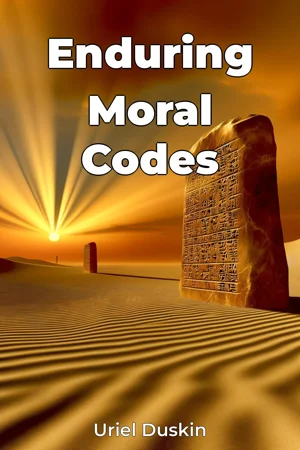
"Enduring Moral Codes" examines how fundamental ethical principles have remained consistent across cultures and centuries, from ancient philosophical teachings to modern social structures. The book traces these ethical guidelines through historical documentation and cultural analysis, demonstrating their persistent influence on contemporary moral frameworks. The work presents three central themes: the universal nature of core moral principles, the evolution of ethical systems through religious and philosophical traditions, and the practical application of these guidelines in modern society. These interconnected elements reveal how basic moral tenets transcend cultural and temporal boundaries while adapting to changing social contexts. The book's foundation rests on extensive historical research, beginning with early Mesopotamian legal codes and extending through Greek philosophical traditions, particularly focusing on Stoic teachings about duty, justice, and personal conduct. It examines how these principles parallel early religious commandments, including those found in Judaism, Christianity, Buddhism, and Islam, revealing surprising consistencies in basic moral guidelines across different belief systems. The central argument posits that despite surface-level differences in cultural expressions of morality, fundamental ethical principles remain remarkably stable across human societies. This stability suggests these guidelines reflect essential aspects of human social organization rather than arbitrary cultural constructions. Through systematic analysis, the work presents evidence from anthropological studies, historical documents, and philosophical texts. Each chapter builds upon this foundation, examining how different societies have codified similar moral principles through varying cultural lenses. The research methodology combines textual analysis of historical documents with comparative studies of ethical systems across cultures. The book connects multiple disciplines, including anthropology, sociology, and psychology, to explain how moral codes emerge and persist. It draws particularly strong connections between evolutionary psychology and social development, explaining how ethical guidelines contribute to group cohesion and survival. Written in an academic yet accessible style, the work presents complex philosophical concepts through clear exposition and relevant examples. The author maintains scholarly rigor while ensuring the material remains engaging for educated general readers interested in ethics, philosophy, or religious studies. The target audience includes students and professionals in philosophy, religious studies, and social sciences, as well as thoughtful readers seeking to understand the historical development of moral systems. The book offers practical insights for modern ethical decision-making while providing historical context for contemporary moral debates. The scope encompasses major world philosophical and religious traditions but acknowledges limitations in coverage of smaller-scale societies and emerging ethical frameworks. It addresses contemporary debates about moral relativism versus universal principles, examining evidence for both perspectives while building a case for fundamental moral commonalities. Practical applications include frameworks for ethical decision-making in professional contexts, guidelines for cross-cultural understanding, and tools for analyzing moral arguments in public discourse. The work addresses current controversies in bioethics, environmental ethics, and technological advancement, showing how traditional moral principles can inform modern challenges. The book maintains objectivity when discussing religious traditions, focusing on documented historical development rather than theological claims. It examines how moral codes function in society without advocating for particular religious or philosophical positions. This comprehensive analysis provides readers with both theoretical understanding and practical tools for engaging with ethical questions in their personal and professional lives, while maintaining scholarly integrity and historical accuracy throughout its examination of enduring moral principles.
"Enduring Moral Codes" examines how fundamental ethical principles have remained consistent across cultures and centuries, from ancient philosophical teachings to modern social structures. The book traces these ethical guidelines through historical documentation and cultural analysis, demonstrating their persistent influence on contemporary moral frameworks. The work presents three central themes: the universal nature of core moral principles, the evolution of ethical systems through religious and philosophical traditions, and the practical application of these guidelines in modern society. These interconnected elements reveal how basic moral tenets transcend cultural and temporal boundaries while adapting to changing social contexts. The book's foundation rests on extensive historical research, beginning with early Mesopotamian legal codes and extending through Greek philosophical traditions, particularly focusing on Stoic teachings about duty, justice, and personal conduct. It examines how these principles parallel early religious commandments, including those found in Judaism, Christianity, Buddhism, and Islam, revealing surprising consistencies in basic moral guidelines across different belief systems. The central argument posits that despite surface-level differences in cultural expressions of morality, fundamental ethical principles remain remarkably stable across human societies. This stability suggests these guidelines reflect essential aspects of human social organization rather than arbitrary cultural constructions. Through systematic analysis, the work presents evidence from anthropological studies, historical documents, and philosophical texts. Each chapter builds upon this foundation, examining how different societies have codified similar moral principles through varying cultural lenses. The research methodology combines textual analysis of historical documents with comparative studies of ethical systems across cultures. The book connects multiple disciplines, including anthropology, sociology, and psychology, to explain how moral codes emerge and persist. It draws particularly strong connections between evolutionary psychology and social development, explaining how ethical guidelines contribute to group cohesion and survival. Written in an academic yet accessible style, the work presents complex philosophical concepts through clear exposition and relevant examples. The author maintains scholarly rigor while ensuring the material remains engaging for educated general readers interested in ethics, philosophy, or religious studies. The target audience includes students and professionals in philosophy, religious studies, and social sciences, as well as thoughtful readers seeking to understand the historical development of moral systems. The book offers practical insights for modern ethical decision-making while providing historical context for contemporary moral debates. The scope encompasses major world philosophical and religious traditions but acknowledges limitations in coverage of smaller-scale societies and emerging ethical frameworks. It addresses contemporary debates about moral relativism versus universal principles, examining evidence for both perspectives while building a case for fundamental moral commonalities. Practical applications include frameworks for ethical decision-making in professional contexts, guidelines for cross-cultural understanding, and tools for analyzing moral arguments in public discourse. The work addresses current controversies in bioethics, environmental ethics, and technological advancement, showing how traditional moral principles can inform modern challenges. The book maintains objectivity when discussing religious traditions, focusing on documented historical development rather than theological claims. It examines how moral codes function in society without advocating for particular religious or philosophical positions. This comprehensive analysis provides readers with both theoretical understanding and practical tools for engaging with ethical questions in their personal and professional lives, while maintaining scholarly integrity and historical accuracy throughout its examination of enduring moral principles.
"Enduring Moral Codes" explores the fascinating continuity of fundamental ethical principles across different cultures and time periods, revealing how core moral values have remained remarkably consistent from ancient Mesopotamia to modern society. Through meticulous historical research and cultural analysis, the book demonstrates how basic moral guidelines transcend cultural boundaries while adapting to evolving social contexts, suggesting these principles are intrinsic to human social organization rather than arbitrary cultural constructs. The book weaves together evidence from multiple disciplines, examining how early philosophical traditions, particularly Stoic teachings about duty and justice, parallel religious commandments found in major world religions. One of the most compelling insights is the discovery of similar moral principles across seemingly unrelated belief systems, from Buddhism to Christianity, indicating a universal foundation for human ethical behavior. The work particularly excels in demonstrating how ancient moral codes continue to influence contemporary ethical decision-making. Moving from historical foundations to modern applications, the book bridges theoretical understanding with practical implications, offering frameworks for addressing current ethical challenges in areas like bioethics and environmental conservation. Written in an accessible yet scholarly style, it provides both academic rigor and practical utility, making complex philosophical concepts understandable through clear exposition and relevant examples. This approach makes the book particularly valuable for readers seeking to understand both the historical development of moral systems and their application to contemporary ethical dilemmas.
Book Details
ISBN
9788233951351
Publisher
Publifye AS
Your Licenses
You don't own any licenses for this book
Purchase a license below to unlock this book and download the EPUB.
Purchase License
Select a tier to unlock this book
Need bulk licensing?
Contact us for enterprise agreements.