
About This Book
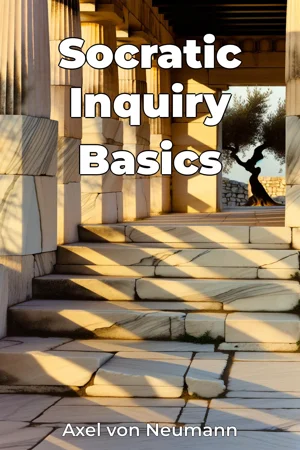
"Socratic Inquiry Basics" examines the systematic methodology that transformed philosophical discourse and continues to influence modern educational approaches. Through careful analysis of historical documents and contemporary research, this book provides a comprehensive exploration of the question-and-answer technique that became Socrates' enduring legacy. The work centers on three fundamental aspects of Socratic inquiry: the elenchus (systematic questioning), maieutics (intellectual midwifery), and aporia (productive confusion). These methodological pillars are examined through both their historical development in ancient Athens and their practical application in current academic and professional settings. Drawing from Plato's dialogues, particularly the "Meno," "Theaetetus," and "Republic," the book establishes the historical context of Socratic methodology. It analyzes how this approach emerged during a period of significant intellectual transformation in ancient Greece, when traditional forms of knowledge transmission were being challenged by new pedagogical methods. The central thesis argues that Socratic inquiry represents more than a historical teaching method—it embodies a sophisticated system for critical thinking and knowledge acquisition that remains relevant in contemporary education, professional development, and problem-solving contexts. The book demonstrates how this methodology facilitates deep learning through structured questioning rather than direct instruction. The content progresses through four major sections: historical foundations, methodological analysis, contemporary applications, and future implications. Each section builds upon the previous, moving from theoretical understanding to practical implementation. The work includes detailed examinations of actual Socratic dialogues, modern case studies, and specific guidelines for applying these techniques in various settings. Supporting evidence comes from multiple sources: classical texts and their translations, archaeological findings, contemporary educational research, and cognitive psychology studies. The book incorporates recent findings from educational neuroscience that validate the effectiveness of question-based learning approaches. The work connects philosophy with education, psychology, and cognitive science, demonstrating how Socratic methodology aligns with current understanding of human learning processes. These interdisciplinary connections strengthen the argument for the method's continued relevance and effectiveness. Written in a scholarly yet accessible style, the book maintains academic rigor while ensuring comprehensibility for educators, students, and professionals interested in critical thinking and effective questioning techniques. It balances theoretical depth with practical applications, making it suitable for both academic study and professional development. The primary audience includes educators, philosophy students, professional trainers, and anyone interested in improving their analytical and questioning skills. The book provides specific frameworks and examples for implementing Socratic techniques in various settings, from classroom discussions to professional development sessions. While comprehensive in its treatment of Socratic methodology, the book acknowledges certain limitations, focusing primarily on educational and professional applications rather than purely philosophical analysis. It addresses ongoing debates about the authenticity of Platonic accounts and the challenges of adapting classical methods to modern contexts. The work concludes by examining current controversies in educational methodology, particularly the tension between traditional instruction and inquiry-based learning. It presents evidence-based arguments for integrating Socratic elements into various educational and professional development contexts, while acknowledging the need to adapt these methods for different cultural and institutional settings.
"Socratic Inquiry Basics" examines the systematic methodology that transformed philosophical discourse and continues to influence modern educational approaches. Through careful analysis of historical documents and contemporary research, this book provides a comprehensive exploration of the question-and-answer technique that became Socrates' enduring legacy. The work centers on three fundamental aspects of Socratic inquiry: the elenchus (systematic questioning), maieutics (intellectual midwifery), and aporia (productive confusion). These methodological pillars are examined through both their historical development in ancient Athens and their practical application in current academic and professional settings. Drawing from Plato's dialogues, particularly the "Meno," "Theaetetus," and "Republic," the book establishes the historical context of Socratic methodology. It analyzes how this approach emerged during a period of significant intellectual transformation in ancient Greece, when traditional forms of knowledge transmission were being challenged by new pedagogical methods. The central thesis argues that Socratic inquiry represents more than a historical teaching method—it embodies a sophisticated system for critical thinking and knowledge acquisition that remains relevant in contemporary education, professional development, and problem-solving contexts. The book demonstrates how this methodology facilitates deep learning through structured questioning rather than direct instruction. The content progresses through four major sections: historical foundations, methodological analysis, contemporary applications, and future implications. Each section builds upon the previous, moving from theoretical understanding to practical implementation. The work includes detailed examinations of actual Socratic dialogues, modern case studies, and specific guidelines for applying these techniques in various settings. Supporting evidence comes from multiple sources: classical texts and their translations, archaeological findings, contemporary educational research, and cognitive psychology studies. The book incorporates recent findings from educational neuroscience that validate the effectiveness of question-based learning approaches. The work connects philosophy with education, psychology, and cognitive science, demonstrating how Socratic methodology aligns with current understanding of human learning processes. These interdisciplinary connections strengthen the argument for the method's continued relevance and effectiveness. Written in a scholarly yet accessible style, the book maintains academic rigor while ensuring comprehensibility for educators, students, and professionals interested in critical thinking and effective questioning techniques. It balances theoretical depth with practical applications, making it suitable for both academic study and professional development. The primary audience includes educators, philosophy students, professional trainers, and anyone interested in improving their analytical and questioning skills. The book provides specific frameworks and examples for implementing Socratic techniques in various settings, from classroom discussions to professional development sessions. While comprehensive in its treatment of Socratic methodology, the book acknowledges certain limitations, focusing primarily on educational and professional applications rather than purely philosophical analysis. It addresses ongoing debates about the authenticity of Platonic accounts and the challenges of adapting classical methods to modern contexts. The work concludes by examining current controversies in educational methodology, particularly the tension between traditional instruction and inquiry-based learning. It presents evidence-based arguments for integrating Socratic elements into various educational and professional development contexts, while acknowledging the need to adapt these methods for different cultural and institutional settings.
"Socratic Inquiry Basics" offers a comprehensive exploration of the timeless questioning methodology that revolutionized philosophical discourse and continues to shape modern education. At its core, the book examines three fundamental pillars of Socratic inquiry: elenchus (systematic questioning), maieutics (intellectual midwifery), and aporia (productive confusion), demonstrating how these ancient techniques remain powerful tools for critical thinking and knowledge acquisition in contemporary settings. Through careful analysis of classical texts, particularly Plato's dialogues, and modern educational research, the book bridges the gap between ancient wisdom and current pedagogical practices. It demonstrates how structured questioning, rather than direct instruction, facilitates deeper learning and understanding. The work's unique value lies in its ability to connect philosophical methodology with recent findings in educational neuroscience and cognitive psychology, validating the effectiveness of question-based learning approaches. The book progresses logically from historical foundations through methodological analysis to practical contemporary applications, making complex philosophical concepts accessible to educators, students, and professionals. By providing specific frameworks and examples for implementing Socratic techniques in various settings, it serves as both a theoretical guide and a practical handbook for anyone interested in improving their analytical and questioning skills. The author maintains a balanced approach, acknowledging ongoing debates about classical methods while presenting evidence-based arguments for their modern adaptation.
Book Details
ISBN
9788233951306
Publisher
Publifye AS
Your Licenses
You don't own any licenses for this book
Purchase a license below to unlock this book and download the EPUB.
Purchase License
Select a tier to unlock this book
Need bulk licensing?
Contact us for enterprise agreements.