
About This Book
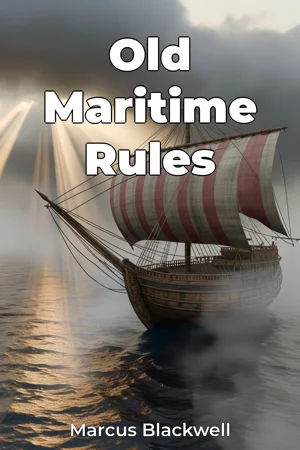
"Old Maritime Rules" uncovers how ancient seafaring civilizations developed sophisticated maritime codes that continue to influence modern naval practices. Through careful examination of archaeological evidence, preserved documents, and maritime artifacts, this comprehensive study traces the evolution of seafaring regulations from the Phoenicians to the Vikings, revealing the foundational principles that shaped global maritime trade and navigation. The book presents three core themes: the development of standardized navigation protocols among ancient maritime powers, the establishment of trade regulations that facilitated cross-cultural commerce, and the codification of survival practices that became universal seafaring standards. These elements formed the basis of maritime law and practice across Mediterranean, Nordic, and Middle Eastern waters. Beginning with the Phoenician maritime codes of 1200 BCE, the text examines how these master sailors created the first documented system of maritime signals, weather prediction methods, and cargo handling procedures. Their influence spread throughout the Mediterranean, establishing practices later adopted by Greeks and Romans. The book then traces these developments through to Viking sea-laws, which added sophisticated navigation techniques for northern waters and established new protocols for crew management and vessel maintenance. The central argument demonstrates how modern maritime practices emerge directly from these ancient foundations. Through analysis of recovered ship logs, trading documents, and harbor regulations, the book establishes clear links between ancient maritime codes and contemporary international maritime law. Each chapter builds upon this premise, examining specific aspects such as navigation techniques, trade protocols, and safety measures. Supporting evidence includes recently translated Phoenician harbor records, Viking maritime laws from the Gotland sea-code, and archaeological findings from major Mediterranean and North Sea ports. The research combines archaeological data with historical documents and modern maritime studies to create a comprehensive understanding of ancient seafaring regulations. The book connects multiple disciplines, including maritime archaeology, international trade history, and modern naval operations. It demonstrates how ancient maritime practices influenced the development of international law and modern economics, while also examining the technological evolution of navigation and shipbuilding. Written in an analytical style that balances academic rigor with accessible narrative, the text provides detailed technical information while maintaining engagement through specific historical examples and case studies. The content is structured to serve maritime historians, naval professionals, and readers interested in ancient trade and navigation. The work distinguishes itself by presenting newly translated maritime documents and incorporating recent archaeological discoveries that challenge previous assumptions about ancient seafaring capabilities. It provides practical insights for modern maritime operations while establishing historical context for current international maritime laws. The scope encompasses the period from 1200 BCE to 1100 CE, focusing on the Mediterranean and North Atlantic regions. The book addresses ongoing debates about the extent of ancient maritime technical knowledge and the degree of standardization in early maritime practices. For modern readers, the book offers practical applications in understanding current maritime regulations and their historical basis. It provides context for contemporary international maritime law and insights into time-tested navigation and safety practices that remain relevant. The target audience includes maritime professionals, historians, archaeologists, and those interested in the development of international trade and navigation. The book serves as both a scholarly reference and a practical guide to understanding the historical foundations of maritime operations.
"Old Maritime Rules" uncovers how ancient seafaring civilizations developed sophisticated maritime codes that continue to influence modern naval practices. Through careful examination of archaeological evidence, preserved documents, and maritime artifacts, this comprehensive study traces the evolution of seafaring regulations from the Phoenicians to the Vikings, revealing the foundational principles that shaped global maritime trade and navigation. The book presents three core themes: the development of standardized navigation protocols among ancient maritime powers, the establishment of trade regulations that facilitated cross-cultural commerce, and the codification of survival practices that became universal seafaring standards. These elements formed the basis of maritime law and practice across Mediterranean, Nordic, and Middle Eastern waters. Beginning with the Phoenician maritime codes of 1200 BCE, the text examines how these master sailors created the first documented system of maritime signals, weather prediction methods, and cargo handling procedures. Their influence spread throughout the Mediterranean, establishing practices later adopted by Greeks and Romans. The book then traces these developments through to Viking sea-laws, which added sophisticated navigation techniques for northern waters and established new protocols for crew management and vessel maintenance. The central argument demonstrates how modern maritime practices emerge directly from these ancient foundations. Through analysis of recovered ship logs, trading documents, and harbor regulations, the book establishes clear links between ancient maritime codes and contemporary international maritime law. Each chapter builds upon this premise, examining specific aspects such as navigation techniques, trade protocols, and safety measures. Supporting evidence includes recently translated Phoenician harbor records, Viking maritime laws from the Gotland sea-code, and archaeological findings from major Mediterranean and North Sea ports. The research combines archaeological data with historical documents and modern maritime studies to create a comprehensive understanding of ancient seafaring regulations. The book connects multiple disciplines, including maritime archaeology, international trade history, and modern naval operations. It demonstrates how ancient maritime practices influenced the development of international law and modern economics, while also examining the technological evolution of navigation and shipbuilding. Written in an analytical style that balances academic rigor with accessible narrative, the text provides detailed technical information while maintaining engagement through specific historical examples and case studies. The content is structured to serve maritime historians, naval professionals, and readers interested in ancient trade and navigation. The work distinguishes itself by presenting newly translated maritime documents and incorporating recent archaeological discoveries that challenge previous assumptions about ancient seafaring capabilities. It provides practical insights for modern maritime operations while establishing historical context for current international maritime laws. The scope encompasses the period from 1200 BCE to 1100 CE, focusing on the Mediterranean and North Atlantic regions. The book addresses ongoing debates about the extent of ancient maritime technical knowledge and the degree of standardization in early maritime practices. For modern readers, the book offers practical applications in understanding current maritime regulations and their historical basis. It provides context for contemporary international maritime law and insights into time-tested navigation and safety practices that remain relevant. The target audience includes maritime professionals, historians, archaeologists, and those interested in the development of international trade and navigation. The book serves as both a scholarly reference and a practical guide to understanding the historical foundations of maritime operations.
"Old Maritime Rules" masterfully explores the fascinating evolution of maritime laws and practices from ancient civilizations to their lasting impact on modern seafaring. The book reveals how the Phoenicians, as master sailors of the Mediterranean, established the first documented system of maritime protocols around 1200 BCE, creating foundational practices for navigation signals, weather prediction, and cargo handling that would influence centuries of maritime development. Through meticulous analysis of archaeological evidence, translated documents, and maritime artifacts, the book traces how these early maritime codes spread and evolved across different seafaring cultures. The narrative progresses from Phoenician innovations through Greek and Roman adaptations, culminating in the sophisticated Viking sea-laws that introduced advanced navigation techniques for northern waters. The author skillfully demonstrates how these ancient practices form the bedrock of contemporary international maritime law, supporting this connection with evidence from recovered ship logs, trading documents, and harbor regulations. The book stands out for its comprehensive integration of multiple disciplines, combining maritime archaeology, trade history, and modern naval operations to create a complete picture of ancient seafaring regulations. Using newly translated maritime documents and recent archaeological discoveries, it challenges previous assumptions about ancient maritime capabilities while providing practical insights for modern maritime operations. This approach makes the complex subject matter accessible to both scholars and general readers interested in the fascinating intersection of ancient history and modern maritime practices.
Book Details
ISBN
9788233951191
Publisher
Publifye AS
Your Licenses
You don't own any licenses for this book
Purchase a license below to unlock this book and download the EPUB.
Purchase License
Select a tier to unlock this book
Need bulk licensing?
Contact us for enterprise agreements.