
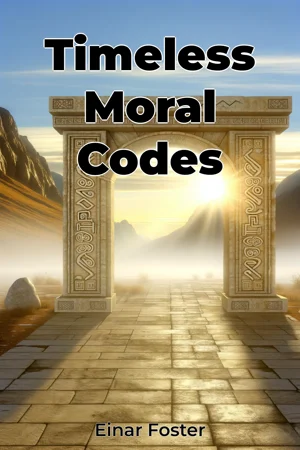
About This Book
"Timeless Moral Codes" examines how fundamental ethical principles have traversed centuries of human civilization, remaining relevant from ancient philosophical discourse to contemporary moral challenges. This comprehensive analysis traces the development and persistence of core moral guidelines that continue to shape modern society. The book systematically explores three primary themes: the universality of basic moral principles across cultures, the evolution of ethical codes through major historical periods, and the practical application of ancient wisdom to contemporary ethical dilemmas. These interconnected topics reveal how civilizations have consistently arrived at similar moral conclusions despite vast differences in time and culture. Beginning with ancient Mesopotamian legal codes and extending through Greek philosophical traditions, the text examines how early societies codified moral behavior. The book presents extensive evidence from archaeological findings, historical documents, and philosophical texts, including the Code of Hammurabi, Aristotelian ethics, and Confucian teachings, demonstrating remarkable similarities in basic moral principles across different civilizations. Central to the book's argument is the demonstration that certain ethical guidelines—such as prohibitions against theft and murder, promotion of truthfulness, and obligations to community—emerge consistently across cultures and time periods. This consistency suggests these principles are fundamental to human social organization rather than merely cultural constructs. The content is structured in three main sections: First, an examination of historical moral codes and their development; second, an analysis of recurring ethical themes across different civilizations; and third, an exploration of how these ancient principles apply to modern ethical challenges in business, technology, and social relations. The research draws from multiple disciplines, including archaeology, anthropology, philosophy, and legal history. Primary sources are complemented by contemporary ethical studies and cross-cultural research, providing a robust framework for understanding moral development across civilizations. The book connects to various fields, including sociology, psychology, and legal studies, demonstrating how moral principles influence social structures, individual behavior, and legal systems. These interdisciplinary connections help readers understand the far-reaching impact of ethical guidelines on different aspects of human society. Written in an analytical yet accessible style, the text balances scholarly rigor with practical application. While maintaining academic credibility, it presents complex philosophical concepts in terms that educated general readers can readily understand and apply to their daily lives. The target audience includes ethics professionals, students of philosophy and religion, and individuals interested in understanding how historical moral principles remain relevant today. The book serves as both a scholarly resource and a practical guide for ethical decision-making. Contemporary debates addressed include the application of traditional moral principles to artificial intelligence, environmental ethics, and global economic systems. The book examines how ancient wisdom can inform modern approaches to these challenges while acknowledging the complexity of applying historical principles to contemporary situations. The scope encompasses major world philosophical traditions while focusing primarily on documented ethical systems that have influenced current Western and Eastern thought. The book acknowledges its limitations, noting that some indigenous moral traditions may be underrepresented due to limited historical documentation. Readers will find practical frameworks for applying historical moral principles to modern ethical decisions, whether in professional contexts, personal relationships, or civic responsibilities. The book provides specific examples and case studies that demonstrate how ancient wisdom can guide contemporary decision-making.
"Timeless Moral Codes" examines how fundamental ethical principles have traversed centuries of human civilization, remaining relevant from ancient philosophical discourse to contemporary moral challenges. This comprehensive analysis traces the development and persistence of core moral guidelines that continue to shape modern society. The book systematically explores three primary themes: the universality of basic moral principles across cultures, the evolution of ethical codes through major historical periods, and the practical application of ancient wisdom to contemporary ethical dilemmas. These interconnected topics reveal how civilizations have consistently arrived at similar moral conclusions despite vast differences in time and culture. Beginning with ancient Mesopotamian legal codes and extending through Greek philosophical traditions, the text examines how early societies codified moral behavior. The book presents extensive evidence from archaeological findings, historical documents, and philosophical texts, including the Code of Hammurabi, Aristotelian ethics, and Confucian teachings, demonstrating remarkable similarities in basic moral principles across different civilizations. Central to the book's argument is the demonstration that certain ethical guidelines—such as prohibitions against theft and murder, promotion of truthfulness, and obligations to community—emerge consistently across cultures and time periods. This consistency suggests these principles are fundamental to human social organization rather than merely cultural constructs. The content is structured in three main sections: First, an examination of historical moral codes and their development; second, an analysis of recurring ethical themes across different civilizations; and third, an exploration of how these ancient principles apply to modern ethical challenges in business, technology, and social relations. The research draws from multiple disciplines, including archaeology, anthropology, philosophy, and legal history. Primary sources are complemented by contemporary ethical studies and cross-cultural research, providing a robust framework for understanding moral development across civilizations. The book connects to various fields, including sociology, psychology, and legal studies, demonstrating how moral principles influence social structures, individual behavior, and legal systems. These interdisciplinary connections help readers understand the far-reaching impact of ethical guidelines on different aspects of human society. Written in an analytical yet accessible style, the text balances scholarly rigor with practical application. While maintaining academic credibility, it presents complex philosophical concepts in terms that educated general readers can readily understand and apply to their daily lives. The target audience includes ethics professionals, students of philosophy and religion, and individuals interested in understanding how historical moral principles remain relevant today. The book serves as both a scholarly resource and a practical guide for ethical decision-making. Contemporary debates addressed include the application of traditional moral principles to artificial intelligence, environmental ethics, and global economic systems. The book examines how ancient wisdom can inform modern approaches to these challenges while acknowledging the complexity of applying historical principles to contemporary situations. The scope encompasses major world philosophical traditions while focusing primarily on documented ethical systems that have influenced current Western and Eastern thought. The book acknowledges its limitations, noting that some indigenous moral traditions may be underrepresented due to limited historical documentation. Readers will find practical frameworks for applying historical moral principles to modern ethical decisions, whether in professional contexts, personal relationships, or civic responsibilities. The book provides specific examples and case studies that demonstrate how ancient wisdom can guide contemporary decision-making.
"Timeless Moral Codes" explores the fascinating continuity of fundamental ethical principles throughout human history, revealing how basic moral guidelines have remained remarkably consistent across different cultures and time periods. The book demonstrates how ancient civilizations, from Mesopotamia to Classical Greece, developed strikingly similar moral frameworks that continue to resonate in today's world, suggesting these principles are intrinsic to human social organization rather than merely cultural constructs. Through a methodical examination of archaeological findings, historical documents, and philosophical texts, the book illuminates how core ethical principles—such as prohibitions against theft, the value of truthfulness, and community obligations—emerge repeatedly across civilizations. The analysis draws compelling parallels between ancient moral codes like the Code of Hammurabi and contemporary ethical challenges, showing how these age-old principles remain relevant in addressing modern dilemmas in technology, business, and social relations. The book progresses systematically through three main sections, beginning with historical moral codes, moving to cross-cultural ethical themes, and concluding with practical applications for modern life. Written in an accessible yet scholarly style, it bridges the gap between academic philosophy and practical wisdom, offering readers both theoretical understanding and actionable insights for ethical decision-making in contemporary situations. This comprehensive approach, combining historical analysis with practical application, makes the book particularly valuable for those seeking to understand how ancient wisdom can inform modern moral choices.
Book Details
ISBN
9788233951153
Publisher
Publifye AS
Your Licenses
You don't own any licenses for this book
Purchase a license below to unlock this book and download the EPUB.
Purchase License
Select a tier to unlock this book
Need bulk licensing?
Contact us for enterprise agreements.