
About This Book
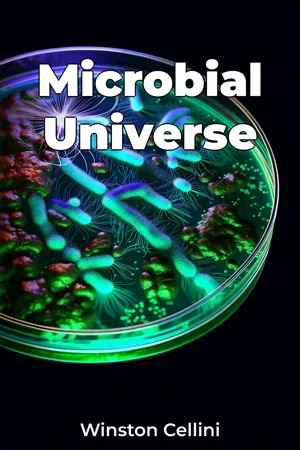
"Microbial Universe" delves into the foundational yet often unseen world of bacteria, revealing how these microscopic organisms shape every aspect of life on Earth, from human health to global ecosystems. The book opens by challenging readers to consider a striking fact: for every human cell in their body, there are ten bacterial cells influencing their daily existence. The text is structured around three core themes: bacterial diversity and adaptation, microbial influence on human systems, and the role of bacteria in planetary processes. These themes interconnect to demonstrate how bacterial life forms create a complex web of interactions that maintain life as we know it. The first section examines bacterial evolution and diversity, providing readers with essential background in cell structure, genetic adaptation, and bacterial classification. This foundation helps readers understand how bacteria developed their remarkable abilities over billions of years. Historical context is provided through the lens of microscopy development and the gradual discovery of bacterial importance, from Leeuwenhoek's first observations to modern genomic analysis. The book's central argument establishes that bacteria are not merely primitive organisms but sophisticated life forms that act as the primary engineers of Earth's biological systems. This perspective is supported through extensive research from molecular biology, environmental science, and medical studies. The text incorporates recent findings from metagenomic studies, electron microscopy, and biochemical analysis to build its case. Subsequent chapters explore specific bacterial impacts, including their role in nutrient cycling, soil fertility, and ocean productivity. The human microbiome receives particular attention, with detailed examination of how bacteria influence digestion, immunity, and even mental health. The book connects these topics to broader fields, including ecology, chemistry, and medical science. The writing maintains an academic foundation while remaining accessible to educated general readers. Technical concepts are carefully explained using clear language and relevant examples. Detailed illustrations and microscopic imagery support the text's explanations of bacterial structures and processes. This work is particularly relevant for students in biological sciences, healthcare professionals, and informed readers interested in understanding life's fundamental processes. The content bridges multiple disciplines, demonstrating how bacterial studies inform fields from agriculture to biotechnology. The book distinguishes itself through its comprehensive integration of classical microbiology with cutting-edge research in areas such as quorum sensing and bacterial communication. It addresses current scientific debates, including the role of bacteria in disease versus health and the impact of antimicrobial resistance. Practical applications are emphasized throughout, showing how understanding bacterial processes leads to advances in medicine, food production, and environmental protection. The text includes specific examples of bacterial applications in bioremediation, pharmaceutical development, and sustainable agriculture. The scope encompasses both broad principles and specific examples, though it focuses primarily on bacterial rather than viral or fungal microorganisms. Current research limitations and areas requiring further study are clearly acknowledged. The book addresses several ongoing scientific debates, including the definition of bacterial species, the extent of horizontal gene transfer, and the true nature of bacterial intelligence. These controversies are presented objectively, with evidence supporting various viewpoints. This comprehensive examination of bacterial life connects laboratory findings with real-world implications, providing readers with both theoretical understanding and practical knowledge of how bacteria influence their daily lives and the planet's future.
"Microbial Universe" delves into the foundational yet often unseen world of bacteria, revealing how these microscopic organisms shape every aspect of life on Earth, from human health to global ecosystems. The book opens by challenging readers to consider a striking fact: for every human cell in their body, there are ten bacterial cells influencing their daily existence. The text is structured around three core themes: bacterial diversity and adaptation, microbial influence on human systems, and the role of bacteria in planetary processes. These themes interconnect to demonstrate how bacterial life forms create a complex web of interactions that maintain life as we know it. The first section examines bacterial evolution and diversity, providing readers with essential background in cell structure, genetic adaptation, and bacterial classification. This foundation helps readers understand how bacteria developed their remarkable abilities over billions of years. Historical context is provided through the lens of microscopy development and the gradual discovery of bacterial importance, from Leeuwenhoek's first observations to modern genomic analysis. The book's central argument establishes that bacteria are not merely primitive organisms but sophisticated life forms that act as the primary engineers of Earth's biological systems. This perspective is supported through extensive research from molecular biology, environmental science, and medical studies. The text incorporates recent findings from metagenomic studies, electron microscopy, and biochemical analysis to build its case. Subsequent chapters explore specific bacterial impacts, including their role in nutrient cycling, soil fertility, and ocean productivity. The human microbiome receives particular attention, with detailed examination of how bacteria influence digestion, immunity, and even mental health. The book connects these topics to broader fields, including ecology, chemistry, and medical science. The writing maintains an academic foundation while remaining accessible to educated general readers. Technical concepts are carefully explained using clear language and relevant examples. Detailed illustrations and microscopic imagery support the text's explanations of bacterial structures and processes. This work is particularly relevant for students in biological sciences, healthcare professionals, and informed readers interested in understanding life's fundamental processes. The content bridges multiple disciplines, demonstrating how bacterial studies inform fields from agriculture to biotechnology. The book distinguishes itself through its comprehensive integration of classical microbiology with cutting-edge research in areas such as quorum sensing and bacterial communication. It addresses current scientific debates, including the role of bacteria in disease versus health and the impact of antimicrobial resistance. Practical applications are emphasized throughout, showing how understanding bacterial processes leads to advances in medicine, food production, and environmental protection. The text includes specific examples of bacterial applications in bioremediation, pharmaceutical development, and sustainable agriculture. The scope encompasses both broad principles and specific examples, though it focuses primarily on bacterial rather than viral or fungal microorganisms. Current research limitations and areas requiring further study are clearly acknowledged. The book addresses several ongoing scientific debates, including the definition of bacterial species, the extent of horizontal gene transfer, and the true nature of bacterial intelligence. These controversies are presented objectively, with evidence supporting various viewpoints. This comprehensive examination of bacterial life connects laboratory findings with real-world implications, providing readers with both theoretical understanding and practical knowledge of how bacteria influence their daily lives and the planet's future.
"Microbial Universe" offers a captivating exploration of bacteria's fundamental role in shaping life on Earth, revealing the intricate relationships between these microscopic organisms and every aspect of our existence. The book's opening revelation that bacterial cells outnumber human cells ten to one in our bodies sets the stage for a fascinating journey through the bacterial world, from molecular processes to global ecosystems. The narrative progresses through three interconnected themes: the remarkable diversity and adaptability of bacteria, their profound influence on human health and well-being, and their crucial role in maintaining Earth's biological systems. Drawing from cutting-edge research in molecular biology and environmental science, the book illuminates how bacteria function as sophisticated engineers of life rather than simple primitive organisms. Readers gain insights into groundbreaking discoveries about the human microbiome, including bacteria's surprising influence on mental health and immunity, while learning about their essential contributions to nutrient cycling and soil fertility. The book distinguishes itself by bridging classical microbiology with contemporary research, making complex concepts accessible through clear explanations and relevant examples. While maintaining academic rigor, it presents technical information in an engaging format supported by detailed illustrations and microscopic imagery. This comprehensive approach makes it particularly valuable for biology students, healthcare professionals, and curious readers seeking to understand how bacterial life forms create the foundation for all living systems on our planet.
Book Details
ISBN
9788233951054
Publisher
Publifye AS
Your Licenses
You don't own any licenses for this book
Purchase a license below to unlock this book and download the EPUB.
Purchase License
Select a tier to unlock this book
Need bulk licensing?
Contact us for enterprise agreements.