
About This Book
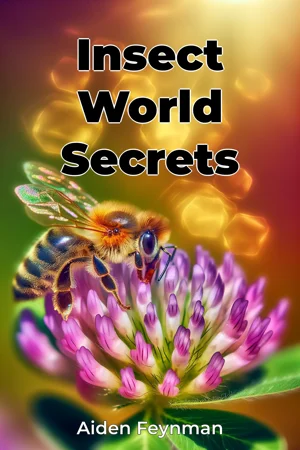
In "Insect World Secrets," entomologists and field researchers reveal how insects, comprising over half of all known living organisms, orchestrate crucial ecological processes that maintain life on Earth. This comprehensive examination of the insect world bridges the gap between scientific research and public understanding, demonstrating how these small creatures impact everything from food security to medical advances. The book presents three core themes: the hidden social structures of insect communities, their role in ecosystem maintenance, and their evolutionary adaptations that have enabled their survival for over 400 million years. Through detailed analysis, readers discover how ant colonies make collective decisions, how bees communicate through complex dance languages, and how termites engineer climate-controlled structures. Drawing from two decades of field research across six continents, the text incorporates recent findings from molecular biology, behavioral studies, and ecological surveys. The first section examines insect anatomy and behavior, revealing sophisticated sensory systems that detect changes in atmospheric pressure, carbon dioxide levels, and plant chemical signatures. The second part explores their ecological roles, from pollination to decomposition, while the final section addresses their relationship with human agriculture and medicine. The book's central argument positions insects as key indicators of ecosystem health and essential partners in human survival. This thesis is supported by extensive data from long-term studies, including research on declining pollinator populations and their effects on global food production. The authors present evidence from both traditional field observations and cutting-edge genomic analyses, offering readers a complete picture of modern entomological research. Interdisciplinary connections link entomology with climate science, showing how insects respond to and influence environmental changes. The text also explores biomimicry, where engineers and designers draw inspiration from insect structures and systems to solve human challenges. Agricultural scientists contribute insights into integrated pest management and sustainable farming practices. The writing maintains an academic foundation while employing clear, accessible language to explain complex concepts. Technical terms are carefully introduced and contextualized, making the content accessible to both university students and interested general readers. Each chapter includes detailed illustrations, microscopy images, and data visualizations to support the text. The target audience includes biology students, environmental professionals, and informed readers interested in natural sciences. The book serves as both a comprehensive introduction to insect biology and an up-to-date reference on their ecological significance. Current debates addressed include the impact of pesticides on beneficial insects, the role of exotic species in ecosystem disruption, and emerging theories about insect consciousness and intelligence. The authors present multiple viewpoints while grounding discussions in peer-reviewed research. The book's scope encompasses both broad ecological principles and specific examples from various insect orders, though it focuses primarily on species that significantly impact human activities and ecosystem functions. It provides practical applications for gardeners, farmers, and conservation workers, including guides for promoting beneficial insects and managing pest species through biological controls. What distinguishes this work is its integration of traditional entomology with contemporary environmental challenges, demonstrating how understanding insect behavior and ecology is crucial for addressing issues like food security and biodiversity conservation. The text challenges common misconceptions about insects while highlighting their indispensable role in maintaining planetary health.
In "Insect World Secrets," entomologists and field researchers reveal how insects, comprising over half of all known living organisms, orchestrate crucial ecological processes that maintain life on Earth. This comprehensive examination of the insect world bridges the gap between scientific research and public understanding, demonstrating how these small creatures impact everything from food security to medical advances. The book presents three core themes: the hidden social structures of insect communities, their role in ecosystem maintenance, and their evolutionary adaptations that have enabled their survival for over 400 million years. Through detailed analysis, readers discover how ant colonies make collective decisions, how bees communicate through complex dance languages, and how termites engineer climate-controlled structures. Drawing from two decades of field research across six continents, the text incorporates recent findings from molecular biology, behavioral studies, and ecological surveys. The first section examines insect anatomy and behavior, revealing sophisticated sensory systems that detect changes in atmospheric pressure, carbon dioxide levels, and plant chemical signatures. The second part explores their ecological roles, from pollination to decomposition, while the final section addresses their relationship with human agriculture and medicine. The book's central argument positions insects as key indicators of ecosystem health and essential partners in human survival. This thesis is supported by extensive data from long-term studies, including research on declining pollinator populations and their effects on global food production. The authors present evidence from both traditional field observations and cutting-edge genomic analyses, offering readers a complete picture of modern entomological research. Interdisciplinary connections link entomology with climate science, showing how insects respond to and influence environmental changes. The text also explores biomimicry, where engineers and designers draw inspiration from insect structures and systems to solve human challenges. Agricultural scientists contribute insights into integrated pest management and sustainable farming practices. The writing maintains an academic foundation while employing clear, accessible language to explain complex concepts. Technical terms are carefully introduced and contextualized, making the content accessible to both university students and interested general readers. Each chapter includes detailed illustrations, microscopy images, and data visualizations to support the text. The target audience includes biology students, environmental professionals, and informed readers interested in natural sciences. The book serves as both a comprehensive introduction to insect biology and an up-to-date reference on their ecological significance. Current debates addressed include the impact of pesticides on beneficial insects, the role of exotic species in ecosystem disruption, and emerging theories about insect consciousness and intelligence. The authors present multiple viewpoints while grounding discussions in peer-reviewed research. The book's scope encompasses both broad ecological principles and specific examples from various insect orders, though it focuses primarily on species that significantly impact human activities and ecosystem functions. It provides practical applications for gardeners, farmers, and conservation workers, including guides for promoting beneficial insects and managing pest species through biological controls. What distinguishes this work is its integration of traditional entomology with contemporary environmental challenges, demonstrating how understanding insect behavior and ecology is crucial for addressing issues like food security and biodiversity conservation. The text challenges common misconceptions about insects while highlighting their indispensable role in maintaining planetary health.
"Insect World Secrets" offers a fascinating exploration of how these tiny creatures, representing over half of Earth's known living organisms, fundamentally shape our world's ecological processes. The book masterfully weaves together decades of research across six continents, revealing the sophisticated lives of insects through three main themes: their complex social structures, ecological significance, and remarkable evolutionary adaptations that have ensured their survival for over 400 million years. Through a blend of traditional field observations and cutting-edge genomic analyses, readers discover extraordinary insights into insect behavior and biology. The text illuminates how ant colonies make collective decisions, bees communicate through intricate dance languages, and termites construct climate-controlled structures. These examples showcase the remarkable intelligence and adaptability of insects while highlighting their crucial role in ecosystem maintenance, from pollination to decomposition. The book distinguishes itself by bridging scientific research with practical applications, making complex entomological concepts accessible to both academic and general audiences. Each chapter builds upon the previous, moving from basic insect anatomy and behavior to broader ecological implications and human applications. The integration of current environmental challenges with traditional entomology demonstrates why understanding insects is crucial for addressing modern issues like food security and biodiversity conservation, all while maintaining a clear, engaging narrative supported by detailed illustrations and data visualizations.
Book Details
ISBN
9788233951023
Publisher
Publifye AS
Your Licenses
You don't own any licenses for this book
Purchase a license below to unlock this book and download the EPUB.
Purchase License
Select a tier to unlock this book
Need bulk licensing?
Contact us for enterprise agreements.