
About This Book
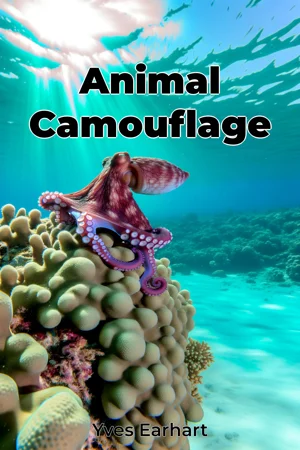
"Animal Camouflage" explores the intricate mechanisms and evolutionary processes that have shaped concealment strategies across the animal kingdom, from the molecular level to complex behavioral adaptations. The book examines three primary aspects of camouflage: physical adaptations, behavioral modifications, and the evolutionary arms race between predators and prey. Through detailed analysis of field research and laboratory studies, readers discover how animals manipulate light, color, pattern, and form to enhance their survival prospects. The work begins with fundamental principles of visual perception and how different species process visual information, providing essential context for understanding camouflage mechanisms. This foundation helps readers grasp the complexity of adaptations discussed in subsequent chapters, from basic background matching to sophisticated dynamic camouflage systems like those found in cephalopods. Central to the book's thesis is the concept that camouflage represents a crucial intersection of natural selection, sensory biology, and behavioral ecology. The text demonstrates how these elements work together to create effective concealment strategies across diverse environments and species. The content is structured in three main sections. The first explores physical mechanisms of camouflage, including pigmentation, structural coloration, and countershading. The second section examines behavioral components, such as habitat selection and position optimization. The final section investigates the co-evolution of camouflage techniques and detection strategies. Research evidence is drawn from recent studies utilizing advanced imaging technologies, genetic analysis, and behavioral experiments. The book includes case studies from marine, terrestrial, and aerial environments, providing comprehensive coverage of camouflage strategies across ecosystems. The work connects multiple scientific disciplines, including evolutionary biology, physics of light and color, cognitive science, and behavioral ecology. These intersections help explain how camouflage systems develop and function at multiple levels of organization. This book stands out through its integration of traditional field observations with cutting-edge research in biomimetics and materials science, showing how natural camouflage systems inspire technological innovations in military and civilian applications. Written in a clear, systematic style, the text balances technical accuracy with accessibility, using detailed illustrations and photographs to clarify complex concepts. While maintaining scientific rigor, the writing remains engaging and comprehensible to readers with a basic science background. The primary audience includes biology students, researchers, and informed general readers interested in natural history and adaptation. The book serves as both a comprehensive reference and an engaging exploration of evolutionary innovation. Following conventions of scientific literature, each chapter includes detailed references, methodology discussions, and critical analysis of current research. The scope encompasses both well-studied classic examples and emerging research areas, while acknowledging areas where scientific understanding remains incomplete. Practical applications extend to conservation biology, sustainable design, and biomimetic engineering. The book discusses how understanding camouflage mechanisms helps in species protection and habitat management. The work addresses ongoing debates in the field, including the relative importance of natural selection versus other evolutionary forces in camouflage development, and the role of behavioral flexibility in concealment strategies. Limitations are clearly stated, focusing primarily on visual camouflage while acknowledging other sensory modalities as areas for future research. The text maintains objectivity when discussing competing hypotheses and unresolved questions in the field.
"Animal Camouflage" explores the intricate mechanisms and evolutionary processes that have shaped concealment strategies across the animal kingdom, from the molecular level to complex behavioral adaptations. The book examines three primary aspects of camouflage: physical adaptations, behavioral modifications, and the evolutionary arms race between predators and prey. Through detailed analysis of field research and laboratory studies, readers discover how animals manipulate light, color, pattern, and form to enhance their survival prospects. The work begins with fundamental principles of visual perception and how different species process visual information, providing essential context for understanding camouflage mechanisms. This foundation helps readers grasp the complexity of adaptations discussed in subsequent chapters, from basic background matching to sophisticated dynamic camouflage systems like those found in cephalopods. Central to the book's thesis is the concept that camouflage represents a crucial intersection of natural selection, sensory biology, and behavioral ecology. The text demonstrates how these elements work together to create effective concealment strategies across diverse environments and species. The content is structured in three main sections. The first explores physical mechanisms of camouflage, including pigmentation, structural coloration, and countershading. The second section examines behavioral components, such as habitat selection and position optimization. The final section investigates the co-evolution of camouflage techniques and detection strategies. Research evidence is drawn from recent studies utilizing advanced imaging technologies, genetic analysis, and behavioral experiments. The book includes case studies from marine, terrestrial, and aerial environments, providing comprehensive coverage of camouflage strategies across ecosystems. The work connects multiple scientific disciplines, including evolutionary biology, physics of light and color, cognitive science, and behavioral ecology. These intersections help explain how camouflage systems develop and function at multiple levels of organization. This book stands out through its integration of traditional field observations with cutting-edge research in biomimetics and materials science, showing how natural camouflage systems inspire technological innovations in military and civilian applications. Written in a clear, systematic style, the text balances technical accuracy with accessibility, using detailed illustrations and photographs to clarify complex concepts. While maintaining scientific rigor, the writing remains engaging and comprehensible to readers with a basic science background. The primary audience includes biology students, researchers, and informed general readers interested in natural history and adaptation. The book serves as both a comprehensive reference and an engaging exploration of evolutionary innovation. Following conventions of scientific literature, each chapter includes detailed references, methodology discussions, and critical analysis of current research. The scope encompasses both well-studied classic examples and emerging research areas, while acknowledging areas where scientific understanding remains incomplete. Practical applications extend to conservation biology, sustainable design, and biomimetic engineering. The book discusses how understanding camouflage mechanisms helps in species protection and habitat management. The work addresses ongoing debates in the field, including the relative importance of natural selection versus other evolutionary forces in camouflage development, and the role of behavioral flexibility in concealment strategies. Limitations are clearly stated, focusing primarily on visual camouflage while acknowledging other sensory modalities as areas for future research. The text maintains objectivity when discussing competing hypotheses and unresolved questions in the field.
"Animal Camouflage" presents a fascinating exploration of how creatures across the animal kingdom have evolved sophisticated concealment strategies for survival. This comprehensive work bridges multiple scientific disciplines, examining camouflage from molecular mechanisms to complex behavioral adaptations, while focusing on the intricate relationship between natural selection, sensory biology, and behavioral ecology. The book masterfully progresses through three main sections, beginning with the fundamental physics of visual perception and how different species process visual information. It then delves into physical camouflage mechanisms, such as pigmentation and countershading, before exploring behavioral aspects like habitat selection. The final section investigates the evolutionary arms race between predators and prey, incorporating cutting-edge research from advanced imaging technologies and genetic analysis. What sets this work apart is its integration of traditional field observations with modern scientific discoveries, particularly in biomimetics and materials science. Using clear language and detailed illustrations, the book makes complex concepts accessible while maintaining scientific rigor. Through diverse case studies spanning marine, terrestrial, and aerial environments, readers gain a comprehensive understanding of how camouflage strategies have evolved across different ecosystems, making it an invaluable resource for biology students, researchers, and nature enthusiasts alike.
Book Details
ISBN
9788233950996
Publisher
Publifye AS
Your Licenses
You don't own any licenses for this book
Purchase a license below to unlock this book and download the EPUB.
Purchase License
Select a tier to unlock this book
Need bulk licensing?
Contact us for enterprise agreements.