
About This Book
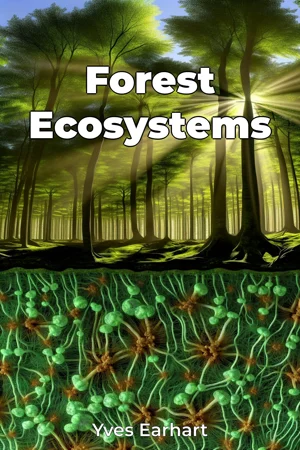
"Forest Ecosystems" delves into the intricate web of relationships that sustain one of Earth's most vital environmental systems. From the microscopic interactions between soil fungi and tree roots to the broad-scale impacts of climate patterns on forest communities, this comprehensive examination reveals how forests function as integrated biological networks. The book presents three core themes: the hierarchical organization of forest systems, from molecular to landscape levels; the dynamic flow of energy and nutrients through forest communities; and the complex feedback mechanisms that maintain forest stability. These interconnected topics provide readers with a framework for understanding how forests respond to environmental changes and human interventions. Drawing from decades of ecological research, the text builds upon fundamental principles of biology and environmental science. Readers with a basic understanding of biological concepts will find the material accessible, while more advanced concepts are carefully developed through progressive chapters. The central thesis argues that forest ecosystems represent more than collections of trees—they are sophisticated networks where every component, from soil microorganisms to apex predators, plays a crucial role in maintaining ecological balance. This understanding is essential for developing effective forest management and conservation strategies. The book's structure moves from foundational concepts to practical applications. Early chapters examine forest composition and structure, followed by detailed explorations of nutrient cycling, species interactions, and succession patterns. Later sections address human impacts, restoration ecology, and future challenges facing forest ecosystems. Research evidence comes from long-term ecological studies, remote sensing data, and molecular analyses. The text incorporates case studies from diverse forest types worldwide, including boreal, temperate, and tropical systems, providing a global perspective on forest ecology. The work connects with multiple disciplines, including climate science, showing how forests influence weather patterns and carbon cycling; soil science, examining the crucial role of below-ground processes; and conservation biology, addressing biodiversity preservation strategies. The book employs a unique systems-based approach, using network analysis and ecological modeling to demonstrate how different components of forest ecosystems interact. This methodology helps readers visualize complex ecological relationships and predict ecosystem responses to environmental changes. Written in an academic yet accessible style, the text balances technical precision with clear explanations, making it suitable for both researchers and informed general readers. Each chapter includes detailed diagrams, data visualizations, and field photographs to illustrate key concepts. The primary audience includes ecology students, forest managers, environmental scientists, and conservation professionals. The book serves as both a comprehensive reference and a practical guide for those working in forest-related fields. Following scientific writing conventions, the text maintains rigorous documentation of sources while presenting information in a logical, systematic manner. While focused primarily on ecological processes, it acknowledges the social and economic factors affecting forest management decisions. The scope encompasses both theoretical principles and practical applications, though it necessarily limits detailed coverage of specific regional forest types to representative examples. Readers can apply the presented concepts to forest assessment, management planning, and conservation efforts. The book addresses current debates in forest ecology, including the role of natural disturbances in forest health, the impact of climate change on forest communities, and the effectiveness of different conservation strategies. This work provides essential knowledge for understanding and managing forest ecosystems in an era of rapid environmental change, offering both theoretical insights and practical solutions for forest conservation and management.
"Forest Ecosystems" delves into the intricate web of relationships that sustain one of Earth's most vital environmental systems. From the microscopic interactions between soil fungi and tree roots to the broad-scale impacts of climate patterns on forest communities, this comprehensive examination reveals how forests function as integrated biological networks. The book presents three core themes: the hierarchical organization of forest systems, from molecular to landscape levels; the dynamic flow of energy and nutrients through forest communities; and the complex feedback mechanisms that maintain forest stability. These interconnected topics provide readers with a framework for understanding how forests respond to environmental changes and human interventions. Drawing from decades of ecological research, the text builds upon fundamental principles of biology and environmental science. Readers with a basic understanding of biological concepts will find the material accessible, while more advanced concepts are carefully developed through progressive chapters. The central thesis argues that forest ecosystems represent more than collections of trees—they are sophisticated networks where every component, from soil microorganisms to apex predators, plays a crucial role in maintaining ecological balance. This understanding is essential for developing effective forest management and conservation strategies. The book's structure moves from foundational concepts to practical applications. Early chapters examine forest composition and structure, followed by detailed explorations of nutrient cycling, species interactions, and succession patterns. Later sections address human impacts, restoration ecology, and future challenges facing forest ecosystems. Research evidence comes from long-term ecological studies, remote sensing data, and molecular analyses. The text incorporates case studies from diverse forest types worldwide, including boreal, temperate, and tropical systems, providing a global perspective on forest ecology. The work connects with multiple disciplines, including climate science, showing how forests influence weather patterns and carbon cycling; soil science, examining the crucial role of below-ground processes; and conservation biology, addressing biodiversity preservation strategies. The book employs a unique systems-based approach, using network analysis and ecological modeling to demonstrate how different components of forest ecosystems interact. This methodology helps readers visualize complex ecological relationships and predict ecosystem responses to environmental changes. Written in an academic yet accessible style, the text balances technical precision with clear explanations, making it suitable for both researchers and informed general readers. Each chapter includes detailed diagrams, data visualizations, and field photographs to illustrate key concepts. The primary audience includes ecology students, forest managers, environmental scientists, and conservation professionals. The book serves as both a comprehensive reference and a practical guide for those working in forest-related fields. Following scientific writing conventions, the text maintains rigorous documentation of sources while presenting information in a logical, systematic manner. While focused primarily on ecological processes, it acknowledges the social and economic factors affecting forest management decisions. The scope encompasses both theoretical principles and practical applications, though it necessarily limits detailed coverage of specific regional forest types to representative examples. Readers can apply the presented concepts to forest assessment, management planning, and conservation efforts. The book addresses current debates in forest ecology, including the role of natural disturbances in forest health, the impact of climate change on forest communities, and the effectiveness of different conservation strategies. This work provides essential knowledge for understanding and managing forest ecosystems in an era of rapid environmental change, offering both theoretical insights and practical solutions for forest conservation and management.
"Forest Ecosystems" presents a comprehensive exploration of forests as sophisticated biological networks, revealing the intricate connections that exist from microscopic soil interactions to landscape-level ecological processes. This authoritative work examines three fundamental themes: hierarchical forest organization, energy and nutrient flow dynamics, and the feedback mechanisms that maintain forest stability, providing readers with a deep understanding of these vital environmental systems. The book progressively builds knowledge through carefully structured chapters, beginning with foundational concepts of forest composition and structure before diving into more complex topics like nutrient cycling and species interactions. It employs an innovative systems-based approach, using network analysis and ecological modeling to demonstrate the interconnectedness of forest components. Real-world examples from boreal, temperate, and tropical forests worldwide illustrate key concepts, while detailed diagrams and field photographs make complex ecological relationships accessible. What sets this work apart is its holistic examination of forests as integrated networks rather than mere collections of trees. Drawing from decades of ecological research, including long-term studies and remote sensing data, it bridges the gap between theoretical understanding and practical application. The book addresses crucial contemporary challenges, such as climate change impacts and biodiversity conservation, while providing valuable insights for forest management and conservation strategies. This makes it an essential resource for ecology students, environmental scientists, and conservation professionals seeking to understand and protect these vital ecosystems.
Book Details
ISBN
9788233950972
Publisher
Publifye AS
Your Licenses
You don't own any licenses for this book
Purchase a license below to unlock this book and download the EPUB.
Purchase License
Select a tier to unlock this book
Need bulk licensing?
Contact us for enterprise agreements.