
About This Book
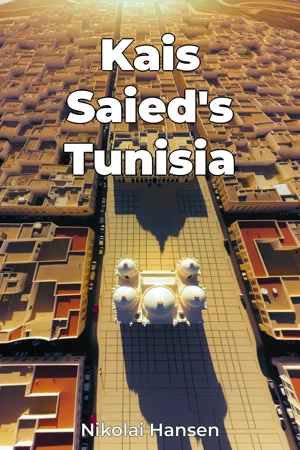
"Kais Saied's Tunisia" examines how a constitutional law professor's rise to Tunisia's presidency in 2019 led to significant reforms that reshaped the nation's democratic landscape. This detailed analysis traces Saied's transformation from an academic outsider to a political figure who fundamentally altered Tunisia's governance structure. The book presents three core themes: the constitutional overhaul of 2021-2022, Saied's vision of direct democracy, and the impact of his policies on Tunisia's post-Arab Spring institutions. Through extensive research and first-hand accounts, it analyzes how Saied's presidency marked a departure from traditional Tunisian politics and challenged established democratic norms. The narrative begins with Tunisia's 2011 revolution and subsequent democratic transition, providing context for Saied's emergence. It explores how his outsider status and anti-corruption platform resonated with voters disillusioned by traditional political parties. The book then delves into his implementation of emergency measures in July 2021, followed by the controversial constitutional referendum of 2022. Central to the book's argument is how Saied's presidency represents a new model of governance that combines elements of direct democracy with strong executive authority. The author presents detailed analysis of constitutional documents, parliamentary records, and interviews with political actors to examine this transformation. The content is structured in three main sections: First, it examines Saied's political philosophy and its roots in his academic career. Second, it analyzes the implementation of his vision through specific policies and reforms. Third, it evaluates the implications of these changes for Tunisia's democratic future and regional stability. The research draws from multiple sources, including government documents, academic studies, interviews with political figures, and public opinion surveys. The author incorporates economic data to demonstrate the practical impacts of Saied's policies on Tunisia's development and social stability. The book connects political science, constitutional law, and economic development, showing how Saied's reforms affect multiple aspects of Tunisian society. It places these changes within the broader context of democratic transitions and constitutional reform in developing nations. Written in an analytical style that combines academic rigor with accessible prose, the book maintains objectivity while examining controversial aspects of Saied's leadership. It addresses ongoing debates about the balance between executive power and democratic institutions, the role of popular sovereignty, and the future of democracy in the Arab world. The target audience includes political scientists, policy makers, and readers interested in Middle Eastern politics and democratic transitions. The book provides practical insights for understanding contemporary political transformation and constitutional reform processes. The work acknowledges its temporal limitations, focusing primarily on the period from 2019 to 2023, while recognizing that the full impact of Saied's reforms may take years to manifest. It addresses key controversies, including debates over the legitimacy of constitutional changes and their compatibility with democratic principles. The book concludes by examining the implications of Tunisia's experience for other nations undergoing democratic transitions, offering insights into the challenges of institutional reform and political transformation in post-revolutionary contexts.
"Kais Saied's Tunisia" examines how a constitutional law professor's rise to Tunisia's presidency in 2019 led to significant reforms that reshaped the nation's democratic landscape. This detailed analysis traces Saied's transformation from an academic outsider to a political figure who fundamentally altered Tunisia's governance structure. The book presents three core themes: the constitutional overhaul of 2021-2022, Saied's vision of direct democracy, and the impact of his policies on Tunisia's post-Arab Spring institutions. Through extensive research and first-hand accounts, it analyzes how Saied's presidency marked a departure from traditional Tunisian politics and challenged established democratic norms. The narrative begins with Tunisia's 2011 revolution and subsequent democratic transition, providing context for Saied's emergence. It explores how his outsider status and anti-corruption platform resonated with voters disillusioned by traditional political parties. The book then delves into his implementation of emergency measures in July 2021, followed by the controversial constitutional referendum of 2022. Central to the book's argument is how Saied's presidency represents a new model of governance that combines elements of direct democracy with strong executive authority. The author presents detailed analysis of constitutional documents, parliamentary records, and interviews with political actors to examine this transformation. The content is structured in three main sections: First, it examines Saied's political philosophy and its roots in his academic career. Second, it analyzes the implementation of his vision through specific policies and reforms. Third, it evaluates the implications of these changes for Tunisia's democratic future and regional stability. The research draws from multiple sources, including government documents, academic studies, interviews with political figures, and public opinion surveys. The author incorporates economic data to demonstrate the practical impacts of Saied's policies on Tunisia's development and social stability. The book connects political science, constitutional law, and economic development, showing how Saied's reforms affect multiple aspects of Tunisian society. It places these changes within the broader context of democratic transitions and constitutional reform in developing nations. Written in an analytical style that combines academic rigor with accessible prose, the book maintains objectivity while examining controversial aspects of Saied's leadership. It addresses ongoing debates about the balance between executive power and democratic institutions, the role of popular sovereignty, and the future of democracy in the Arab world. The target audience includes political scientists, policy makers, and readers interested in Middle Eastern politics and democratic transitions. The book provides practical insights for understanding contemporary political transformation and constitutional reform processes. The work acknowledges its temporal limitations, focusing primarily on the period from 2019 to 2023, while recognizing that the full impact of Saied's reforms may take years to manifest. It addresses key controversies, including debates over the legitimacy of constitutional changes and their compatibility with democratic principles. The book concludes by examining the implications of Tunisia's experience for other nations undergoing democratic transitions, offering insights into the challenges of institutional reform and political transformation in post-revolutionary contexts.
"Kais Saied's Tunisia" offers a compelling examination of how a constitutional law professor's unexpected rise to power in 2019 dramatically reshaped Tunisia's political landscape. The book traces Tunisia's journey from its 2011 Arab Spring revolution through Saied's controversial presidency, analyzing how his unique vision of governance combines direct democracy with strong executive authority. Through meticulous research including government documents, interviews, and public opinion surveys, the author explores three pivotal themes: the sweeping constitutional reforms of 2021-2022, Saied's implementation of direct democracy principles, and the transformation of post-Arab Spring institutions. The narrative skillfully weaves together Saied's transition from academic outsider to influential president, highlighting how his anti-corruption platform resonated with voters disillusioned by traditional politics. The book progresses systematically through three main sections, beginning with Saied's political philosophy and academic background, moving to his specific policy implementations, and concluding with an evaluation of these changes' implications for Tunisia's democratic future. What sets this work apart is its comprehensive analysis of how Saied's reforms affect multiple aspects of Tunisian society, from constitutional law to economic development, providing valuable insights for political scientists, policymakers, and anyone interested in Middle Eastern democratic transitions.
Book Details
ISBN
9788233950569
Publisher
Publifye AS
Your Licenses
You don't own any licenses for this book
Purchase a license below to unlock this book and download the EPUB.
Purchase License
Select a tier to unlock this book
Need bulk licensing?
Contact us for enterprise agreements.