
About This Book
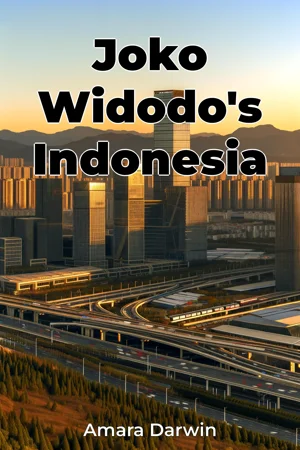
"Joko Widodo's Indonesia" examines how a furniture maker from Solo rose to become Indonesia's president and transformed Southeast Asia's largest economy through pragmatic leadership and ambitious development programs. The book provides an analytical perspective on Widodo's governance approach, focusing on two pivotal areas: his signature infrastructure development program and economic reform policies implemented between 2014-2024. Through detailed research and first-hand accounts, it reveals how Widodo's background in business and local politics shaped his practical, results-oriented leadership style. The narrative begins with Indonesia's economic landscape in 2014, when Widodo inherited a nation facing significant infrastructure gaps, bureaucratic inefficiencies, and economic inequality. The book traces his administration's systematic efforts to address these challenges through three major initiatives: the development of transportation infrastructure across the archipelago, the acceleration of digital connectivity, and the implementation of investment-friendly policies. Central to the book's argument is that Widodo's leadership represents a departure from Indonesia's traditional political approach, introducing a more technocratic and business-oriented governance model. This shift is documented through case studies of specific projects, including the Trans-Java Highway, Jakarta MRT, and the relocation of the capital to East Kalimantan. The content is structured chronologically, beginning with Widodo's early reforms and continuing through successive phases of implementation. Each chapter examines specific policy areas, supported by economic data, government documents, and interviews with key stakeholders. The research draws from World Bank reports, Indonesian government statistics, and extensive interviews with cabinet members, business leaders, and economic analysts. The book connects political science, economics, and development studies, demonstrating how leadership style influences policy outcomes. It examines the intersection of democratic governance with economic development in the context of a diverse archipelagic nation. Written in an analytical style that balances academic rigor with accessibility, the book targets policy makers, business leaders, academics, and readers interested in Southeast Asian politics and economics. It maintains objectivity while addressing controversies, including debates over Chinese investment in Indonesia, environmental concerns related to development projects, and the challenges of wealth distribution. The scope covers Widodo's two presidential terms, with particular emphasis on major policy initiatives and their outcomes. While focused primarily on economic and infrastructure development, the book acknowledges but does not deeply explore social and environmental policies. The work provides practical insights for other developing nations pursuing infrastructure-led growth strategies. It addresses ongoing debates about the balance between rapid development and environmental sustainability, as well as the role of state intervention in economic development. Critical analysis is supported by comparative studies with other Asian economies, detailed project assessments, and statistical analysis of economic indicators. The book presents both achievements and shortcomings of Widodo's approach, including challenges in implementation and uneven development outcomes across regions. Current events readers will find relevant discussions of Indonesia's emerging role in global supply chains, its position in Asian geopolitics, and its potential as an emerging market economy. The book concludes by examining the long-term implications of Widodo's policies for Indonesia's economic trajectory and political development.
"Joko Widodo's Indonesia" examines how a furniture maker from Solo rose to become Indonesia's president and transformed Southeast Asia's largest economy through pragmatic leadership and ambitious development programs. The book provides an analytical perspective on Widodo's governance approach, focusing on two pivotal areas: his signature infrastructure development program and economic reform policies implemented between 2014-2024. Through detailed research and first-hand accounts, it reveals how Widodo's background in business and local politics shaped his practical, results-oriented leadership style. The narrative begins with Indonesia's economic landscape in 2014, when Widodo inherited a nation facing significant infrastructure gaps, bureaucratic inefficiencies, and economic inequality. The book traces his administration's systematic efforts to address these challenges through three major initiatives: the development of transportation infrastructure across the archipelago, the acceleration of digital connectivity, and the implementation of investment-friendly policies. Central to the book's argument is that Widodo's leadership represents a departure from Indonesia's traditional political approach, introducing a more technocratic and business-oriented governance model. This shift is documented through case studies of specific projects, including the Trans-Java Highway, Jakarta MRT, and the relocation of the capital to East Kalimantan. The content is structured chronologically, beginning with Widodo's early reforms and continuing through successive phases of implementation. Each chapter examines specific policy areas, supported by economic data, government documents, and interviews with key stakeholders. The research draws from World Bank reports, Indonesian government statistics, and extensive interviews with cabinet members, business leaders, and economic analysts. The book connects political science, economics, and development studies, demonstrating how leadership style influences policy outcomes. It examines the intersection of democratic governance with economic development in the context of a diverse archipelagic nation. Written in an analytical style that balances academic rigor with accessibility, the book targets policy makers, business leaders, academics, and readers interested in Southeast Asian politics and economics. It maintains objectivity while addressing controversies, including debates over Chinese investment in Indonesia, environmental concerns related to development projects, and the challenges of wealth distribution. The scope covers Widodo's two presidential terms, with particular emphasis on major policy initiatives and their outcomes. While focused primarily on economic and infrastructure development, the book acknowledges but does not deeply explore social and environmental policies. The work provides practical insights for other developing nations pursuing infrastructure-led growth strategies. It addresses ongoing debates about the balance between rapid development and environmental sustainability, as well as the role of state intervention in economic development. Critical analysis is supported by comparative studies with other Asian economies, detailed project assessments, and statistical analysis of economic indicators. The book presents both achievements and shortcomings of Widodo's approach, including challenges in implementation and uneven development outcomes across regions. Current events readers will find relevant discussions of Indonesia's emerging role in global supply chains, its position in Asian geopolitics, and its potential as an emerging market economy. The book concludes by examining the long-term implications of Widodo's policies for Indonesia's economic trajectory and political development.
"Joko Widodo's Indonesia" offers a compelling analysis of how a furniture maker's pragmatic leadership style revolutionized Southeast Asia's largest economy. The book meticulously traces Widodo's transformative journey from 2014 to 2024, focusing on his signature infrastructure development initiatives and economic reforms that reshaped Indonesia's political and economic landscape. Through a combination of detailed research, first-hand accounts, and economic data, the narrative illuminates how Widodo's business background influenced his results-oriented approach to governance. The book's unique strength lies in its comprehensive examination of three major initiatives: nationwide transportation infrastructure development, digital connectivity expansion, and investment-friendly policy implementation. By analyzing specific projects like the Trans-Java Highway and Jakarta MRT, readers gain practical insights into how Widodo's technocratic, business-oriented governance model departed from Indonesia's traditional political approach. The author skillfully weaves together World Bank reports, government statistics, and interviews with key stakeholders to present a balanced view of both achievements and challenges. Through chronologically structured chapters, the book explores the intersection of democratic governance and economic development in a diverse archipelagic nation. While maintaining academic rigor, it remains accessible to a broad audience interested in Southeast Asian politics and emerging markets. The analysis extends beyond pure economics to address crucial debates about environmental sustainability, wealth distribution, and Indonesia's evolving role in global supply chains, making it particularly relevant for policymakers, business leaders, and students of international development.
Book Details
ISBN
9788233950439
Publisher
Publifye AS
Your Licenses
You don't own any licenses for this book
Purchase a license below to unlock this book and download the EPUB.
Purchase License
Select a tier to unlock this book
Need bulk licensing?
Contact us for enterprise agreements.