
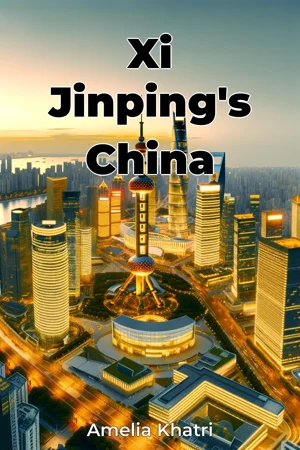
About This Book
"Xi Jinping's China" examines how one leader's vision and policies have fundamentally reshaped the world's most populous nation and its role in global affairs. Through detailed analysis of Xi's consolidation of power since 2012, this book reveals the intricate relationship between China's domestic transformation and its expanding international influence. The work centers on three pivotal themes: Xi's unique brand of authoritarian leadership, which combines Communist Party ideology with nationalist aspirations; China's economic transition from export-driven growth to a "dual circulation" model; and Beijing's increasingly assertive foreign policy under Xi's guidance. These interconnected elements form the foundation of what Chinese officials call the "New Era." Drawing from government documents, economic data, and insider accounts, the book provides context for Xi's rise within China's political system and his break from the collective leadership model of his predecessors. It traces his journey from provincial governor to China's "core leader," explaining how he successfully centralized power through anti-corruption campaigns and institutional reforms. The central argument posits that Xi's leadership represents a distinctive model of authoritarian state capitalism that challenges Western assumptions about the inevitability of liberal democratic development. The book demonstrates how Xi's policies seek to strengthen Communist Party control while pursuing technological self-sufficiency and economic upgrading. Structured in three parts, the narrative first examines Xi's domestic governance, including his emphasis on party discipline and ideological control. The second section analyzes China's economic transformation, detailing policies from Made in China 2025 to the Belt and Road Initiative. The final portion explores China's international relations under Xi, from trade tensions with the United States to territorial assertions in the South China Sea. The research draws upon official Chinese government sources, economic indicators, policy documents, and interviews with policy experts. It incorporates insights from Chinese state media, academic publications, and international observers to provide multiple perspectives on Xi's impact. The book connects political science, economics, and international relations, showing how Xi's policies affect global trade patterns, technological competition, and geopolitical alignments. It examines the implications for international institutions, regional security, and economic development models. Written in an analytical style that balances academic rigor with accessibility, the work maintains objectivity while examining controversial aspects of Xi's rule, including human rights concerns and tensions with neighboring countries. It addresses both critics who warn of China's authoritarian influence and advocates who praise its development achievements. This book serves policymakers, business leaders, and informed citizens seeking to understand China's trajectory under Xi's leadership. It provides essential insights for those navigating China's role in global affairs, from investment decisions to diplomatic relations. The work acknowledges ongoing debates about China's future stability, its technological ambitions, and the sustainability of its economic model. It addresses how Xi's policies affect different sectors of Chinese society and international stakeholders, from state-owned enterprises to private businesses, from urban professionals to rural communities. Rather than offering simple predictions, the book provides frameworks for understanding China's complex transformation under Xi's leadership and its implications for global order in the 21st century. It equips readers with analytical tools to interpret China's actions and anticipate future developments in this crucial period of global change.
"Xi Jinping's China" examines how one leader's vision and policies have fundamentally reshaped the world's most populous nation and its role in global affairs. Through detailed analysis of Xi's consolidation of power since 2012, this book reveals the intricate relationship between China's domestic transformation and its expanding international influence. The work centers on three pivotal themes: Xi's unique brand of authoritarian leadership, which combines Communist Party ideology with nationalist aspirations; China's economic transition from export-driven growth to a "dual circulation" model; and Beijing's increasingly assertive foreign policy under Xi's guidance. These interconnected elements form the foundation of what Chinese officials call the "New Era." Drawing from government documents, economic data, and insider accounts, the book provides context for Xi's rise within China's political system and his break from the collective leadership model of his predecessors. It traces his journey from provincial governor to China's "core leader," explaining how he successfully centralized power through anti-corruption campaigns and institutional reforms. The central argument posits that Xi's leadership represents a distinctive model of authoritarian state capitalism that challenges Western assumptions about the inevitability of liberal democratic development. The book demonstrates how Xi's policies seek to strengthen Communist Party control while pursuing technological self-sufficiency and economic upgrading. Structured in three parts, the narrative first examines Xi's domestic governance, including his emphasis on party discipline and ideological control. The second section analyzes China's economic transformation, detailing policies from Made in China 2025 to the Belt and Road Initiative. The final portion explores China's international relations under Xi, from trade tensions with the United States to territorial assertions in the South China Sea. The research draws upon official Chinese government sources, economic indicators, policy documents, and interviews with policy experts. It incorporates insights from Chinese state media, academic publications, and international observers to provide multiple perspectives on Xi's impact. The book connects political science, economics, and international relations, showing how Xi's policies affect global trade patterns, technological competition, and geopolitical alignments. It examines the implications for international institutions, regional security, and economic development models. Written in an analytical style that balances academic rigor with accessibility, the work maintains objectivity while examining controversial aspects of Xi's rule, including human rights concerns and tensions with neighboring countries. It addresses both critics who warn of China's authoritarian influence and advocates who praise its development achievements. This book serves policymakers, business leaders, and informed citizens seeking to understand China's trajectory under Xi's leadership. It provides essential insights for those navigating China's role in global affairs, from investment decisions to diplomatic relations. The work acknowledges ongoing debates about China's future stability, its technological ambitions, and the sustainability of its economic model. It addresses how Xi's policies affect different sectors of Chinese society and international stakeholders, from state-owned enterprises to private businesses, from urban professionals to rural communities. Rather than offering simple predictions, the book provides frameworks for understanding China's complex transformation under Xi's leadership and its implications for global order in the 21st century. It equips readers with analytical tools to interpret China's actions and anticipate future developments in this crucial period of global change.
"Xi Jinping's China" offers a comprehensive analysis of how China's most powerful leader since Mao Zedong has fundamentally reshaped both the nation's domestic landscape and its global role. The book expertly weaves together three crucial themes: Xi's distinctive authoritarian leadership style, China's economic transformation, and Beijing's increasingly assertive international presence, collectively defining what Chinese officials term the "New Era." Through meticulous research drawing from government documents, economic data, and insider accounts, the book traces Xi's remarkable journey from provincial governor to "core leader." It reveals how he has consolidated power through anti-corruption campaigns and institutional reforms while pursuing a unique model of authoritarian state capitalism. The work particularly emphasizes Xi's break from his predecessors' collective leadership approach, highlighting his combination of Communist Party ideology with nationalist aspirations. The book's three-part structure progressively examines Xi's domestic governance, China's economic evolution (including signature initiatives like Made in China 2025 and the Belt and Road Initiative), and its changing international relations. Rather than making simple predictions, it provides readers with analytical frameworks to understand China's complex transformation and its implications for the global order. This balanced approach, incorporating multiple perspectives from state media to international observers, makes it an invaluable resource for anyone seeking to comprehend China's trajectory in the 21st century.
Book Details
ISBN
9788233950316
Publisher
Publifye AS
Your Licenses
You don't own any licenses for this book
Purchase a license below to unlock this book and download the EPUB.
Purchase License
Select a tier to unlock this book
Need bulk licensing?
Contact us for enterprise agreements.