
About This Book
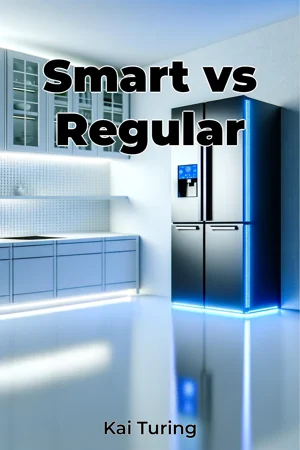
"Smart vs Regular" examines the technological evolution of household refrigeration, exploring how Internet of Things (IoT) integration has transformed a basic appliance into a central hub of kitchen automation. This comprehensive analysis delves into the technological framework, practical implications, and societal impact of smart refrigeration systems compared to their traditional counterparts. The book presents three core areas of focus: the technical architecture of smart refrigerators, including sensors and connectivity systems; the practical applications of advanced features like inventory management and energy optimization; and the broader implications for household management and consumer behavior. These topics are particularly relevant as homes become increasingly connected and consumers seek ways to optimize their daily routines. The historical context begins with the development of electric refrigeration in the early 20th century, tracking its evolution through the digital revolution to today's AI-integrated appliances. Readers receive foundational knowledge about basic refrigeration principles before exploring smart technology integration. The central thesis argues that smart refrigerators represent more than a luxury upgrade—they mark a fundamental shift in how we interact with household appliances and manage our food resources. The book demonstrates how this transformation affects energy consumption, food waste reduction, and daily household operations. Structured in three main sections, the content progresses from technical fundamentals to practical applications. Part one examines the components and systems that distinguish smart refrigerators, including sensors, cameras, and network connectivity. Part two explores feature implementation, such as inventory tracking, remote monitoring, and automated shopping list generation. The final section addresses the broader implications for sustainability, lifestyle changes, and future developments. The analysis draws from multiple data sources, including manufacturer specifications, energy efficiency studies, and user behavior research. Case studies from early adopters and controlled experiments demonstrate real-world performance and benefits. The book connects to environmental science through energy efficiency analysis, to computer science through IoT infrastructure discussions, and to behavioral economics through consumer adoption patterns. These interdisciplinary perspectives provide a comprehensive understanding of smart refrigeration's impact. Written in a technical yet accessible style, the book maintains a balanced approach between detailed specifications and practical applications. The content is structured to serve both technology professionals and informed consumers, with technical concepts explained clearly without oversimplification. The target audience includes technology enthusiasts, home automation planners, and professionals in the appliance industry. The book provides value through detailed comparisons, implementation guidelines, and future-focused analysis. Scope-wise, the book focuses primarily on current-generation smart refrigerators while acknowledging emerging technologies. It addresses limitations such as network dependency and privacy concerns while maintaining objectivity in assessing benefits and drawbacks. The text examines ongoing debates about data security, the necessity of connected appliances, and the balance between automation and user control. It presents multiple viewpoints while maintaining focus on factual analysis and practical implications. Real-world applications are emphasized throughout, with specific guidance on selecting, implementing, and maximizing smart refrigerator features. The book includes troubleshooting guides, optimization strategies, and best practices for integration with other smart home systems. The writing maintains a professional, evidence-based tone while ensuring accessibility for readers with varying technical backgrounds. This approach allows the book to serve as both a practical guide and a comprehensive reference for understanding the transformation of household refrigeration technology.
"Smart vs Regular" examines the technological evolution of household refrigeration, exploring how Internet of Things (IoT) integration has transformed a basic appliance into a central hub of kitchen automation. This comprehensive analysis delves into the technological framework, practical implications, and societal impact of smart refrigeration systems compared to their traditional counterparts. The book presents three core areas of focus: the technical architecture of smart refrigerators, including sensors and connectivity systems; the practical applications of advanced features like inventory management and energy optimization; and the broader implications for household management and consumer behavior. These topics are particularly relevant as homes become increasingly connected and consumers seek ways to optimize their daily routines. The historical context begins with the development of electric refrigeration in the early 20th century, tracking its evolution through the digital revolution to today's AI-integrated appliances. Readers receive foundational knowledge about basic refrigeration principles before exploring smart technology integration. The central thesis argues that smart refrigerators represent more than a luxury upgrade—they mark a fundamental shift in how we interact with household appliances and manage our food resources. The book demonstrates how this transformation affects energy consumption, food waste reduction, and daily household operations. Structured in three main sections, the content progresses from technical fundamentals to practical applications. Part one examines the components and systems that distinguish smart refrigerators, including sensors, cameras, and network connectivity. Part two explores feature implementation, such as inventory tracking, remote monitoring, and automated shopping list generation. The final section addresses the broader implications for sustainability, lifestyle changes, and future developments. The analysis draws from multiple data sources, including manufacturer specifications, energy efficiency studies, and user behavior research. Case studies from early adopters and controlled experiments demonstrate real-world performance and benefits. The book connects to environmental science through energy efficiency analysis, to computer science through IoT infrastructure discussions, and to behavioral economics through consumer adoption patterns. These interdisciplinary perspectives provide a comprehensive understanding of smart refrigeration's impact. Written in a technical yet accessible style, the book maintains a balanced approach between detailed specifications and practical applications. The content is structured to serve both technology professionals and informed consumers, with technical concepts explained clearly without oversimplification. The target audience includes technology enthusiasts, home automation planners, and professionals in the appliance industry. The book provides value through detailed comparisons, implementation guidelines, and future-focused analysis. Scope-wise, the book focuses primarily on current-generation smart refrigerators while acknowledging emerging technologies. It addresses limitations such as network dependency and privacy concerns while maintaining objectivity in assessing benefits and drawbacks. The text examines ongoing debates about data security, the necessity of connected appliances, and the balance between automation and user control. It presents multiple viewpoints while maintaining focus on factual analysis and practical implications. Real-world applications are emphasized throughout, with specific guidance on selecting, implementing, and maximizing smart refrigerator features. The book includes troubleshooting guides, optimization strategies, and best practices for integration with other smart home systems. The writing maintains a professional, evidence-based tone while ensuring accessibility for readers with varying technical backgrounds. This approach allows the book to serve as both a practical guide and a comprehensive reference for understanding the transformation of household refrigeration technology.
"Smart vs Regular" explores the revolutionary transformation of household refrigeration through Internet of Things (IoT) technology, offering a detailed examination of how traditional refrigerators have evolved into sophisticated smart appliances. This comprehensive guide bridges the gap between basic cooling functionality and advanced automation, focusing on the technical architecture, practical applications, and broader societal implications of smart refrigeration systems. The book progresses logically through three main sections, beginning with the fundamental components that make smart refrigerators unique, such as sensors, cameras, and network connectivity. It then delves into practical implementations, showcasing how features like automated inventory tracking and remote monitoring can revolutionize kitchen management. The final section examines broader impacts on sustainability and lifestyle changes, backed by real-world case studies and energy efficiency research. What sets this book apart is its balanced approach to analyzing both the technical and practical aspects of smart refrigeration. While maintaining accessibility for general readers, it doesn't shy away from exploring complex topics like IoT infrastructure and energy optimization. The inclusion of troubleshooting guides and integration strategies makes it particularly valuable for both technology enthusiasts and home automation planners looking to understand the practical implications of upgrading to smart appliances. Throughout the text, real-world examples and case studies demonstrate how these technologies are reshaping our approach to food storage and household management.
Book Details
ISBN
9788233950286
Publisher
Publifye AS
Your Licenses
You don't own any licenses for this book
Purchase a license below to unlock this book and download the EPUB.
Purchase License
Select a tier to unlock this book
Need bulk licensing?
Contact us for enterprise agreements.