
About This Book
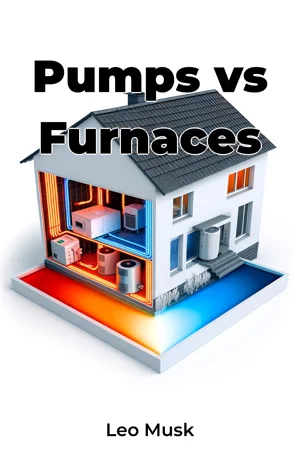
"Pumps vs Furnaces" addresses one of the most significant decisions homeowners face in the era of climate change and rising energy costs: selecting between heat pumps and traditional furnaces for home heating. Through detailed technical analysis and real-world performance data, this comprehensive guide examines the fundamental differences, operational characteristics, and long-term implications of these heating systems. The book begins by establishing the basic principles of heat transfer and energy conversion, providing readers with essential background knowledge to understand how both systems function. This foundation sets the stage for a detailed exploration of heat pump technology, which moves heat rather than generating it, and furnace systems that create heat through fuel combustion. Three main sections form the core of the analysis. The first examines energy efficiency metrics, comparing coefficient of performance (COP) values of heat pumps with annual fuel utilization efficiency (AFUE) ratings of furnaces. The second section presents a detailed cost analysis, incorporating initial installation expenses, operational costs, maintenance requirements, and expected system longevity. The third section evaluates environmental impact, including direct and indirect emissions, refrigerant considerations, and overall carbon footprint. Supporting evidence comes from multiple sources, including Department of Energy statistics, manufacturer specifications, and real-world performance studies across various climate zones. The book incorporates thermal imaging data, energy consumption logs, and maintenance records from actual installations to provide concrete comparative analysis. The work connects engineering principles with practical considerations, bridging mechanical engineering, electrical systems, environmental science, and home economics. This interdisciplinary approach helps readers understand both the technical aspects and the practical implications of their heating system choices. The book maintains an objective, data-driven tone while remaining accessible to both technical and non-technical readers. It addresses common misconceptions, such as heat pump performance in cold climates and the true cost-effectiveness of different fuel sources. Each chapter includes detailed diagrams, performance charts, and calculation examples that readers can apply to their specific situations. Written for homeowners, building contractors, and energy consultants, the book provides actionable insights for different scenarios. It includes decision matrices based on factors such as climate zone, energy prices, and building characteristics, enabling readers to make informed choices for their specific circumstances. The scope encompasses residential applications in various climate zones, focusing on single-family homes while acknowledging applications in multi-unit buildings. The book addresses current market options while discussing emerging technologies and potential future developments in heating systems. Practical applications include step-by-step guides for performing basic efficiency calculations, understanding energy bills, and evaluating contractor proposals. The book also covers system sizing considerations, integration with existing infrastructure, and optimization strategies for different climate conditions. Throughout the text, ongoing debates in the field are addressed, including the role of heat pumps in cold climates, the impact of different electricity sources on overall efficiency, and the future of natural gas in residential heating. The book maintains neutrality while presenting evidence-based analyses of these controversial topics. Limitations are clearly stated, including the exclusion of industrial applications and specialized heating requirements. The focus remains on residential and light commercial applications where these systems are most commonly compared and implemented. This technical guide fills a crucial gap in the literature by providing an unbiased, comprehensive comparison of these heating technologies, enabling readers to make well-informed decisions based on quantifiable data and proven engineering principles.
"Pumps vs Furnaces" addresses one of the most significant decisions homeowners face in the era of climate change and rising energy costs: selecting between heat pumps and traditional furnaces for home heating. Through detailed technical analysis and real-world performance data, this comprehensive guide examines the fundamental differences, operational characteristics, and long-term implications of these heating systems. The book begins by establishing the basic principles of heat transfer and energy conversion, providing readers with essential background knowledge to understand how both systems function. This foundation sets the stage for a detailed exploration of heat pump technology, which moves heat rather than generating it, and furnace systems that create heat through fuel combustion. Three main sections form the core of the analysis. The first examines energy efficiency metrics, comparing coefficient of performance (COP) values of heat pumps with annual fuel utilization efficiency (AFUE) ratings of furnaces. The second section presents a detailed cost analysis, incorporating initial installation expenses, operational costs, maintenance requirements, and expected system longevity. The third section evaluates environmental impact, including direct and indirect emissions, refrigerant considerations, and overall carbon footprint. Supporting evidence comes from multiple sources, including Department of Energy statistics, manufacturer specifications, and real-world performance studies across various climate zones. The book incorporates thermal imaging data, energy consumption logs, and maintenance records from actual installations to provide concrete comparative analysis. The work connects engineering principles with practical considerations, bridging mechanical engineering, electrical systems, environmental science, and home economics. This interdisciplinary approach helps readers understand both the technical aspects and the practical implications of their heating system choices. The book maintains an objective, data-driven tone while remaining accessible to both technical and non-technical readers. It addresses common misconceptions, such as heat pump performance in cold climates and the true cost-effectiveness of different fuel sources. Each chapter includes detailed diagrams, performance charts, and calculation examples that readers can apply to their specific situations. Written for homeowners, building contractors, and energy consultants, the book provides actionable insights for different scenarios. It includes decision matrices based on factors such as climate zone, energy prices, and building characteristics, enabling readers to make informed choices for their specific circumstances. The scope encompasses residential applications in various climate zones, focusing on single-family homes while acknowledging applications in multi-unit buildings. The book addresses current market options while discussing emerging technologies and potential future developments in heating systems. Practical applications include step-by-step guides for performing basic efficiency calculations, understanding energy bills, and evaluating contractor proposals. The book also covers system sizing considerations, integration with existing infrastructure, and optimization strategies for different climate conditions. Throughout the text, ongoing debates in the field are addressed, including the role of heat pumps in cold climates, the impact of different electricity sources on overall efficiency, and the future of natural gas in residential heating. The book maintains neutrality while presenting evidence-based analyses of these controversial topics. Limitations are clearly stated, including the exclusion of industrial applications and specialized heating requirements. The focus remains on residential and light commercial applications where these systems are most commonly compared and implemented. This technical guide fills a crucial gap in the literature by providing an unbiased, comprehensive comparison of these heating technologies, enabling readers to make well-informed decisions based on quantifiable data and proven engineering principles.
"Pumps vs Furnaces" presents a comprehensive analysis of two competing home heating technologies, addressing the critical decision between heat pumps and traditional furnaces in an era of climate consciousness and fluctuating energy costs. The book uniquely combines rigorous technical analysis with practical, real-world applications, making complex engineering concepts accessible to both technical professionals and homeowners. Through detailed examination of Department of Energy statistics and actual installation data, it reveals how these systems perform across different climate zones and operating conditions. The text progresses logically from fundamental principles of heat transfer to detailed comparisons of system efficiency, costs, and environmental impact. Key insights include comprehensive analyses of heat pump coefficient of performance (COP) values versus furnace annual fuel utilization efficiency (AFUE) ratings, alongside detailed cost breakdowns incorporating installation, operation, and maintenance expenses. The book stands out for its use of thermal imaging data and energy consumption logs from real installations, providing readers with concrete evidence rather than theoretical projections. What makes this guide particularly valuable is its objective, data-driven approach to addressing common misconceptions about heat pump performance in cold climates and the true cost-effectiveness of different fuel sources. The inclusion of decision matrices and step-by-step calculation guides helps readers apply the information to their specific situations, while detailed diagrams and performance charts illuminate complex concepts. Throughout the book, the integration of mechanical engineering principles with practical considerations creates a bridge between theoretical knowledge and real-world application, making it an essential resource for anyone involved in residential heating decisions.
Book Details
ISBN
9788233950279
Publisher
Publifye AS
Your Licenses
You don't own any licenses for this book
Purchase a license below to unlock this book and download the EPUB.
Purchase License
Select a tier to unlock this book
Need bulk licensing?
Contact us for enterprise agreements.