
About This Book
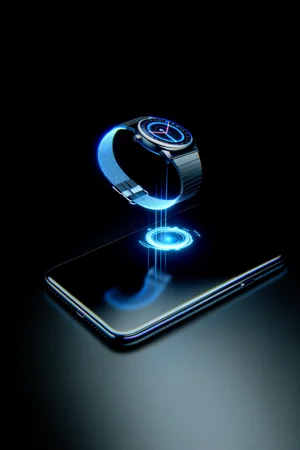
"Wearables vs Phones" examines the intricate technological ecosystem that has emerged between wearable devices and smartphones, challenging the notion that one will eventually replace the other. Through detailed analysis and research, the book reveals how these technologies are evolving into complementary tools that enhance human capability and connectivity. The book begins by mapping the parallel development trajectories of smartphones and wearable technology, from the first basic fitness trackers to sophisticated smartwatches capable of independent cellular connectivity. It establishes three core themes: the technical symbiosis between devices, the optimization of user experience through device specialization, and the impact on personal health monitoring and data management. Drawing from extensive industry research, interviews with technology leaders, and user behavior studies, the text explores how manufacturers are creating integrated ecosystems rather than competing platforms. The book presents evidence from major technology companies' development strategies, patent applications, and market research data spanning 2010-2023 to support its analysis. The content is structured in three main sections. The first examines the technical architecture of device interaction, including protocols, data sharing mechanisms, and power management strategies. The second section analyzes user behavior patterns and preferences, supported by studies from major markets in North America, Europe, and Asia. The final section projects future developments in areas such as ambient computing, artificial intelligence integration, and enhanced reality applications. Key arguments are supported by case studies from major technology companies, medical research institutions, and user experience laboratories. The book incorporates findings from peer-reviewed journals in computer science, human-computer interaction, and digital health, providing a robust foundation for its conclusions. The interdisciplinary approach connects technology development with behavioral psychology, health sciences, and data privacy considerations. These connections illuminate how device interaction patterns influence human behavior, health monitoring capabilities, and personal data management strategies. Rather than advocating for either technology's supremacy, the book presents an analytical framework for understanding their complementary roles. It offers practical insights for developers, technology strategists, and consumers about optimizing device ecosystems for different use cases and user needs. Written in a technically precise yet accessible style, the content balances detailed technical information with clear explanations suitable for technology professionals, business strategists, and informed general readers. The book maintains an objective tone while addressing both the benefits and limitations of current technologies. The target audience includes technology professionals, business strategists, healthcare technology specialists, and consumers interested in understanding the future of personal technology. Special attention is given to privacy considerations, security protocols, and the ethical implications of continuous personal data collection. The scope encompasses current market-ready technologies while exploring emerging trends and future possibilities. It addresses ongoing debates about device autonomy, privacy concerns, and the optimal balance between smartphone and wearable functionality. Practical applications focus on helping readers make informed decisions about personal technology ecosystems, understanding device integration capabilities, and maximizing the benefits of multi-device setups. The book includes specific recommendations for different user profiles, from casual consumers to technology professionals. The text acknowledges and addresses current limitations in battery technology, processing power, and user interface design, providing realistic assessments of both current capabilities and future potential. It concludes by outlining likely development paths for the next decade, based on current research trends and technological trajectories.
"Wearables vs Phones" examines the intricate technological ecosystem that has emerged between wearable devices and smartphones, challenging the notion that one will eventually replace the other. Through detailed analysis and research, the book reveals how these technologies are evolving into complementary tools that enhance human capability and connectivity. The book begins by mapping the parallel development trajectories of smartphones and wearable technology, from the first basic fitness trackers to sophisticated smartwatches capable of independent cellular connectivity. It establishes three core themes: the technical symbiosis between devices, the optimization of user experience through device specialization, and the impact on personal health monitoring and data management. Drawing from extensive industry research, interviews with technology leaders, and user behavior studies, the text explores how manufacturers are creating integrated ecosystems rather than competing platforms. The book presents evidence from major technology companies' development strategies, patent applications, and market research data spanning 2010-2023 to support its analysis. The content is structured in three main sections. The first examines the technical architecture of device interaction, including protocols, data sharing mechanisms, and power management strategies. The second section analyzes user behavior patterns and preferences, supported by studies from major markets in North America, Europe, and Asia. The final section projects future developments in areas such as ambient computing, artificial intelligence integration, and enhanced reality applications. Key arguments are supported by case studies from major technology companies, medical research institutions, and user experience laboratories. The book incorporates findings from peer-reviewed journals in computer science, human-computer interaction, and digital health, providing a robust foundation for its conclusions. The interdisciplinary approach connects technology development with behavioral psychology, health sciences, and data privacy considerations. These connections illuminate how device interaction patterns influence human behavior, health monitoring capabilities, and personal data management strategies. Rather than advocating for either technology's supremacy, the book presents an analytical framework for understanding their complementary roles. It offers practical insights for developers, technology strategists, and consumers about optimizing device ecosystems for different use cases and user needs. Written in a technically precise yet accessible style, the content balances detailed technical information with clear explanations suitable for technology professionals, business strategists, and informed general readers. The book maintains an objective tone while addressing both the benefits and limitations of current technologies. The target audience includes technology professionals, business strategists, healthcare technology specialists, and consumers interested in understanding the future of personal technology. Special attention is given to privacy considerations, security protocols, and the ethical implications of continuous personal data collection. The scope encompasses current market-ready technologies while exploring emerging trends and future possibilities. It addresses ongoing debates about device autonomy, privacy concerns, and the optimal balance between smartphone and wearable functionality. Practical applications focus on helping readers make informed decisions about personal technology ecosystems, understanding device integration capabilities, and maximizing the benefits of multi-device setups. The book includes specific recommendations for different user profiles, from casual consumers to technology professionals. The text acknowledges and addresses current limitations in battery technology, processing power, and user interface design, providing realistic assessments of both current capabilities and future potential. It concludes by outlining likely development paths for the next decade, based on current research trends and technological trajectories.
"Wearables vs Phones" presents a comprehensive exploration of the evolving relationship between wearable technology and smartphones, challenging the common assumption that one will eventually make the other obsolete. Instead, the book reveals how these technologies are developing into complementary tools that work together to enhance human capabilities and connectivity, supported by extensive research spanning from 2010 to 2023. The book's three-part structure begins with a detailed examination of technical architecture and device interaction protocols, followed by an analysis of user behavior patterns across global markets, and concludes with projections of future developments in ambient computing and artificial intelligence integration. Through case studies from major technology companies and findings from medical research institutions, the text illuminates how manufacturers are creating integrated ecosystems rather than competing platforms, demonstrating the symbiotic relationship between wearables and smartphones. What sets this book apart is its interdisciplinary approach, connecting technological development with behavioral psychology, health sciences, and data privacy considerations. Written in an accessible yet technically precise style, it offers practical insights for both technology professionals and informed general readers, while maintaining a balanced perspective on the benefits and limitations of current technologies. The book provides specific recommendations for different user profiles and addresses crucial concerns about device autonomy, privacy, and the optimal balance between smartphone and wearable functionality.
Book Details
ISBN
9788233950187
Publisher
Publifye AS
Your Licenses
You don't own any licenses for this book
Purchase a license below to unlock this book and download the EPUB.
Purchase License
Select a tier to unlock this book
Need bulk licensing?
Contact us for enterprise agreements.