
About This Book
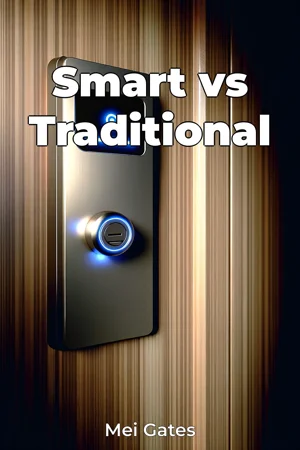
"Smart vs Traditional" opens with a critical question facing modern homeowners: In an age where technology intersects with every aspect of our lives, how do we make informed decisions about something as fundamental as securing our homes? This comprehensive analysis delves into the evolving landscape of residential security, examining the transition from mechanical to digital access control systems. The book presents three core areas of investigation: security architecture, user interaction patterns, and vulnerability assessment. Through systematic comparison, it explores how traditional pin-tumbler locks and smart locks approach these crucial aspects differently, offering readers a framework for understanding both systems' strengths and limitations. Drawing from decades of locksmithing history and recent technological advances, the text establishes essential context by tracing the development of mechanical locks from ancient Egypt to modern times, then examining how digital transformation has revolutionized access control. The book argues that neither system offers absolute security, but rather different security models requiring distinct risk assessment approaches. The content is structured in three main sections. The first examines physical security principles, including attack resistance, key control, and mechanical durability. The second explores smart lock technologies, covering encryption protocols, wireless security, and integration capabilities. The final section provides a detailed comparative analysis, supported by laboratory testing data and real-world case studies from security firms and insurance companies. Research methodology combines technical testing data from independent laboratories, statistical analysis of break-in patterns, and user experience studies conducted across diverse residential settings. The book incorporates findings from cybersecurity researchers, mechanical engineers, and insurance risk assessors to provide a multifaceted analysis. The work connects multiple disciplines, linking computer science with mechanical engineering, and behavioral psychology with security theory. This intersection allows readers to understand how human factors influence security system effectiveness, regardless of technological sophistication. Written in a technical yet accessible style, the book maintains a balanced, analytical approach while avoiding sensationalism. It serves primarily as a resource for homeowners, security professionals, and technology enthusiasts seeking factual, research-based information about residential security options. The text addresses several current debates, including the impact of remote access vulnerabilities, the role of artificial intelligence in access control, and the balance between convenience and security. It examines common misconceptions about both traditional and smart locks, using empirical evidence to separate fact from marketing claims. Practical applications include decision-making frameworks for selecting appropriate security systems, implementation guidelines for both lock types, and maintenance protocols to ensure optimal performance. The book also provides insight into future developments, including biometric integration and mesh network security systems. Limitations are clearly acknowledged, focusing specifically on residential applications rather than commercial or industrial settings. The scope encompasses currently available consumer technology, with periodic updates planned to address rapid technological advancement in the smart lock sector. The book maintains objectivity throughout, presenting verifiable data and expert analysis while acknowledging that security needs vary based on individual circumstances. It provides readers with tools to evaluate their specific requirements and make informed decisions about their security infrastructure.
"Smart vs Traditional" opens with a critical question facing modern homeowners: In an age where technology intersects with every aspect of our lives, how do we make informed decisions about something as fundamental as securing our homes? This comprehensive analysis delves into the evolving landscape of residential security, examining the transition from mechanical to digital access control systems. The book presents three core areas of investigation: security architecture, user interaction patterns, and vulnerability assessment. Through systematic comparison, it explores how traditional pin-tumbler locks and smart locks approach these crucial aspects differently, offering readers a framework for understanding both systems' strengths and limitations. Drawing from decades of locksmithing history and recent technological advances, the text establishes essential context by tracing the development of mechanical locks from ancient Egypt to modern times, then examining how digital transformation has revolutionized access control. The book argues that neither system offers absolute security, but rather different security models requiring distinct risk assessment approaches. The content is structured in three main sections. The first examines physical security principles, including attack resistance, key control, and mechanical durability. The second explores smart lock technologies, covering encryption protocols, wireless security, and integration capabilities. The final section provides a detailed comparative analysis, supported by laboratory testing data and real-world case studies from security firms and insurance companies. Research methodology combines technical testing data from independent laboratories, statistical analysis of break-in patterns, and user experience studies conducted across diverse residential settings. The book incorporates findings from cybersecurity researchers, mechanical engineers, and insurance risk assessors to provide a multifaceted analysis. The work connects multiple disciplines, linking computer science with mechanical engineering, and behavioral psychology with security theory. This intersection allows readers to understand how human factors influence security system effectiveness, regardless of technological sophistication. Written in a technical yet accessible style, the book maintains a balanced, analytical approach while avoiding sensationalism. It serves primarily as a resource for homeowners, security professionals, and technology enthusiasts seeking factual, research-based information about residential security options. The text addresses several current debates, including the impact of remote access vulnerabilities, the role of artificial intelligence in access control, and the balance between convenience and security. It examines common misconceptions about both traditional and smart locks, using empirical evidence to separate fact from marketing claims. Practical applications include decision-making frameworks for selecting appropriate security systems, implementation guidelines for both lock types, and maintenance protocols to ensure optimal performance. The book also provides insight into future developments, including biometric integration and mesh network security systems. Limitations are clearly acknowledged, focusing specifically on residential applications rather than commercial or industrial settings. The scope encompasses currently available consumer technology, with periodic updates planned to address rapid technological advancement in the smart lock sector. The book maintains objectivity throughout, presenting verifiable data and expert analysis while acknowledging that security needs vary based on individual circumstances. It provides readers with tools to evaluate their specific requirements and make informed decisions about their security infrastructure.
"Smart vs Traditional" offers a comprehensive exploration of modern residential security, examining the crucial transition from traditional mechanical locks to smart digital access systems. This timely analysis helps homeowners navigate the complex decision between time-tested mechanical security and emerging smart technology solutions, acknowledging that neither option provides perfect security but rather different approaches to protecting our homes. The book methodically breaks down three essential aspects of home security: security architecture, user interaction, and vulnerability assessment. Through detailed laboratory testing data and real-world case studies, it traces the evolution of lock technology from ancient Egyptian mechanisms to today's sophisticated digital systems. Particularly fascinating is the examination of how human behavior influences security effectiveness, regardless of the chosen technology, and the careful analysis of break-in patterns across different security implementations. Moving from fundamental mechanical principles to advanced digital protocols, the book maintains an accessible yet thorough approach to complex technical concepts. It uniquely combines insights from multiple disciplines, including cybersecurity, mechanical engineering, and behavioral psychology, to provide a complete picture of modern residential security options. The work stands out for its balanced, evidence-based analysis that helps readers understand the practical implications of choosing between traditional and smart security systems, while offering clear frameworks for decision-making based on individual circumstances and risk factors.
Book Details
ISBN
9788233950132
Publisher
Publifye AS
Your Licenses
You don't own any licenses for this book
Purchase a license below to unlock this book and download the EPUB.
Purchase License
Select a tier to unlock this book
Need bulk licensing?
Contact us for enterprise agreements.