
About This Book
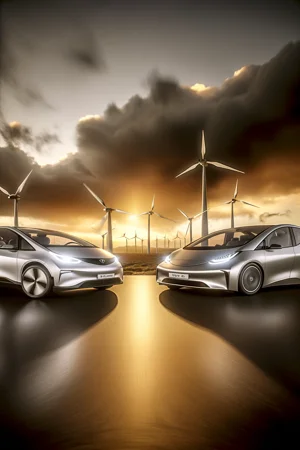
"Electric vs Hybrid" addresses the critical transition in transportation technology at a time when climate change and energy security demand innovative solutions. The book provides a comprehensive analysis of electric and hybrid vehicles, examining their roles in reducing carbon emissions while acknowledging the practical challenges of widespread adoption. The work begins by establishing the fundamental differences between fully electric vehicles (EVs) and hybrid cars, detailing their respective powertrains, energy management systems, and environmental impacts. Through data-driven analysis, the book demonstrates how each technology offers distinct advantages in specific use cases, from urban commuting to long-distance travel. Three core sections form the backbone of the investigation. The first explores the technical architecture of both vehicle types, including battery systems, regenerative braking, and power management. The second section evaluates real-world performance metrics, including range capabilities, charging infrastructure requirements, and total cost of ownership. The final section examines environmental impacts through detailed lifecycle analyses, from manufacturing to end-of-life disposal. The book presents evidence from multiple sources, including manufacturer data, independent laboratory testing, and real-world user studies across different climates and driving conditions. This research reveals that while EVs excel in urban environments and offer zero direct emissions, hybrid vehicles provide a practical bridge technology, particularly in regions with limited charging infrastructure or extreme climate conditions. Key findings highlight how factors such as electricity grid composition, driving patterns, and local climate significantly influence the environmental benefits of both technologies. The book incorporates engineering principles, environmental science, and economic analysis to provide a holistic understanding of these vehicles' roles in sustainable transportation. Interdisciplinary connections link automotive engineering with power grid infrastructure, urban planning, and materials science. The text examines how advances in battery technology, smart grid development, and renewable energy integration affect the viability of electric and hybrid vehicles. The writing maintains a technical yet accessible tone, using clear explanations and practical examples to convey complex concepts. While the primary audience includes engineering professionals, policymakers, and environmentally conscious consumers, the book remains accessible to readers with basic technical literacy. Practical applications receive particular attention, with detailed discussions of charging strategies, maintenance requirements, and optimal use cases for different driving needs. The book includes decision-making frameworks to help readers evaluate which technology best suits their specific circumstances. Current debates addressed include the environmental impact of battery production, the role of hydrogen fuel cells as an alternative, and the challenges of scaling charging infrastructure. The text maintains objectivity while examining controversial topics such as government incentives and the true environmental cost of vehicle production. The book acknowledges its limitations, focusing primarily on passenger vehicles in developed markets while briefly addressing commercial applications and emerging market considerations. It concludes by examining future trends, including advancing battery technology, improving charging infrastructure, and the potential for vehicle-to-grid integration. Throughout the work, readers gain insight into how these technologies complement rather than compete with each other in the broader pursuit of sustainable transportation. The book serves as both a technical reference and a practical guide for understanding the evolving landscape of automotive technology in an environmentally conscious world.
"Electric vs Hybrid" addresses the critical transition in transportation technology at a time when climate change and energy security demand innovative solutions. The book provides a comprehensive analysis of electric and hybrid vehicles, examining their roles in reducing carbon emissions while acknowledging the practical challenges of widespread adoption. The work begins by establishing the fundamental differences between fully electric vehicles (EVs) and hybrid cars, detailing their respective powertrains, energy management systems, and environmental impacts. Through data-driven analysis, the book demonstrates how each technology offers distinct advantages in specific use cases, from urban commuting to long-distance travel. Three core sections form the backbone of the investigation. The first explores the technical architecture of both vehicle types, including battery systems, regenerative braking, and power management. The second section evaluates real-world performance metrics, including range capabilities, charging infrastructure requirements, and total cost of ownership. The final section examines environmental impacts through detailed lifecycle analyses, from manufacturing to end-of-life disposal. The book presents evidence from multiple sources, including manufacturer data, independent laboratory testing, and real-world user studies across different climates and driving conditions. This research reveals that while EVs excel in urban environments and offer zero direct emissions, hybrid vehicles provide a practical bridge technology, particularly in regions with limited charging infrastructure or extreme climate conditions. Key findings highlight how factors such as electricity grid composition, driving patterns, and local climate significantly influence the environmental benefits of both technologies. The book incorporates engineering principles, environmental science, and economic analysis to provide a holistic understanding of these vehicles' roles in sustainable transportation. Interdisciplinary connections link automotive engineering with power grid infrastructure, urban planning, and materials science. The text examines how advances in battery technology, smart grid development, and renewable energy integration affect the viability of electric and hybrid vehicles. The writing maintains a technical yet accessible tone, using clear explanations and practical examples to convey complex concepts. While the primary audience includes engineering professionals, policymakers, and environmentally conscious consumers, the book remains accessible to readers with basic technical literacy. Practical applications receive particular attention, with detailed discussions of charging strategies, maintenance requirements, and optimal use cases for different driving needs. The book includes decision-making frameworks to help readers evaluate which technology best suits their specific circumstances. Current debates addressed include the environmental impact of battery production, the role of hydrogen fuel cells as an alternative, and the challenges of scaling charging infrastructure. The text maintains objectivity while examining controversial topics such as government incentives and the true environmental cost of vehicle production. The book acknowledges its limitations, focusing primarily on passenger vehicles in developed markets while briefly addressing commercial applications and emerging market considerations. It concludes by examining future trends, including advancing battery technology, improving charging infrastructure, and the potential for vehicle-to-grid integration. Throughout the work, readers gain insight into how these technologies complement rather than compete with each other in the broader pursuit of sustainable transportation. The book serves as both a technical reference and a practical guide for understanding the evolving landscape of automotive technology in an environmentally conscious world.
"Electric vs Hybrid" offers a comprehensive exploration of two transformative vehicle technologies shaping the future of sustainable transportation. Through data-driven analysis and real-world studies, the book examines how electric vehicles (EVs) and hybrid cars contribute differently to reducing carbon emissions while addressing practical considerations for potential adopters. The text progresses logically through three main sections, beginning with a thorough examination of technical architectures, including battery systems and power management. Moving beyond technical specifications, it delves into critical real-world performance metrics such as range capabilities and total ownership costs. The final section presents detailed lifecycle analyses, revealing how factors like electricity grid composition and local climate conditions influence each technology's environmental impact. Particularly noteworthy is the book's finding that while EVs excel in urban environments with zero direct emissions, hybrid vehicles serve as a practical bridge technology in regions with limited charging infrastructure. Written in an accessible yet technically precise style, the book combines engineering principles with environmental science and economic analysis to provide actionable insights. It stands out by incorporating extensive real-world data from multiple sources, including manufacturer testing and user experiences across various climates and driving conditions. The inclusion of decision-making frameworks helps readers evaluate which technology best suits their specific circumstances, while discussions of emerging trends in battery technology and charging infrastructure provide valuable context for understanding the future of sustainable transportation.
Book Details
ISBN
9788233950101
Publisher
Publifye AS
Your Licenses
You don't own any licenses for this book
Purchase a license below to unlock this book and download the EPUB.
Purchase License
Select a tier to unlock this book
Need bulk licensing?
Contact us for enterprise agreements.