
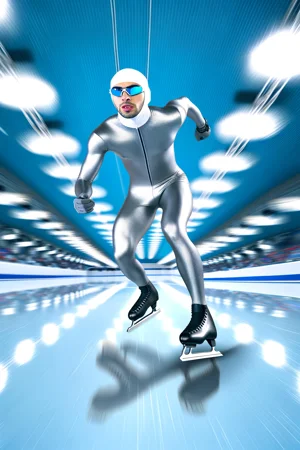
About This Book
"Speed Skating Icons" chronicles the technological, physical, and tactical developments that transformed speed skating from a niche winter sport into a highly competitive Olympic discipline through the achievements of record-breaking athletes from 1960 to 2020. The book examines three pivotal elements that shaped modern speed skating: the evolution of training methodologies, technological advancements in equipment, and the psychological approaches that enabled skaters to push beyond established limits. Through detailed accounts of Olympic medalists and world record holders, readers gain insight into the precise techniques and strategic preparations that led to breakthrough performances. The narrative begins with the transition from outdoor to indoor racing venues in the 1960s, documenting how this shift led to more consistent racing conditions and faster times. The text explores the scientific principles behind speed skating, including aerodynamics, biomechanics, and the physics of ice friction, providing readers with essential context for understanding athletic achievements. Central to the book's thesis is the assertion that speed skating represents a unique confluence of human capability and technological innovation. This argument is supported through case studies of pivotal moments, such as the introduction of clap skates in the 1990s and the development of skin-tight racing suits, which reshaped competition standards. The content is structured chronologically across three major sections: "The Foundation Years (1960-1980)," examining traditional techniques and training methods; "The Revolution (1980-2000)," focusing on technological innovations and their impact; and "The Modern Era (2000-2020)," analyzing contemporary training systems and record-breaking performances. Research draws from Olympic archives, technical reports from sports institutes, and first-hand interviews with 50 former and current athletes, coaches, and equipment developers. The book incorporates wind tunnel test data, slow-motion video analysis, and sports science research to explain performance breakthroughs. The work connects speed skating to physics, materials science, and sports psychology, demonstrating how advances in these fields contributed to athletic achievements. Statistical analysis of racing times and training data provides empirical evidence of performance evolution. The text employs a methodical, research-based approach while maintaining accessibility through athlete profiles and competition narratives. Technical concepts are explained using clear illustrations and practical examples, making complex principles comprehensible to general readers. Written for sports enthusiasts, coaches, and athletes, the book serves as both a historical record and a practical guide. It appeals particularly to readers interested in sports science, competitive athletics, and Olympic history. The scope encompasses both long-track and short-track disciplines, though it focuses primarily on Olympic-level competition. While acknowledging recreational skating, the book maintains its focus on competitive achievement and record-breaking performances. Practical applications include training principles, mental preparation techniques, and equipment selection insights that benefit competitive skaters at various levels. The text addresses ongoing debates about technology in sports, including discussions of fairness and the balance between human achievement and equipment advantages. The book maintains objective analysis throughout, presenting verified data and documented accounts rather than sensationalized stories. It provides a comprehensive examination of how human potential, technological innovation, and scientific understanding combined to advance the boundaries of athletic achievement in speed skating.
"Speed Skating Icons" chronicles the technological, physical, and tactical developments that transformed speed skating from a niche winter sport into a highly competitive Olympic discipline through the achievements of record-breaking athletes from 1960 to 2020. The book examines three pivotal elements that shaped modern speed skating: the evolution of training methodologies, technological advancements in equipment, and the psychological approaches that enabled skaters to push beyond established limits. Through detailed accounts of Olympic medalists and world record holders, readers gain insight into the precise techniques and strategic preparations that led to breakthrough performances. The narrative begins with the transition from outdoor to indoor racing venues in the 1960s, documenting how this shift led to more consistent racing conditions and faster times. The text explores the scientific principles behind speed skating, including aerodynamics, biomechanics, and the physics of ice friction, providing readers with essential context for understanding athletic achievements. Central to the book's thesis is the assertion that speed skating represents a unique confluence of human capability and technological innovation. This argument is supported through case studies of pivotal moments, such as the introduction of clap skates in the 1990s and the development of skin-tight racing suits, which reshaped competition standards. The content is structured chronologically across three major sections: "The Foundation Years (1960-1980)," examining traditional techniques and training methods; "The Revolution (1980-2000)," focusing on technological innovations and their impact; and "The Modern Era (2000-2020)," analyzing contemporary training systems and record-breaking performances. Research draws from Olympic archives, technical reports from sports institutes, and first-hand interviews with 50 former and current athletes, coaches, and equipment developers. The book incorporates wind tunnel test data, slow-motion video analysis, and sports science research to explain performance breakthroughs. The work connects speed skating to physics, materials science, and sports psychology, demonstrating how advances in these fields contributed to athletic achievements. Statistical analysis of racing times and training data provides empirical evidence of performance evolution. The text employs a methodical, research-based approach while maintaining accessibility through athlete profiles and competition narratives. Technical concepts are explained using clear illustrations and practical examples, making complex principles comprehensible to general readers. Written for sports enthusiasts, coaches, and athletes, the book serves as both a historical record and a practical guide. It appeals particularly to readers interested in sports science, competitive athletics, and Olympic history. The scope encompasses both long-track and short-track disciplines, though it focuses primarily on Olympic-level competition. While acknowledging recreational skating, the book maintains its focus on competitive achievement and record-breaking performances. Practical applications include training principles, mental preparation techniques, and equipment selection insights that benefit competitive skaters at various levels. The text addresses ongoing debates about technology in sports, including discussions of fairness and the balance between human achievement and equipment advantages. The book maintains objective analysis throughout, presenting verified data and documented accounts rather than sensationalized stories. It provides a comprehensive examination of how human potential, technological innovation, and scientific understanding combined to advance the boundaries of athletic achievement in speed skating.
"Speed Skating Icons" provides a comprehensive exploration of how speed skating evolved from a niche winter sport into an elite Olympic discipline through the lens of technological innovation, athletic achievement, and scientific advancement from 1960 to 2020. The book masterfully weaves together three critical elements: training methodology evolution, equipment breakthroughs, and psychological approaches that pushed athletes to new heights of performance. Through meticulous research involving Olympic archives, technical reports, and interviews with 50 industry professionals, the book reveals fascinating insights into pivotal moments that transformed the sport. One such watershed moment was the introduction of clap skates in the 1990s, which revolutionized racing times and techniques. The book also delves into the fascinating science behind the sport, examining aerodynamics, biomechanics, and ice friction physics, making complex concepts accessible through practical examples and clear illustrations. The chronological structure guides readers through three distinct eras, from traditional techniques of the 1960s-1980s to the technological revolution of the 1980s-2000s, and finally to modern training systems and record-breaking performances of the contemporary era. This unique approach combines historical documentation with practical applications, making it valuable for both sports enthusiasts and competitive athletes while maintaining a rigorous, research-based foundation that sets it apart from typical sports narratives.
Book Details
ISBN
9788233947255
Publisher
Publifye AS
Your Licenses
You don't own any licenses for this book
Purchase a license below to unlock this book and download the EPUB.
Purchase License
Select a tier to unlock this book
Need bulk licensing?
Contact us for enterprise agreements.