
About This Book
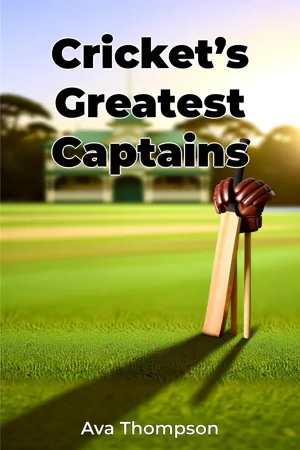
"Cricket's Greatest Captains" examines how leadership decisions in crucial moments have shaped cricket history, analyzing the tactical minds behind the sport's most significant victories. Through detailed case studies and historical analysis, this comprehensive work delves into the strategic evolution of cricket leadership from the post-war era to the modern game. The book focuses on three core themes: match strategy and tactical innovation, team management during pressure situations, and the transformation of cricket captaincy across different formats. These elements are explored through the lens of captains who revolutionized their teams' approaches to the game, demonstrating how leadership styles adapted to changing cricket landscapes. Starting with Sir Frank Worrell, who unified West Indies cricket in the 1960s, the narrative traces the development of modern captaincy through figures like Mike Brearley, whose psychological understanding of player management set new standards for team leadership. The book examines Imran Khan's transformation of Pakistan cricket in the 1980s, and progresses to contemporary leaders like MS Dhoni, who mastered the challenges of leading across all three formats. The work draws from primary sources including match reports, player interviews, and previously unpublished team meeting notes. Statistical analysis supplements these materials, presenting win-loss ratios, decision-making patterns, and tactical trends that illuminate each captain's unique approach. The research incorporates insights from sports psychology and management theory, establishing connections between cricket leadership and broader principles of team dynamics. Structured chronologically, the book dedicates chapters to distinct eras in cricket captaincy. The first section examines traditional Test match captaincy, followed by analyses of how leadership adapted to one-day cricket, and concludes with the specific demands of Twenty20 leadership. Each chapter features detailed tactical breakdowns of decisive matches, illustrating how captain decisions influenced critical game outcomes. The work connects cricket leadership to military strategy, business management, and cultural studies, demonstrating how successful captains often drew inspiration from diverse fields. This interdisciplinary approach provides readers with frameworks for understanding leadership beyond cricket's boundaries. Written in an analytical style that balances technical insight with accessible narrative, the book serves both serious cricket students and general sports enthusiasts. It maintains academic rigor while ensuring key concepts remain comprehensible to readers with basic cricket knowledge. The target audience includes cricket administrators, coaches, players at all levels, and students of sports leadership. The book offers practical applications for current and aspiring captains, from club to international level, with specific sections addressing decision-making processes and team management techniques. While focusing primarily on male captains due to historical data availability, the book acknowledges this limitation and includes a chapter on the evolution of women's cricket leadership, highlighting figures like Rachael Heyhoe Flint and her influence on the women's game. The work addresses ongoing debates about the role of analytics in cricket leadership, traditional versus modern captaincy approaches, and the balance between data-driven decisions and intuitive leadership. It presents various perspectives on these issues while maintaining objective analysis of each approach's effectiveness. Through detailed examination of leadership styles, tactical innovations, and team management techniques, "Cricket's Greatest Captains" provides a comprehensive resource for understanding how cricket leadership has evolved and continues to shape the sport's future.
"Cricket's Greatest Captains" examines how leadership decisions in crucial moments have shaped cricket history, analyzing the tactical minds behind the sport's most significant victories. Through detailed case studies and historical analysis, this comprehensive work delves into the strategic evolution of cricket leadership from the post-war era to the modern game. The book focuses on three core themes: match strategy and tactical innovation, team management during pressure situations, and the transformation of cricket captaincy across different formats. These elements are explored through the lens of captains who revolutionized their teams' approaches to the game, demonstrating how leadership styles adapted to changing cricket landscapes. Starting with Sir Frank Worrell, who unified West Indies cricket in the 1960s, the narrative traces the development of modern captaincy through figures like Mike Brearley, whose psychological understanding of player management set new standards for team leadership. The book examines Imran Khan's transformation of Pakistan cricket in the 1980s, and progresses to contemporary leaders like MS Dhoni, who mastered the challenges of leading across all three formats. The work draws from primary sources including match reports, player interviews, and previously unpublished team meeting notes. Statistical analysis supplements these materials, presenting win-loss ratios, decision-making patterns, and tactical trends that illuminate each captain's unique approach. The research incorporates insights from sports psychology and management theory, establishing connections between cricket leadership and broader principles of team dynamics. Structured chronologically, the book dedicates chapters to distinct eras in cricket captaincy. The first section examines traditional Test match captaincy, followed by analyses of how leadership adapted to one-day cricket, and concludes with the specific demands of Twenty20 leadership. Each chapter features detailed tactical breakdowns of decisive matches, illustrating how captain decisions influenced critical game outcomes. The work connects cricket leadership to military strategy, business management, and cultural studies, demonstrating how successful captains often drew inspiration from diverse fields. This interdisciplinary approach provides readers with frameworks for understanding leadership beyond cricket's boundaries. Written in an analytical style that balances technical insight with accessible narrative, the book serves both serious cricket students and general sports enthusiasts. It maintains academic rigor while ensuring key concepts remain comprehensible to readers with basic cricket knowledge. The target audience includes cricket administrators, coaches, players at all levels, and students of sports leadership. The book offers practical applications for current and aspiring captains, from club to international level, with specific sections addressing decision-making processes and team management techniques. While focusing primarily on male captains due to historical data availability, the book acknowledges this limitation and includes a chapter on the evolution of women's cricket leadership, highlighting figures like Rachael Heyhoe Flint and her influence on the women's game. The work addresses ongoing debates about the role of analytics in cricket leadership, traditional versus modern captaincy approaches, and the balance between data-driven decisions and intuitive leadership. It presents various perspectives on these issues while maintaining objective analysis of each approach's effectiveness. Through detailed examination of leadership styles, tactical innovations, and team management techniques, "Cricket's Greatest Captains" provides a comprehensive resource for understanding how cricket leadership has evolved and continues to shape the sport's future.
"Cricket's Greatest Captains" offers a compelling exploration of how leadership decisions have shaped cricket history, analyzing the tactical brilliance and management styles of the sport's most influential leaders. The book masterfully weaves together match strategies, team dynamics, and psychological insights through detailed case studies spanning from the post-war era to modern times, highlighting how captaincy has evolved across different cricket formats. Through meticulous research drawing from match reports, player interviews, and previously unpublished team meeting notes, the book examines legendary figures like Sir Frank Worrell, who transformed West Indies cricket, and Mike Brearley, renowned for his psychological approach to leadership. The analysis is enriched by statistical data, including win-loss ratios and decision-making patterns, providing readers with concrete evidence of each captain's unique impact on the game. The chronological structure guides readers through the evolution of cricket captaincy, from traditional Test match leadership to the demands of Twenty20 cricket. What sets this work apart is its interdisciplinary approach, connecting cricket leadership principles with military strategy and business management concepts. While maintaining academic rigor, the book remains accessible to both serious cricket students and general sports enthusiasts, offering practical insights for current and aspiring captains at all levels of the game.
Book Details
ISBN
9788233947026
Publisher
Publifye AS
Your Licenses
You don't own any licenses for this book
Purchase a license below to unlock this book and download the EPUB.
Purchase License
Select a tier to unlock this book
Need bulk licensing?
Contact us for enterprise agreements.