
About This Book
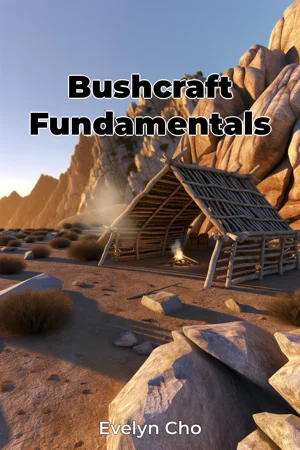
"Bushcraft Fundamentals" examines the critical wilderness skills that have sustained human survival for millennia, offering modern practitioners a comprehensive guide to self-reliance in mountain environments. This practical manual bridges ancient knowledge with contemporary outdoor expertise, providing readers with tested methods for thriving in remote settings. The book centers on three foundational pillars of wilderness proficiency: tool creation and maintenance, natural resource identification and utilization, and shelter construction. These skills form an interconnected system that enables practitioners to adapt to various mountain ecosystems while minimizing their environmental impact. Drawing from both archaeological evidence and active practitioners, the text explores how indigenous peoples and early settlers developed these techniques through direct interaction with mountain environments. This historical context illuminates the evolution of bushcraft practices and their continued relevance in modern wilderness navigation. The book's core argument emphasizes that mastering fundamental bushcraft skills enhances both wilderness safety and environmental stewardship. This perspective challenges the notion that modern equipment can substitute for traditional knowledge, demonstrating how basic skills provide reliable solutions in unpredictable situations. The content progresses systematically through skill development phases. Initial chapters focus on essential tool crafting, including knife handling, wood selection, and basic carving techniques. The middle section covers foraging principles, featuring detailed botanical identification guides and seasonal availability charts. Later chapters address shelter construction, incorporating physics principles and architectural concepts adapted for wilderness applications. Research methodology combines field testing with documented case studies from search and rescue operations, highlighting the practical applications of traditional skills in modern emergency scenarios. The text incorporates findings from environmental science, ethnobotany, and materials engineering to support its technical recommendations. The work connects multiple disciplines, including environmental science, anthropology, and materials engineering. These intersections provide readers with a deeper understanding of how natural systems can be responsibly utilized for survival purposes. The book distinguishes itself through its focus on skill integration rather than isolated technique mastery. This approach demonstrates how different bushcraft elements work together in practical scenarios, supported by detailed illustrations and step-by-step photographs. Written in a methodical, instructional style, the text balances technical detail with accessible explanations, making complex concepts understandable for both novice and experienced outdoor enthusiasts. The primary audience includes wilderness professionals, outdoor educators, and serious recreational hikers seeking to deepen their mountain craft skills. The content particularly appeals to those interested in sustainable outdoor practices and traditional knowledge preservation. Within the adventure and outdoor skills genre, the book adheres to established safety protocols while introducing traditional methods that complement modern outdoor practices. The scope focuses specifically on mountain environments in various seasons, acknowledging that different ecosystems require adapted techniques. While the skills are transferable, the book emphasizes mountain-specific applications and limitations. Practical applications extend beyond wilderness survival to include sustainable outdoor recreation, environmental education, and cultural preservation. Each skill is presented with multiple variations to accommodate different environmental conditions and personal capabilities. The text addresses ongoing debates in the outdoor community regarding traditional versus modern techniques, presenting evidence-based comparisons of effectiveness while acknowledging the value of both approaches.
"Bushcraft Fundamentals" examines the critical wilderness skills that have sustained human survival for millennia, offering modern practitioners a comprehensive guide to self-reliance in mountain environments. This practical manual bridges ancient knowledge with contemporary outdoor expertise, providing readers with tested methods for thriving in remote settings. The book centers on three foundational pillars of wilderness proficiency: tool creation and maintenance, natural resource identification and utilization, and shelter construction. These skills form an interconnected system that enables practitioners to adapt to various mountain ecosystems while minimizing their environmental impact. Drawing from both archaeological evidence and active practitioners, the text explores how indigenous peoples and early settlers developed these techniques through direct interaction with mountain environments. This historical context illuminates the evolution of bushcraft practices and their continued relevance in modern wilderness navigation. The book's core argument emphasizes that mastering fundamental bushcraft skills enhances both wilderness safety and environmental stewardship. This perspective challenges the notion that modern equipment can substitute for traditional knowledge, demonstrating how basic skills provide reliable solutions in unpredictable situations. The content progresses systematically through skill development phases. Initial chapters focus on essential tool crafting, including knife handling, wood selection, and basic carving techniques. The middle section covers foraging principles, featuring detailed botanical identification guides and seasonal availability charts. Later chapters address shelter construction, incorporating physics principles and architectural concepts adapted for wilderness applications. Research methodology combines field testing with documented case studies from search and rescue operations, highlighting the practical applications of traditional skills in modern emergency scenarios. The text incorporates findings from environmental science, ethnobotany, and materials engineering to support its technical recommendations. The work connects multiple disciplines, including environmental science, anthropology, and materials engineering. These intersections provide readers with a deeper understanding of how natural systems can be responsibly utilized for survival purposes. The book distinguishes itself through its focus on skill integration rather than isolated technique mastery. This approach demonstrates how different bushcraft elements work together in practical scenarios, supported by detailed illustrations and step-by-step photographs. Written in a methodical, instructional style, the text balances technical detail with accessible explanations, making complex concepts understandable for both novice and experienced outdoor enthusiasts. The primary audience includes wilderness professionals, outdoor educators, and serious recreational hikers seeking to deepen their mountain craft skills. The content particularly appeals to those interested in sustainable outdoor practices and traditional knowledge preservation. Within the adventure and outdoor skills genre, the book adheres to established safety protocols while introducing traditional methods that complement modern outdoor practices. The scope focuses specifically on mountain environments in various seasons, acknowledging that different ecosystems require adapted techniques. While the skills are transferable, the book emphasizes mountain-specific applications and limitations. Practical applications extend beyond wilderness survival to include sustainable outdoor recreation, environmental education, and cultural preservation. Each skill is presented with multiple variations to accommodate different environmental conditions and personal capabilities. The text addresses ongoing debates in the outdoor community regarding traditional versus modern techniques, presenting evidence-based comparisons of effectiveness while acknowledging the value of both approaches.
"Bushcraft Fundamentals" masterfully bridges ancient wilderness wisdom with modern outdoor expertise, focusing on essential survival skills in mountain environments. This comprehensive guide explores three core pillars: tool creation and maintenance, natural resource utilization, and shelter construction, demonstrating how these interconnected elements form a complete system for wilderness self-reliance. The book's unique approach combines indigenous knowledge with contemporary scientific understanding, making it particularly valuable for those seeking to develop deeper connections with mountain ecosystems. Through methodical progression, readers journey from basic tool crafting and knife handling to advanced shelter construction and resource identification. What sets this work apart is its emphasis on skill integration rather than isolated techniques, supported by real-world case studies from search and rescue operations. The content draws from multiple disciplines, including environmental science, ethnobotany, and materials engineering, providing readers with both practical skills and theoretical understanding. The book challenges the common reliance on modern equipment by demonstrating how traditional bushcraft skills offer reliable solutions in unpredictable mountain situations. Written for wilderness professionals, outdoor educators, and serious hikers, it presents complex concepts in accessible language while maintaining technical accuracy. Detailed illustrations and step-by-step photographs complement the instruction, making traditional knowledge preservation and sustainable outdoor practices accessible to contemporary practitioners.
Book Details
ISBN
9788233946784
Publisher
Publifye AS
Your Licenses
You don't own any licenses for this book
Purchase a license below to unlock this book and download the EPUB.
Purchase License
Select a tier to unlock this book
Need bulk licensing?
Contact us for enterprise agreements.