
About This Book
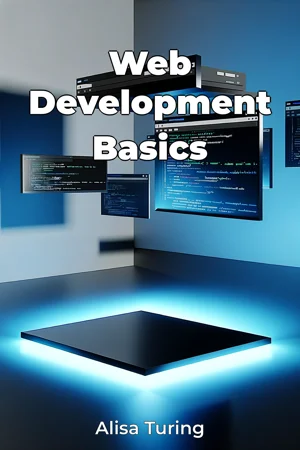
"Web Development Basics" addresses the fundamental question that many aspiring developers face: How can one effectively create modern, responsive websites that meet today's digital demands? This comprehensive guide navigates readers through the three pillars of web development: HTML for structure, CSS for presentation, and JavaScript for interactivity. The book begins by establishing the historical context of web development, from the first static HTML pages in the early 1990s to today's dynamic, interactive web applications. This evolution provides readers with essential background knowledge to understand current best practices and future trends in web development. Central to the book's argument is the principle that successful web development requires a systematic approach to learning and implementing these three core technologies. The text demonstrates how these languages work together synergistically, rather than as isolated components. The content is structured in three major sections. The first covers HTML5's semantic elements and document structure, emphasizing the importance of accessibility and SEO-friendly markup. The second section explores CSS3, including flexbox, grid systems, and responsive design principles. The final section introduces JavaScript fundamentals, DOM manipulation, and event handling. Throughout these sections, the book incorporates practical examples and real-world scenarios, utilizing code snippets and case studies from actual websites. The content is supported by current Web Standards documentation, industry best practices, and performance metrics from leading tech companies. The text makes interdisciplinary connections to visual design principles, user experience (UX) theory, and computer science concepts. These connections help readers understand how web development intersects with other technical and creative fields, providing a holistic view of the development process. What distinguishes this book is its project-based learning approach, where readers build a portfolio website from scratch, applying concepts as they progress. This hands-on methodology reinforces theoretical knowledge with practical implementation. Written in a methodical, tutorial-style format, the book maintains a balance between technical precision and accessibility. While technical terms are thoroughly explained, the writing remains engaging and practical rather than purely academic. The primary audience includes beginning web developers, career changers, and students in technical programs. The book assumes basic computer literacy but no prior programming experience, making it accessible to motivated beginners while providing enough depth for intermediate learners. The scope covers front-end development fundamentals comprehensively, though it intentionally limits coverage of advanced frameworks and back-end technologies. These limitations allow for thorough treatment of core concepts rather than superficial coverage of a broader range of topics. Practical applications are emphasized throughout, with each chapter including exercises, coding challenges, and debugging scenarios. Readers learn to create responsive layouts, implement interactive features, and optimize their code for performance. The book addresses ongoing debates in the field, such as the role of frameworks versus vanilla JavaScript, and progressive enhancement versus graceful degradation. These discussions help readers understand the context of different development approaches without prescribing rigid solutions. The content acknowledges the rapid evolution of web technologies while focusing on enduring principles that remain relevant despite changing tools and trends. This approach ensures that the knowledge gained remains valuable even as specific technologies evolve.
"Web Development Basics" addresses the fundamental question that many aspiring developers face: How can one effectively create modern, responsive websites that meet today's digital demands? This comprehensive guide navigates readers through the three pillars of web development: HTML for structure, CSS for presentation, and JavaScript for interactivity. The book begins by establishing the historical context of web development, from the first static HTML pages in the early 1990s to today's dynamic, interactive web applications. This evolution provides readers with essential background knowledge to understand current best practices and future trends in web development. Central to the book's argument is the principle that successful web development requires a systematic approach to learning and implementing these three core technologies. The text demonstrates how these languages work together synergistically, rather than as isolated components. The content is structured in three major sections. The first covers HTML5's semantic elements and document structure, emphasizing the importance of accessibility and SEO-friendly markup. The second section explores CSS3, including flexbox, grid systems, and responsive design principles. The final section introduces JavaScript fundamentals, DOM manipulation, and event handling. Throughout these sections, the book incorporates practical examples and real-world scenarios, utilizing code snippets and case studies from actual websites. The content is supported by current Web Standards documentation, industry best practices, and performance metrics from leading tech companies. The text makes interdisciplinary connections to visual design principles, user experience (UX) theory, and computer science concepts. These connections help readers understand how web development intersects with other technical and creative fields, providing a holistic view of the development process. What distinguishes this book is its project-based learning approach, where readers build a portfolio website from scratch, applying concepts as they progress. This hands-on methodology reinforces theoretical knowledge with practical implementation. Written in a methodical, tutorial-style format, the book maintains a balance between technical precision and accessibility. While technical terms are thoroughly explained, the writing remains engaging and practical rather than purely academic. The primary audience includes beginning web developers, career changers, and students in technical programs. The book assumes basic computer literacy but no prior programming experience, making it accessible to motivated beginners while providing enough depth for intermediate learners. The scope covers front-end development fundamentals comprehensively, though it intentionally limits coverage of advanced frameworks and back-end technologies. These limitations allow for thorough treatment of core concepts rather than superficial coverage of a broader range of topics. Practical applications are emphasized throughout, with each chapter including exercises, coding challenges, and debugging scenarios. Readers learn to create responsive layouts, implement interactive features, and optimize their code for performance. The book addresses ongoing debates in the field, such as the role of frameworks versus vanilla JavaScript, and progressive enhancement versus graceful degradation. These discussions help readers understand the context of different development approaches without prescribing rigid solutions. The content acknowledges the rapid evolution of web technologies while focusing on enduring principles that remain relevant despite changing tools and trends. This approach ensures that the knowledge gained remains valuable even as specific technologies evolve.
"Web Development Basics" offers a comprehensive introduction to modern website creation, focusing on the three fundamental pillars of web development: HTML5, CSS3, and JavaScript. The book takes readers on a practical journey from understanding basic markup structure to creating dynamic, interactive web experiences, all while emphasizing current industry best practices and standards. The text stands out through its project-based learning approach, where readers progressively build a portfolio website while learning core concepts. Starting with HTML's semantic elements and document structure, the book advances through CSS3's powerful layout tools like flexbox and grid systems, before diving into JavaScript fundamentals and DOM manipulation. Each chapter builds upon previous knowledge, incorporating real-world examples and practical code snippets that demonstrate how these technologies work together seamlessly. What makes this guide particularly valuable is its balanced approach to technical content and accessibility. While maintaining technical accuracy, it presents complex concepts in plain language, making it ideal for beginners with basic computer literacy while offering enough depth for intermediate learners. The book's emphasis on hands-on practice, combined with its exploration of current web development debates and enduring principles, ensures readers gain practical skills that remain relevant despite the field's rapid evolution.
Book Details
ISBN
9788233946463
Publisher
Publifye AS
Your Licenses
You don't own any licenses for this book
Purchase a license below to unlock this book and download the EPUB.
Purchase License
Select a tier to unlock this book
Need bulk licensing?
Contact us for enterprise agreements.