
About This Book
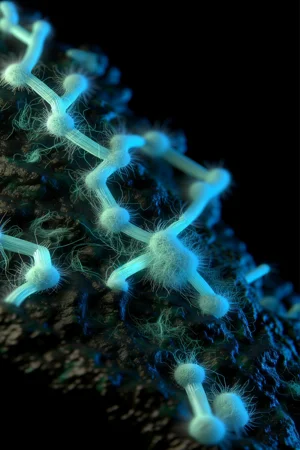
"Wonders of Microbes" reveals the intricate networks of microscopic life that serve as the foundation for Earth's ecosystems. Through advanced microscopy and molecular analysis, scientists have discovered that bacteria and fungi are not merely decomposers but architects of environmental stability and biological innovation. The book examines three primary themes: the role of soil microbiomes in maintaining terrestrial ecosystems, fungal networks that facilitate inter-plant communication, and bacterial communities that influence climate patterns. These microscopic organisms, numbering in the billions per gram of soil, orchestrate nutrient cycles, support plant growth, and maintain atmospheric balance. Drawing from recent microbiological research across five continents, the text presents evidence from long-term field studies, laboratory experiments, and genomic analyses. The first section explores soil bacteria's ability to fix nitrogen, sequester carbon, and break down organic matter, processes that directly impact agricultural productivity and ecosystem resilience. The second section delves into mycorrhizal fungi, documenting their role in forest communication networks and resource distribution among plant communities. The final section examines how marine bacteria influence weather patterns through cloud formation and precipitation cycles. The book's central thesis demonstrates that microorganisms are essential engineers of planetary health, arguing that understanding their functions is crucial for addressing environmental challenges. This argument is supported by data from the Human Microbiome Project, the Earth Microbiome Project, and numerous independent research institutions. The content integrates concepts from ecology, chemistry, and climate science, presenting a multidisciplinary view of microbial influence. For instance, the text explains how bacterial metabolic processes connect to geological mineral formation and how fungal networks parallel human-designed communication systems. The writing maintains a systematic approach, beginning with fundamental microbiological concepts before progressing to complex ecological interactions. Technical terms are clearly defined, making the content accessible to readers with basic science background while providing depth for specialists. Research methods are thoroughly explained, including new technologies in environmental DNA sampling, real-time PCR analysis, and environmental metabolomics. The book features case studies from diverse ecosystems, from Arctic tundra to tropical rainforests, demonstrating the universal importance of microbial life. The target audience includes biology students, environmental scientists, and informed general readers interested in natural sciences. The content is particularly relevant for those concerned with ecosystem conservation, agricultural sustainability, and climate change mitigation. Current debates addressed include the role of microbes in climate change adaptation, the impact of agricultural practices on soil microbial diversity, and the potential use of engineered microorganisms in ecosystem restoration. Practical applications focus on sustainable agriculture, forest management, and bioremediation techniques. The book provides specific examples of how understanding microbial processes can improve soil fertility, reduce chemical inputs, and enhance ecosystem restoration efforts. The scope encompasses both natural and managed ecosystems but maintains focus on wild-type microorganisms rather than laboratory-modified strains. While the book acknowledges the potential of synthetic biology, it emphasizes the study and preservation of natural microbial communities. Through careful examination of current research and established ecological principles, "Wonders of Microbes" presents a comprehensive view of how microscopic life forms shape our world and influence our future.
"Wonders of Microbes" reveals the intricate networks of microscopic life that serve as the foundation for Earth's ecosystems. Through advanced microscopy and molecular analysis, scientists have discovered that bacteria and fungi are not merely decomposers but architects of environmental stability and biological innovation. The book examines three primary themes: the role of soil microbiomes in maintaining terrestrial ecosystems, fungal networks that facilitate inter-plant communication, and bacterial communities that influence climate patterns. These microscopic organisms, numbering in the billions per gram of soil, orchestrate nutrient cycles, support plant growth, and maintain atmospheric balance. Drawing from recent microbiological research across five continents, the text presents evidence from long-term field studies, laboratory experiments, and genomic analyses. The first section explores soil bacteria's ability to fix nitrogen, sequester carbon, and break down organic matter, processes that directly impact agricultural productivity and ecosystem resilience. The second section delves into mycorrhizal fungi, documenting their role in forest communication networks and resource distribution among plant communities. The final section examines how marine bacteria influence weather patterns through cloud formation and precipitation cycles. The book's central thesis demonstrates that microorganisms are essential engineers of planetary health, arguing that understanding their functions is crucial for addressing environmental challenges. This argument is supported by data from the Human Microbiome Project, the Earth Microbiome Project, and numerous independent research institutions. The content integrates concepts from ecology, chemistry, and climate science, presenting a multidisciplinary view of microbial influence. For instance, the text explains how bacterial metabolic processes connect to geological mineral formation and how fungal networks parallel human-designed communication systems. The writing maintains a systematic approach, beginning with fundamental microbiological concepts before progressing to complex ecological interactions. Technical terms are clearly defined, making the content accessible to readers with basic science background while providing depth for specialists. Research methods are thoroughly explained, including new technologies in environmental DNA sampling, real-time PCR analysis, and environmental metabolomics. The book features case studies from diverse ecosystems, from Arctic tundra to tropical rainforests, demonstrating the universal importance of microbial life. The target audience includes biology students, environmental scientists, and informed general readers interested in natural sciences. The content is particularly relevant for those concerned with ecosystem conservation, agricultural sustainability, and climate change mitigation. Current debates addressed include the role of microbes in climate change adaptation, the impact of agricultural practices on soil microbial diversity, and the potential use of engineered microorganisms in ecosystem restoration. Practical applications focus on sustainable agriculture, forest management, and bioremediation techniques. The book provides specific examples of how understanding microbial processes can improve soil fertility, reduce chemical inputs, and enhance ecosystem restoration efforts. The scope encompasses both natural and managed ecosystems but maintains focus on wild-type microorganisms rather than laboratory-modified strains. While the book acknowledges the potential of synthetic biology, it emphasizes the study and preservation of natural microbial communities. Through careful examination of current research and established ecological principles, "Wonders of Microbes" presents a comprehensive view of how microscopic life forms shape our world and influence our future.
"Wonders of Microbes" unveils the fascinating world of microscopic organisms that fundamentally shape our planet's ecosystems. This comprehensive exploration reveals how billions of microorganisms in each gram of soil serve as nature's hidden architects, orchestrating everything from nutrient cycles to climate patterns. The book presents cutting-edge research from five continents, combining insights from advanced microscopy and molecular analysis to demonstrate how these tiny life forms impact our world on a massive scale. Through a systematic progression across three main themes, the book examines soil microbiomes, fungal networks, and bacterial communities. Readers discover how soil bacteria fix nitrogen and sequester carbon, while mycorrhizal fungi create sophisticated communication networks among plants. Perhaps most surprisingly, the text reveals how marine bacteria influence weather patterns and precipitation cycles, demonstrating the far-reaching impact of microbial life. The book stands out for its accessible presentation of complex scientific concepts, making it valuable for both students and environmental scientists. Drawing from projects like the Earth Microbiome Project and featuring case studies from Arctic tundra to tropical rainforests, it offers practical applications for sustainable agriculture and ecosystem restoration. By integrating ecology, chemistry, and climate science, the text presents a compelling argument for understanding and preserving these essential microscopic communities that maintain our planet's health.
Book Details
ISBN
9788233946333
Publisher
Publifye AS
Your Licenses
You don't own any licenses for this book
Purchase a license below to unlock this book and download the EPUB.
Purchase License
Select a tier to unlock this book
Need bulk licensing?
Contact us for enterprise agreements.