
About This Book
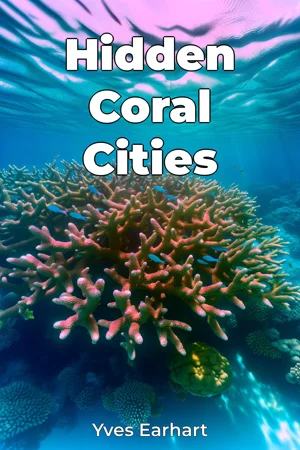
"Hidden Coral Cities" unveils the complex architectural systems of coral reef ecosystems, revealing how these marine metropolises support up to 25% of all ocean species while occupying less than 1% of the ocean floor. Through comprehensive marine studies and recent scientific findings, this book examines the intricate relationships between coral structures and marine biodiversity. The work presents three core themes: the engineering principles behind coral reef construction, the symbiotic relationships that sustain reef communities, and the adaptive mechanisms that allow these systems to persist through environmental changes. These topics provide crucial insights into marine ecosystem dynamics and offer valuable lessons for conservation biology. Drawing from fifty years of marine research, including data from the Great Barrier Reef Marine Park Authority and the National Oceanic and Atmospheric Administration, the book establishes how coral polyps create elaborate calcium carbonate frameworks that form the foundation of reef ecosystems. These structures evolve through centuries of biological and geological processes, creating specialized habitats that support distinct species assemblages. The book's central argument posits that coral reefs function as biological cities, complete with neighborhoods, transportation networks, and resource distribution systems. This urban ecology paradigm provides a fresh framework for understanding reef dynamics and their significance to global marine biodiversity. Structured in three parts, the text first explores the physical architecture of reef systems, including the formation of different reef types and their geological development. The second section examines the biological interactions within reef communities, from microscopic algae to apex predators. The final portion addresses conservation challenges and potential solutions based on current research. The research presented combines traditional marine biology methodologies with cutting-edge technologies, including 3D mapping of reef structures, genetic analysis of coral populations, and long-term monitoring data from marine research stations worldwide. This multifaceted approach provides comprehensive evidence for the book's key arguments. The work connects marine biology with urban planning, chemistry, and climate science, demonstrating how reef systems influence global ocean chemistry, coastal protection, and human economies. These interdisciplinary links highlight the far-reaching implications of reef ecosystem health. Written in an analytical style that balances technical accuracy with accessibility, the text serves both academic and general audiences interested in marine science, environmental conservation, and natural history. Each chapter includes detailed diagrams, maps, and photographs that illustrate key concepts. The book is particularly relevant for marine biology students, environmental scientists, conservation practitioners, and informed readers seeking to understand marine ecosystem dynamics. It provides practical insights for reef conservation and management while addressing current debates about reef restoration techniques and climate change adaptation strategies. The scope encompasses both shallow and deep-water reef systems worldwide, though it focuses primarily on tropical coral reefs where biodiversity is highest. The text acknowledges the limitations of current research methods and areas where scientific understanding continues to evolve. The work addresses ongoing scientific discussions regarding reef resilience, restoration methods, and the effectiveness of marine protected areas. It presents evidence-based perspectives on these debates while maintaining objective analysis of different approaches to reef conservation. Real-world applications include guidelines for marine protected area design, reef restoration techniques, and sustainable coastal development practices, making the book valuable for conservation planning and policy development. This systematic examination of coral reef ecosystems provides readers with a comprehensive understanding of these crucial marine systems while highlighting their significance to global ocean health and biodiversity conservation.
"Hidden Coral Cities" unveils the complex architectural systems of coral reef ecosystems, revealing how these marine metropolises support up to 25% of all ocean species while occupying less than 1% of the ocean floor. Through comprehensive marine studies and recent scientific findings, this book examines the intricate relationships between coral structures and marine biodiversity. The work presents three core themes: the engineering principles behind coral reef construction, the symbiotic relationships that sustain reef communities, and the adaptive mechanisms that allow these systems to persist through environmental changes. These topics provide crucial insights into marine ecosystem dynamics and offer valuable lessons for conservation biology. Drawing from fifty years of marine research, including data from the Great Barrier Reef Marine Park Authority and the National Oceanic and Atmospheric Administration, the book establishes how coral polyps create elaborate calcium carbonate frameworks that form the foundation of reef ecosystems. These structures evolve through centuries of biological and geological processes, creating specialized habitats that support distinct species assemblages. The book's central argument posits that coral reefs function as biological cities, complete with neighborhoods, transportation networks, and resource distribution systems. This urban ecology paradigm provides a fresh framework for understanding reef dynamics and their significance to global marine biodiversity. Structured in three parts, the text first explores the physical architecture of reef systems, including the formation of different reef types and their geological development. The second section examines the biological interactions within reef communities, from microscopic algae to apex predators. The final portion addresses conservation challenges and potential solutions based on current research. The research presented combines traditional marine biology methodologies with cutting-edge technologies, including 3D mapping of reef structures, genetic analysis of coral populations, and long-term monitoring data from marine research stations worldwide. This multifaceted approach provides comprehensive evidence for the book's key arguments. The work connects marine biology with urban planning, chemistry, and climate science, demonstrating how reef systems influence global ocean chemistry, coastal protection, and human economies. These interdisciplinary links highlight the far-reaching implications of reef ecosystem health. Written in an analytical style that balances technical accuracy with accessibility, the text serves both academic and general audiences interested in marine science, environmental conservation, and natural history. Each chapter includes detailed diagrams, maps, and photographs that illustrate key concepts. The book is particularly relevant for marine biology students, environmental scientists, conservation practitioners, and informed readers seeking to understand marine ecosystem dynamics. It provides practical insights for reef conservation and management while addressing current debates about reef restoration techniques and climate change adaptation strategies. The scope encompasses both shallow and deep-water reef systems worldwide, though it focuses primarily on tropical coral reefs where biodiversity is highest. The text acknowledges the limitations of current research methods and areas where scientific understanding continues to evolve. The work addresses ongoing scientific discussions regarding reef resilience, restoration methods, and the effectiveness of marine protected areas. It presents evidence-based perspectives on these debates while maintaining objective analysis of different approaches to reef conservation. Real-world applications include guidelines for marine protected area design, reef restoration techniques, and sustainable coastal development practices, making the book valuable for conservation planning and policy development. This systematic examination of coral reef ecosystems provides readers with a comprehensive understanding of these crucial marine systems while highlighting their significance to global ocean health and biodiversity conservation.
"Hidden Coral Cities" offers a fascinating exploration of coral reef ecosystems, revealing how these underwater metropolises support a quarter of all ocean species while occupying just a tiny fraction of the ocean floor. The book presents a groundbreaking perspective by comparing coral reefs to urban systems, complete with neighborhoods, transportation networks, and resource distribution systems, providing readers with an innovative framework for understanding these complex marine environments. Through a combination of traditional marine biology and cutting-edge technology, including 3D mapping and genetic analysis, the book guides readers through three main sections: the physical architecture of reef systems, the intricate biological interactions within reef communities, and pressing conservation challenges. Drawing from fifty years of marine research, including data from prestigious organizations like the Great Barrier Reef Marine Park Authority, the text illuminates how coral polyps construct elaborate calcium carbonate frameworks that become the foundation for entire ecosystems. What sets this book apart is its interdisciplinary approach, connecting marine biology with urban planning, chemistry, and climate science to demonstrate the far-reaching implications of reef ecosystem health. Written in an accessible yet technically accurate style, it serves both academic and general audiences, offering practical insights for reef conservation while addressing current debates about restoration techniques and climate change adaptation strategies. The inclusion of detailed diagrams, maps, and photographs helps readers visualize and understand these complex marine systems that are so crucial to global ocean health.
Book Details
ISBN
9788233946326
Publisher
Publifye AS
Your Licenses
You don't own any licenses for this book
Purchase a license below to unlock this book and download the EPUB.
Purchase License
Select a tier to unlock this book
Need bulk licensing?
Contact us for enterprise agreements.