
About This Book
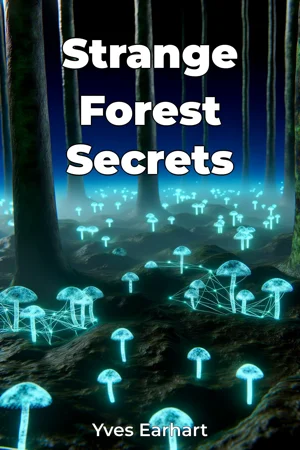
"Strange Forest Secrets" delves into the overlooked mechanisms and relationships within forest ecosystems that challenge our current understanding of environmental science. The book presents research-backed findings about species interactions that have remained largely undocumented in mainstream scientific literature. The work focuses on three primary areas: underground fungal networks that facilitate inter-species communication, nocturnal plant behaviors that influence forest dynamics, and the role of seemingly insignificant organisms in maintaining ecosystem balance. These topics emerge from two decades of field research across temperate and tropical forests, combining traditional ecological studies with advanced monitoring technologies. The book builds upon foundational ecological principles established in the 1960s while incorporating recent discoveries from 2010-2023. It presents evidence that small-scale biological interactions often have cascade effects throughout entire ecosystems, demonstrating how contemporary environmental studies have overlooked critical ecological relationships. The central thesis argues that forest ecosystems operate through complex networks of cooperation and communication that extend beyond previously recognized boundaries of species interaction. This understanding holds significant implications for conservation strategies and forest management practices. Structured in three main sections, the book first establishes the historical context of forest research, then presents new findings about inter-species relationships, and concludes with practical applications for conservation and forest management. Each chapter integrates case studies from diverse geographical locations, supported by data from long-term monitoring stations and advanced molecular analysis. The research methodology combines traditional field observations with modern techniques, including DNA sequencing, infrared photography, and chemical analysis of plant communications. The findings draw from collaborations with indigenous knowledge holders, botanical gardens, and research institutions across four continents. The work connects ecology with chemistry, physics, and social sciences, demonstrating how forest processes influence climate patterns, soil composition, and even human social structures in forest-dependent communities. These interdisciplinary connections provide a comprehensive framework for understanding forest ecosystems. The book maintains an academic tone while presenting complex information through accessible narratives and detailed illustrations. It targets environmental professionals, researchers, and informed general readers interested in deeper ecological understanding. The content is particularly relevant for conservation managers, environmental policy makers, and students in environmental sciences. Rather than attempting to cover all aspects of forest ecology, the book focuses specifically on previously undocumented species interactions and their implications for ecosystem management. It addresses ongoing debates about forest conservation methods and challenges several commonly held assumptions about species isolation and competition. Practical applications include improved methods for forest restoration, more effective conservation strategies, and new approaches to sustainable resource management. The book also discusses how understanding these hidden relationships can inform urban forest planning and climate change adaptation strategies. The work acknowledges current limitations in research methodology and areas requiring further study, maintaining scientific integrity while pointing toward future research directions. It addresses controversies regarding traditional forest management practices and presents evidence-based alternatives. This comprehensive examination of forest ecosystems reveals patterns of interaction that reshape our understanding of natural systems while providing practical tools for environmental protection and restoration.
"Strange Forest Secrets" delves into the overlooked mechanisms and relationships within forest ecosystems that challenge our current understanding of environmental science. The book presents research-backed findings about species interactions that have remained largely undocumented in mainstream scientific literature. The work focuses on three primary areas: underground fungal networks that facilitate inter-species communication, nocturnal plant behaviors that influence forest dynamics, and the role of seemingly insignificant organisms in maintaining ecosystem balance. These topics emerge from two decades of field research across temperate and tropical forests, combining traditional ecological studies with advanced monitoring technologies. The book builds upon foundational ecological principles established in the 1960s while incorporating recent discoveries from 2010-2023. It presents evidence that small-scale biological interactions often have cascade effects throughout entire ecosystems, demonstrating how contemporary environmental studies have overlooked critical ecological relationships. The central thesis argues that forest ecosystems operate through complex networks of cooperation and communication that extend beyond previously recognized boundaries of species interaction. This understanding holds significant implications for conservation strategies and forest management practices. Structured in three main sections, the book first establishes the historical context of forest research, then presents new findings about inter-species relationships, and concludes with practical applications for conservation and forest management. Each chapter integrates case studies from diverse geographical locations, supported by data from long-term monitoring stations and advanced molecular analysis. The research methodology combines traditional field observations with modern techniques, including DNA sequencing, infrared photography, and chemical analysis of plant communications. The findings draw from collaborations with indigenous knowledge holders, botanical gardens, and research institutions across four continents. The work connects ecology with chemistry, physics, and social sciences, demonstrating how forest processes influence climate patterns, soil composition, and even human social structures in forest-dependent communities. These interdisciplinary connections provide a comprehensive framework for understanding forest ecosystems. The book maintains an academic tone while presenting complex information through accessible narratives and detailed illustrations. It targets environmental professionals, researchers, and informed general readers interested in deeper ecological understanding. The content is particularly relevant for conservation managers, environmental policy makers, and students in environmental sciences. Rather than attempting to cover all aspects of forest ecology, the book focuses specifically on previously undocumented species interactions and their implications for ecosystem management. It addresses ongoing debates about forest conservation methods and challenges several commonly held assumptions about species isolation and competition. Practical applications include improved methods for forest restoration, more effective conservation strategies, and new approaches to sustainable resource management. The book also discusses how understanding these hidden relationships can inform urban forest planning and climate change adaptation strategies. The work acknowledges current limitations in research methodology and areas requiring further study, maintaining scientific integrity while pointing toward future research directions. It addresses controversies regarding traditional forest management practices and presents evidence-based alternatives. This comprehensive examination of forest ecosystems reveals patterns of interaction that reshape our understanding of natural systems while providing practical tools for environmental protection and restoration.
"Strange Forest Secrets" unveils the hidden world of forest ecosystems, exploring fascinating relationships and mechanisms that reshape our understanding of how forests truly function. Drawing from two decades of field research across temperate and tropical regions, the book reveals groundbreaking discoveries about underground fungal networks that enable inter-species communication and previously undocumented nocturnal plant behaviors that influence entire forest communities. Through a blend of traditional ecological studies and cutting-edge monitoring technologies, the book challenges conventional wisdom about forest ecosystems. It presents compelling evidence that small-scale biological interactions create ripple effects throughout entire forest systems, demonstrating how seemingly minor organisms play crucial roles in maintaining ecosystem balance. The research combines DNA sequencing, infrared photography, and chemical analysis, while also incorporating valuable indigenous knowledge from four continents. The book progresses logically from historical context to new findings and practical applications, making complex ecological concepts accessible through narrative storytelling and detailed illustrations. What sets this work apart is its focus on previously undocumented species interactions and their implications for conservation and forest management. For environmental professionals, researchers, and nature enthusiasts, this comprehensive examination offers both theoretical insights and practical tools for forest restoration and sustainable ecosystem management.
Book Details
ISBN
9788233946319
Publisher
Publifye AS
Your Licenses
You don't own any licenses for this book
Purchase a license below to unlock this book and download the EPUB.
Purchase License
Select a tier to unlock this book
Need bulk licensing?
Contact us for enterprise agreements.