
About This Book
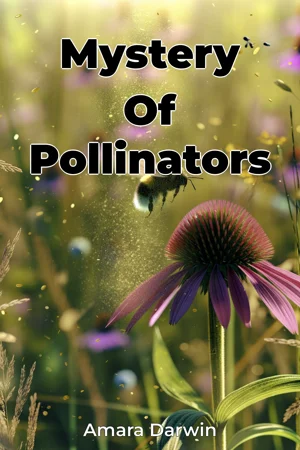
"Mystery of Pollinators" explores the fundamental mechanisms of plant reproduction through the lens of diverse species interactions, presenting extensive research from leading biological studies and field observations. The book examines how the intricate relationship between plants and their pollinators has evolved over millions of years, shaping Earth's biodiversity and agricultural systems. The work begins by addressing a critical question: How do less than 1,000 pollinator species enable the reproduction of over 80% of the world's flowering plants? This complex web of interactions forms the foundation for terrestrial ecosystems and global food production. Through detailed analysis, the book reveals the sophisticated communication methods between plants and pollinators, including chemical signals, visual markers, and temporal patterns. Three main sections structure the narrative: First, the biochemical mechanisms of pollination, including the role of proteins, enzymes, and genetic factors in successful reproduction. Second, the behavioral patterns of major pollinator groups, from insects to vertebrates, supported by recent field studies and laboratory findings. Third, the implications of pollinator decline on ecosystem stability and agricultural productivity, incorporating data from multiple continents. The book draws from peer-reviewed research published in prominent journals such as Nature, Science, and specialized botanical publications. It presents findings from long-term studies conducted across various ecosystems, from tropical rainforests to alpine meadows, providing comprehensive coverage of pollination dynamics in different environments. Key arguments emphasize the interconnected nature of species relationships, demonstrating how the loss of single pollinator species can trigger cascading effects through entire ecosystems. The text integrates concepts from evolutionary biology, chemistry, and agricultural science to provide a multifaceted understanding of pollination processes. Practical applications include detailed guidelines for creating pollinator-friendly environments, techniques for monitoring local pollinator populations, and strategies for supporting agricultural pollination services. The work addresses current challenges in pollinator conservation, examining factors such as habitat loss, pesticide use, and climate change impacts on pollinator-plant relationships. The writing maintains an academic foundation while remaining accessible to readers with basic scientific literacy. Technical terms are carefully introduced and explained, allowing readers to build their understanding progressively. The book incorporates detailed illustrations, microscopy images, and data visualizations to clarify complex concepts. Target readers include biology students, environmental professionals, agricultural specialists, and informed general readers interested in ecological processes. The content serves both as an academic reference and a practical guide for conservation efforts. The scope encompasses both wild and managed pollinator systems, though it focuses primarily on insects and flowering plants due to their predominant role in global pollination. The book acknowledges current debates regarding the relative importance of different pollinator groups and competing conservation strategies. Interdisciplinary connections link pollination biology to agricultural economics, climate science, and conservation policy, demonstrating the broad relevance of pollinator research to multiple fields. The work concludes with an examination of emerging research directions and urgent priorities in pollinator conservation. This systematic exploration of pollination biology combines rigorous scientific analysis with practical conservation strategies, providing readers with both theoretical understanding and actionable knowledge for supporting pollinator populations and plant reproduction systems.
"Mystery of Pollinators" explores the fundamental mechanisms of plant reproduction through the lens of diverse species interactions, presenting extensive research from leading biological studies and field observations. The book examines how the intricate relationship between plants and their pollinators has evolved over millions of years, shaping Earth's biodiversity and agricultural systems. The work begins by addressing a critical question: How do less than 1,000 pollinator species enable the reproduction of over 80% of the world's flowering plants? This complex web of interactions forms the foundation for terrestrial ecosystems and global food production. Through detailed analysis, the book reveals the sophisticated communication methods between plants and pollinators, including chemical signals, visual markers, and temporal patterns. Three main sections structure the narrative: First, the biochemical mechanisms of pollination, including the role of proteins, enzymes, and genetic factors in successful reproduction. Second, the behavioral patterns of major pollinator groups, from insects to vertebrates, supported by recent field studies and laboratory findings. Third, the implications of pollinator decline on ecosystem stability and agricultural productivity, incorporating data from multiple continents. The book draws from peer-reviewed research published in prominent journals such as Nature, Science, and specialized botanical publications. It presents findings from long-term studies conducted across various ecosystems, from tropical rainforests to alpine meadows, providing comprehensive coverage of pollination dynamics in different environments. Key arguments emphasize the interconnected nature of species relationships, demonstrating how the loss of single pollinator species can trigger cascading effects through entire ecosystems. The text integrates concepts from evolutionary biology, chemistry, and agricultural science to provide a multifaceted understanding of pollination processes. Practical applications include detailed guidelines for creating pollinator-friendly environments, techniques for monitoring local pollinator populations, and strategies for supporting agricultural pollination services. The work addresses current challenges in pollinator conservation, examining factors such as habitat loss, pesticide use, and climate change impacts on pollinator-plant relationships. The writing maintains an academic foundation while remaining accessible to readers with basic scientific literacy. Technical terms are carefully introduced and explained, allowing readers to build their understanding progressively. The book incorporates detailed illustrations, microscopy images, and data visualizations to clarify complex concepts. Target readers include biology students, environmental professionals, agricultural specialists, and informed general readers interested in ecological processes. The content serves both as an academic reference and a practical guide for conservation efforts. The scope encompasses both wild and managed pollinator systems, though it focuses primarily on insects and flowering plants due to their predominant role in global pollination. The book acknowledges current debates regarding the relative importance of different pollinator groups and competing conservation strategies. Interdisciplinary connections link pollination biology to agricultural economics, climate science, and conservation policy, demonstrating the broad relevance of pollinator research to multiple fields. The work concludes with an examination of emerging research directions and urgent priorities in pollinator conservation. This systematic exploration of pollination biology combines rigorous scientific analysis with practical conservation strategies, providing readers with both theoretical understanding and actionable knowledge for supporting pollinator populations and plant reproduction systems.
"Mystery of Pollinators" delves into the fascinating world of plant reproduction and species interactions, revealing how a relatively small number of pollinator species enable the reproduction of most flowering plants worldwide. This comprehensive exploration examines the sophisticated communication methods between plants and their pollinators, from chemical signals to visual markers, demonstrating the intricate dance that has evolved over millions of years to maintain Earth's biodiversity. The book progresses through three distinct sections, beginning with the biochemical foundations of pollination, moving to the behavioral patterns of various pollinator groups, and concluding with the crucial implications of pollinator decline on ecosystem stability. Through detailed analysis supported by peer-reviewed research, readers discover how less than 1,000 pollinator species facilitate the reproduction of over 80% of flowering plants, forming the backbone of terrestrial ecosystems and global food production. What sets this work apart is its multifaceted approach, combining rigorous scientific analysis with practical conservation strategies. While maintaining academic integrity, the book remains accessible through carefully explained technical concepts and detailed illustrations. For biology students, environmental professionals, and informed general readers, it serves both as an academic reference and a practical guide, offering actionable insights for supporting pollinator populations while illuminating the complex web of relationships that sustain our natural world.
Book Details
ISBN
9788233946296
Publisher
Publifye AS
Your Licenses
You don't own any licenses for this book
Purchase a license below to unlock this book and download the EPUB.
Purchase License
Select a tier to unlock this book
Need bulk licensing?
Contact us for enterprise agreements.