
About This Book
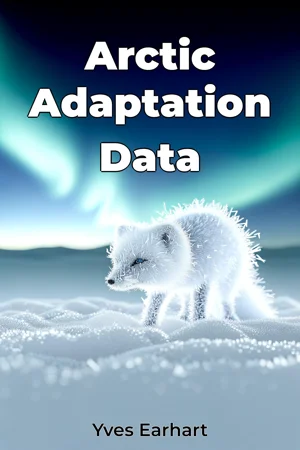
"Arctic Adaptation Data" presents a data-driven analysis of the sophisticated survival mechanisms developed by organisms in Earth's polar regions, where temperatures regularly plunge below -50°C and darkness persists for months. The book systematically examines two primary areas: metabolic adaptations in polar species and photoperiod response mechanisms. These topics are crucial for understanding both current biodiversity in extreme environments and potential biological responses to climate change. A third focus explores the interconnected survival strategies among species in polar ecosystems. Drawing from recent research published in journals including "Polar Biology" and "Arctic Science," the text presents comprehensive data on physiological and behavioral adaptations. The central thesis demonstrates how polar organisms have developed highly specialized molecular and physiological systems that operate efficiently in conditions that would be lethal to most other life forms. The content is structured in three main sections. The first examines cellular-level adaptations, including antifreeze proteins in fish blood and modified membrane lipids in plants. The second section analyzes photoperiod responses, detailing how organisms maximize limited sunlight through enhanced photosynthetic efficiency and modified circadian rhythms. The final section synthesizes these adaptations into ecosystem-wide patterns. Research evidence includes long-term observational data from polar research stations, molecular analyses of cold-resistant proteins, and comparative physiological studies. The book incorporates findings from the International Polar Year project and ongoing monitoring programs in both Arctic and Antarctic regions. The work connects biology with chemistry, physics, and climate science, showing how molecular structures influence cold resistance and how atmospheric conditions affect biological rhythms. These interdisciplinary links provide context for understanding polar adaptations as part of broader natural systems. Written in a technical yet accessible style, the text uses detailed diagrams, data tables, and case studies to illustrate complex concepts. The target audience includes biology researchers, environmental scientists, and advanced students in life sciences, though the material remains accessible to informed general readers interested in polar ecosystems. The book addresses current debates in polar biology, including questions about adaptation rates versus climate change velocity and the potential for genetic transfer of cold-resistant traits to agricultural species. It maintains objective analysis of competing hypotheses regarding the evolution of cold-resistance mechanisms. Practical applications include insights for cold-storage technology, agricultural crop development, and conservation biology. The text provides specific examples of how understanding polar adaptations has led to innovations in freeze-resistant materials and crop varieties. While focused primarily on current adaptation mechanisms, the book acknowledges gaps in current knowledge, particularly regarding the limits of adaptive capacity and the molecular basis of some cold-resistance traits. It emphasizes the need for continued research in these areas. Throughout, the work maintains rigorous scientific standards while presenting information in a structured, logical progression. It avoids sensationalism in favor of detailed, evidence-based analysis of how life persists in Earth's most challenging environments. The book serves as both a comprehensive reference for polar biology and a framework for understanding biological adaptation in extreme conditions.
"Arctic Adaptation Data" presents a data-driven analysis of the sophisticated survival mechanisms developed by organisms in Earth's polar regions, where temperatures regularly plunge below -50°C and darkness persists for months. The book systematically examines two primary areas: metabolic adaptations in polar species and photoperiod response mechanisms. These topics are crucial for understanding both current biodiversity in extreme environments and potential biological responses to climate change. A third focus explores the interconnected survival strategies among species in polar ecosystems. Drawing from recent research published in journals including "Polar Biology" and "Arctic Science," the text presents comprehensive data on physiological and behavioral adaptations. The central thesis demonstrates how polar organisms have developed highly specialized molecular and physiological systems that operate efficiently in conditions that would be lethal to most other life forms. The content is structured in three main sections. The first examines cellular-level adaptations, including antifreeze proteins in fish blood and modified membrane lipids in plants. The second section analyzes photoperiod responses, detailing how organisms maximize limited sunlight through enhanced photosynthetic efficiency and modified circadian rhythms. The final section synthesizes these adaptations into ecosystem-wide patterns. Research evidence includes long-term observational data from polar research stations, molecular analyses of cold-resistant proteins, and comparative physiological studies. The book incorporates findings from the International Polar Year project and ongoing monitoring programs in both Arctic and Antarctic regions. The work connects biology with chemistry, physics, and climate science, showing how molecular structures influence cold resistance and how atmospheric conditions affect biological rhythms. These interdisciplinary links provide context for understanding polar adaptations as part of broader natural systems. Written in a technical yet accessible style, the text uses detailed diagrams, data tables, and case studies to illustrate complex concepts. The target audience includes biology researchers, environmental scientists, and advanced students in life sciences, though the material remains accessible to informed general readers interested in polar ecosystems. The book addresses current debates in polar biology, including questions about adaptation rates versus climate change velocity and the potential for genetic transfer of cold-resistant traits to agricultural species. It maintains objective analysis of competing hypotheses regarding the evolution of cold-resistance mechanisms. Practical applications include insights for cold-storage technology, agricultural crop development, and conservation biology. The text provides specific examples of how understanding polar adaptations has led to innovations in freeze-resistant materials and crop varieties. While focused primarily on current adaptation mechanisms, the book acknowledges gaps in current knowledge, particularly regarding the limits of adaptive capacity and the molecular basis of some cold-resistance traits. It emphasizes the need for continued research in these areas. Throughout, the work maintains rigorous scientific standards while presenting information in a structured, logical progression. It avoids sensationalism in favor of detailed, evidence-based analysis of how life persists in Earth's most challenging environments. The book serves as both a comprehensive reference for polar biology and a framework for understanding biological adaptation in extreme conditions.
"Arctic Adaptation Data" offers a fascinating exploration of how organisms survive in Earth's most extreme polar environments, where temperatures drop below -50°C and darkness rules for months at a time. The book masterfully weaves together research findings to reveal the remarkable ways species have evolved to thrive in conditions that would be lethal to most life forms. From antifreeze proteins in fish blood to modified membrane lipids in plants, the text illuminates the sophisticated molecular and physiological mechanisms that enable polar life to persist. The book's systematic approach progresses through three key areas: cellular-level adaptations, photoperiod responses, and ecosystem-wide survival strategies. Drawing from extensive research published in prominent journals and data from polar research stations, it presents compelling evidence of how organisms have developed specialized systems to handle extreme cold and limited sunlight. Particularly intriguing are the descriptions of how species maximize photosynthetic efficiency during brief periods of light and maintain modified circadian rhythms in months-long darkness. This comprehensive work bridges multiple scientific disciplines, connecting biology with chemistry, physics, and climate science to provide a holistic understanding of polar adaptations. While maintaining technical accuracy, the book remains accessible through its use of detailed diagrams, data tables, and relevant case studies. It serves as both a valuable reference for researchers and an enlightening resource for anyone interested in understanding how life adapts to Earth's most challenging environments, while also offering practical applications for cold-storage technology and agricultural development.
Book Details
ISBN
9788233946289
Publisher
Publifye AS
Your Licenses
You don't own any licenses for this book
Purchase a license below to unlock this book and download the EPUB.
Purchase License
Select a tier to unlock this book
Need bulk licensing?
Contact us for enterprise agreements.