
About This Book
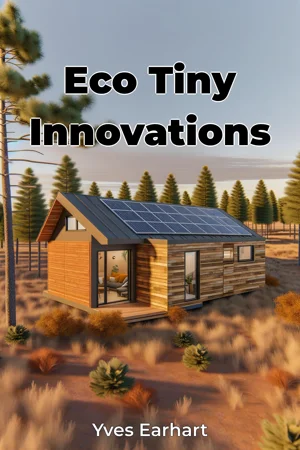
"Eco Tiny Innovations" addresses the critical intersection of sustainable living and compact housing solutions at a time when environmental concerns and housing affordability have become global priorities. The book presents a systematic analysis of cutting-edge sustainable technologies and practices specifically adapted for minimal-footprint dwellings. The work examines three primary areas: integrated solar solutions for small-scale applications, the effective utilization of reclaimed materials in construction, and the optimization of resource consumption in compact living spaces. These topics are particularly relevant as urban density increases and environmental pressures demand more efficient housing solutions. The book establishes its foundation with a detailed overview of the tiny house movement's evolution from the 1970s to present day, providing context for current innovations. Readers receive essential background on building codes, zoning requirements, and basic architectural principles that inform sustainable small-space design. Central to the book's thesis is the argument that technological innovation in miniature housing represents a viable path toward reducing residential environmental impact while maintaining modern living standards. This position is supported by extensive case studies, technical specifications, and performance data from existing projects across various climate zones. The content is structured in three main sections. The first explores solar integration, covering photovoltaic systems, passive solar design, and energy storage solutions scaled for tiny homes. The second section analyzes the structural and aesthetic applications of reclaimed materials, including certification requirements and sourcing strategies. The final section addresses resource-efficient systems, from water recycling to space-saving mechanical solutions. Research presented includes data from the Department of Energy's small housing studies, international tiny home communities, and original surveys of over 200 tiny home residents. The book incorporates technical drawings, energy performance metrics, and cost-benefit analyses of various sustainable systems. The work connects environmental science, architectural design, and social psychology, demonstrating how compact living influences both resource consumption and occupant behavior. It examines the relationship between space utilization and human adaptation, supported by behavioral studies and post-occupancy evaluations. The book employs a technical yet accessible approach, using clear language to explain complex concepts. Each chapter includes practical implementation guides, making it valuable for both professionals and motivated DIY enthusiasts. The primary audience includes architects, environmental consultants, tiny home builders, and individuals planning minimal-impact housing projects. Real-world applications are emphasized through detailed case studies, construction specifications, and step-by-step implementation guides. The book addresses current debates in the field, including the scalability of tiny house communities and their role in addressing housing crises. While maintaining focus on residential applications under 400 square feet, the book acknowledges that not all solutions are universally applicable, providing guidance for adapting recommendations to local conditions and regulations. The work stands out through its integration of quantitative performance data with practical building strategies, offering readers both theoretical understanding and actionable insights. It maintains an evidence-based approach throughout, relying on documented research and verified performance metrics rather than anecdotal evidence. The technical content is balanced with discussions of regulatory frameworks, community planning, and the social implications of minimal-impact housing, providing readers with a comprehensive understanding of both practical and policy considerations in sustainable tiny house development.
"Eco Tiny Innovations" addresses the critical intersection of sustainable living and compact housing solutions at a time when environmental concerns and housing affordability have become global priorities. The book presents a systematic analysis of cutting-edge sustainable technologies and practices specifically adapted for minimal-footprint dwellings. The work examines three primary areas: integrated solar solutions for small-scale applications, the effective utilization of reclaimed materials in construction, and the optimization of resource consumption in compact living spaces. These topics are particularly relevant as urban density increases and environmental pressures demand more efficient housing solutions. The book establishes its foundation with a detailed overview of the tiny house movement's evolution from the 1970s to present day, providing context for current innovations. Readers receive essential background on building codes, zoning requirements, and basic architectural principles that inform sustainable small-space design. Central to the book's thesis is the argument that technological innovation in miniature housing represents a viable path toward reducing residential environmental impact while maintaining modern living standards. This position is supported by extensive case studies, technical specifications, and performance data from existing projects across various climate zones. The content is structured in three main sections. The first explores solar integration, covering photovoltaic systems, passive solar design, and energy storage solutions scaled for tiny homes. The second section analyzes the structural and aesthetic applications of reclaimed materials, including certification requirements and sourcing strategies. The final section addresses resource-efficient systems, from water recycling to space-saving mechanical solutions. Research presented includes data from the Department of Energy's small housing studies, international tiny home communities, and original surveys of over 200 tiny home residents. The book incorporates technical drawings, energy performance metrics, and cost-benefit analyses of various sustainable systems. The work connects environmental science, architectural design, and social psychology, demonstrating how compact living influences both resource consumption and occupant behavior. It examines the relationship between space utilization and human adaptation, supported by behavioral studies and post-occupancy evaluations. The book employs a technical yet accessible approach, using clear language to explain complex concepts. Each chapter includes practical implementation guides, making it valuable for both professionals and motivated DIY enthusiasts. The primary audience includes architects, environmental consultants, tiny home builders, and individuals planning minimal-impact housing projects. Real-world applications are emphasized through detailed case studies, construction specifications, and step-by-step implementation guides. The book addresses current debates in the field, including the scalability of tiny house communities and their role in addressing housing crises. While maintaining focus on residential applications under 400 square feet, the book acknowledges that not all solutions are universally applicable, providing guidance for adapting recommendations to local conditions and regulations. The work stands out through its integration of quantitative performance data with practical building strategies, offering readers both theoretical understanding and actionable insights. It maintains an evidence-based approach throughout, relying on documented research and verified performance metrics rather than anecdotal evidence. The technical content is balanced with discussions of regulatory frameworks, community planning, and the social implications of minimal-impact housing, providing readers with a comprehensive understanding of both practical and policy considerations in sustainable tiny house development.
"Eco Tiny Innovations" presents a comprehensive exploration of sustainable tiny house development, masterfully bridging the gap between environmental consciousness and practical housing solutions. The book delves into three crucial areas: solar integration for small dwellings, the creative use of reclaimed materials, and optimizing resource efficiency in compact spaces. Drawing from extensive research, including Department of Energy studies and surveys of over 200 tiny home residents, it offers both theoretical framework and practical applications for sustainable living. The book's progression takes readers through a fascinating journey, beginning with the historical context of the tiny house movement from the 1970s to present day. It then advances into detailed technical analyses of solar solutions, structural applications of recycled materials, and innovative resource-efficient systems. What sets this work apart is its evidence-based approach, combining quantitative performance data with real-world case studies across various climate zones, making it relevant for both professionals and DIY enthusiasts. At its core, this technical yet accessible guide demonstrates how compact living can maintain modern standards while significantly reducing environmental impact. The inclusion of practical implementation guides, construction specifications, and step-by-step instructions makes complex concepts approachable. By addressing both the technical aspects of sustainable design and the broader implications of minimal-impact housing, including regulatory frameworks and community planning, the book serves as an invaluable resource for architects, environmental consultants, and anyone interested in sustainable living solutions.
Book Details
ISBN
9788233945725
Publisher
Publifye AS
Your Licenses
You don't own any licenses for this book
Purchase a license below to unlock this book and download the EPUB.
Purchase License
Select a tier to unlock this book
Need bulk licensing?
Contact us for enterprise agreements.