
About This Book
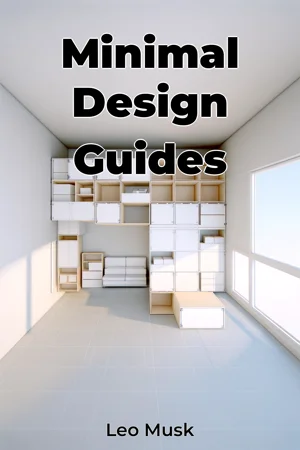
"Minimal Design Guides" addresses the fundamental challenge facing modern urban dwellers: how to create functional, aesthetically pleasing spaces within increasingly limited square footage. This comprehensive guide presents research-based solutions for maximizing living spaces through strategic design principles and practical applications. The book centers on three core pillars: spatial optimization through furniture scaling, integrated storage solutions, and scientific approaches to layout design. These elements form the foundation of a systematic method for transforming confined spaces into efficient, livable environments. Drawing from architectural principles and contemporary design research, the work establishes clear connections between spatial psychology and practical design implementation. The text progresses through carefully structured sections, beginning with an analysis of spatial perception and its impact on daily living. It examines how proper scaling affects room functionality, supported by studies from leading design institutions and real-world case studies from urban centers worldwide. The guide presents precise measurements, proportional relationships, and proven layout formulas that readers can apply to their specific situations. Storage integration receives detailed attention, with the book presenting innovative solutions derived from commercial design practices and adapted for residential use. These include modular systems, multi-functional furniture concepts, and vertical space utilization techniques. Each solution is accompanied by technical specifications, installation considerations, and cost-benefit analyses. The layout techniques section synthesizes principles from architecture, interior design, and environmental psychology. It presents evidence-based strategies for furniture placement, traffic flow optimization, and visual weight distribution. The book includes CAD drawings, 3D renderings, and detailed floor plans to illustrate these concepts. Research support comes from multiple sources, including spatial studies from leading architecture firms, environmental psychology research, and extensive field testing in various urban environments. The methodology combines quantitative spatial analysis with qualitative user experience data, providing a comprehensive framework for space optimization. The work connects to multiple disciplines, including environmental psychology, ergonomics, and sustainable design. These intersections provide readers with a deeper understanding of how spatial design affects human behavior and well-being. The book maintains a practical, solution-oriented approach while incorporating relevant theoretical frameworks. Written in a clear, instructional style, the text balances technical information with accessible explanations. Each chapter includes practical exercises, measurement guides, and implementation checklists. The approach is methodical and educational, suitable for both design professionals and informed homeowners seeking to optimize their living spaces. The primary audience includes urban residents, interior designers, architects, and property developers working with limited space constraints. The content is particularly relevant for metropolitan areas where living spaces continue to decrease in size while increasing in cost. The book acknowledges current debates in the field, including the balance between aesthetic minimalism and functional necessity, and the role of technology in space optimization. It addresses these issues through evidence-based solutions rather than theoretical arguments. Real-world applications form the core of the work, with each principle illustrated through practical examples and step-by-step implementation guides. The book includes a dedicated section on common space-planning challenges and their solutions, making the content immediately applicable for readers. While focused primarily on residential spaces, the principles can be adapted for small commercial environments. The book maintains a clear scope, concentrating on interior solutions rather than structural modifications, making it relevant for both homeowners and renters. This guide stands out through its systematic approach to space optimization, combining established design principles with contemporary research and practical applications. It provides readers with a comprehensive toolkit for transforming limited spaces into efficient, comfortable environments.
"Minimal Design Guides" addresses the fundamental challenge facing modern urban dwellers: how to create functional, aesthetically pleasing spaces within increasingly limited square footage. This comprehensive guide presents research-based solutions for maximizing living spaces through strategic design principles and practical applications. The book centers on three core pillars: spatial optimization through furniture scaling, integrated storage solutions, and scientific approaches to layout design. These elements form the foundation of a systematic method for transforming confined spaces into efficient, livable environments. Drawing from architectural principles and contemporary design research, the work establishes clear connections between spatial psychology and practical design implementation. The text progresses through carefully structured sections, beginning with an analysis of spatial perception and its impact on daily living. It examines how proper scaling affects room functionality, supported by studies from leading design institutions and real-world case studies from urban centers worldwide. The guide presents precise measurements, proportional relationships, and proven layout formulas that readers can apply to their specific situations. Storage integration receives detailed attention, with the book presenting innovative solutions derived from commercial design practices and adapted for residential use. These include modular systems, multi-functional furniture concepts, and vertical space utilization techniques. Each solution is accompanied by technical specifications, installation considerations, and cost-benefit analyses. The layout techniques section synthesizes principles from architecture, interior design, and environmental psychology. It presents evidence-based strategies for furniture placement, traffic flow optimization, and visual weight distribution. The book includes CAD drawings, 3D renderings, and detailed floor plans to illustrate these concepts. Research support comes from multiple sources, including spatial studies from leading architecture firms, environmental psychology research, and extensive field testing in various urban environments. The methodology combines quantitative spatial analysis with qualitative user experience data, providing a comprehensive framework for space optimization. The work connects to multiple disciplines, including environmental psychology, ergonomics, and sustainable design. These intersections provide readers with a deeper understanding of how spatial design affects human behavior and well-being. The book maintains a practical, solution-oriented approach while incorporating relevant theoretical frameworks. Written in a clear, instructional style, the text balances technical information with accessible explanations. Each chapter includes practical exercises, measurement guides, and implementation checklists. The approach is methodical and educational, suitable for both design professionals and informed homeowners seeking to optimize their living spaces. The primary audience includes urban residents, interior designers, architects, and property developers working with limited space constraints. The content is particularly relevant for metropolitan areas where living spaces continue to decrease in size while increasing in cost. The book acknowledges current debates in the field, including the balance between aesthetic minimalism and functional necessity, and the role of technology in space optimization. It addresses these issues through evidence-based solutions rather than theoretical arguments. Real-world applications form the core of the work, with each principle illustrated through practical examples and step-by-step implementation guides. The book includes a dedicated section on common space-planning challenges and their solutions, making the content immediately applicable for readers. While focused primarily on residential spaces, the principles can be adapted for small commercial environments. The book maintains a clear scope, concentrating on interior solutions rather than structural modifications, making it relevant for both homeowners and renters. This guide stands out through its systematic approach to space optimization, combining established design principles with contemporary research and practical applications. It provides readers with a comprehensive toolkit for transforming limited spaces into efficient, comfortable environments.
"Minimal Design Guides" presents a comprehensive approach to transforming limited urban living spaces into functional, aesthetically pleasing environments through research-based design principles. The book addresses the growing challenge of maximizing increasingly compact living areas by focusing on three fundamental pillars: spatial optimization through furniture scaling, integrated storage solutions, and scientific approaches to layout design. This systematic methodology combines architectural principles with environmental psychology to create practical solutions for modern urban dwellers. The guide progresses logically from spatial perception fundamentals to detailed implementation strategies, incorporating real-world case studies from global urban centers. It offers precise measurements, proportional relationships, and proven layout formulas that readers can directly apply to their spaces. Particularly noteworthy are the innovative storage solutions adapted from commercial design practices, including modular systems and vertical space utilization techniques, each supported by technical specifications and cost-benefit analyses. What sets this guide apart is its evidence-based approach, combining quantitative spatial analysis with qualitative user experience data. The content is presented through clear, instructional text accompanied by CAD drawings, 3D renderings, and detailed floor plans, making complex design principles accessible to both professionals and informed homeowners. Throughout the book, readers find practical exercises, measurement guides, and implementation checklists that transform theoretical concepts into actionable solutions for small space living.
Book Details
ISBN
9788233945701
Publisher
Publifye AS
Your Licenses
You don't own any licenses for this book
Purchase a license below to unlock this book and download the EPUB.
Purchase License
Select a tier to unlock this book
Need bulk licensing?
Contact us for enterprise agreements.