
About This Book
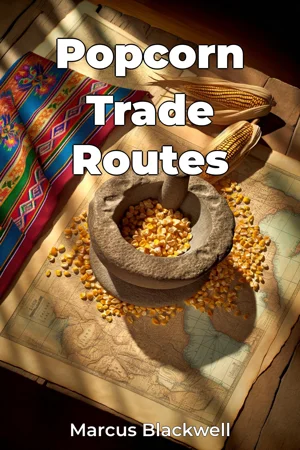
"Popcorn Trade Routes" traces an unexpected thread through global agricultural history, revealing how a single variant of corn transformed from a local Native American crop into a worldwide cultural phenomenon. This comprehensive examination begins with archaeological evidence from Peru's ancient Moche civilization, where the oldest known popcorn kernels were discovered, dating back over 6,500 years. The book presents three interconnected narratives: the biological evolution of corn varieties capable of popping, the development of trade routes that distributed these specific kernels across continents, and the diverse cultural practices that emerged around popcorn preparation and consumption. Through careful analysis of agricultural records, trade documents, and archaeological findings, readers discover how popcorn's journey paralleled major historical events and technological advances. Section one examines the scientific foundations of popcorn, detailing the specific genetic characteristics that allow certain corn variants to pop. Drawing from botanical research and agricultural studies, the text explores how environmental conditions in different regions influenced the development of various popping corn strains. This section includes detailed analysis of kernel composition, moisture content requirements, and the physics behind the popping process. The second section maps the movement of popcorn across trade routes, from its origins in the Americas to its global distribution. Using historical records from Spanish conquistadors, merchant shipping logs, and colonial-era agricultural documents, the book reconstructs how popcorn reached Europe, Asia, and Africa. This portion includes previously unpublished data from maritime trade records and agricultural censuses spanning three centuries. The cultural impact of popcorn forms the third major focus, examining how different societies incorporated this food into their customs. From religious ceremonies in pre-Columbian civilizations to its role in nineteenth-century American temperance movements, the book reveals how popcorn adapted to various cultural contexts while maintaining its basic preparation method. The work integrates elements of food science, economic history, and cultural anthropology, providing readers with a multi-disciplinary perspective on this dietary staple. Through examination of primary sources, including Native American oral histories, European trade documents, and early American agricultural records, the book presents verifiable evidence for its historical claims. Written in an accessible narrative style while maintaining academic rigor, this work serves multiple audiences: food historians, agricultural researchers, and general readers interested in cultural history. The text includes detailed maps of historical trade routes, tables of corn variant characteristics, and documented accounts of popcorn's role in various societies. The book addresses several scholarly debates, including the exact timing of popcorn's first cultivation and its relationship to other corn varieties. It challenges some commonly held assumptions about popcorn's distribution patterns and provides new evidence for early trans-oceanic trade routes. Practical applications of this research extend to modern agricultural practices, food science, and cultural studies. The work concludes with an examination of contemporary popcorn cultivation and its economic impact on global agriculture, providing context for current food production and distribution systems. This work fills a significant gap in food history literature by combining agricultural data with cultural analysis, offering readers a complete understanding of how a single food item influenced and was influenced by global trade patterns and cultural exchange.
"Popcorn Trade Routes" traces an unexpected thread through global agricultural history, revealing how a single variant of corn transformed from a local Native American crop into a worldwide cultural phenomenon. This comprehensive examination begins with archaeological evidence from Peru's ancient Moche civilization, where the oldest known popcorn kernels were discovered, dating back over 6,500 years. The book presents three interconnected narratives: the biological evolution of corn varieties capable of popping, the development of trade routes that distributed these specific kernels across continents, and the diverse cultural practices that emerged around popcorn preparation and consumption. Through careful analysis of agricultural records, trade documents, and archaeological findings, readers discover how popcorn's journey paralleled major historical events and technological advances. Section one examines the scientific foundations of popcorn, detailing the specific genetic characteristics that allow certain corn variants to pop. Drawing from botanical research and agricultural studies, the text explores how environmental conditions in different regions influenced the development of various popping corn strains. This section includes detailed analysis of kernel composition, moisture content requirements, and the physics behind the popping process. The second section maps the movement of popcorn across trade routes, from its origins in the Americas to its global distribution. Using historical records from Spanish conquistadors, merchant shipping logs, and colonial-era agricultural documents, the book reconstructs how popcorn reached Europe, Asia, and Africa. This portion includes previously unpublished data from maritime trade records and agricultural censuses spanning three centuries. The cultural impact of popcorn forms the third major focus, examining how different societies incorporated this food into their customs. From religious ceremonies in pre-Columbian civilizations to its role in nineteenth-century American temperance movements, the book reveals how popcorn adapted to various cultural contexts while maintaining its basic preparation method. The work integrates elements of food science, economic history, and cultural anthropology, providing readers with a multi-disciplinary perspective on this dietary staple. Through examination of primary sources, including Native American oral histories, European trade documents, and early American agricultural records, the book presents verifiable evidence for its historical claims. Written in an accessible narrative style while maintaining academic rigor, this work serves multiple audiences: food historians, agricultural researchers, and general readers interested in cultural history. The text includes detailed maps of historical trade routes, tables of corn variant characteristics, and documented accounts of popcorn's role in various societies. The book addresses several scholarly debates, including the exact timing of popcorn's first cultivation and its relationship to other corn varieties. It challenges some commonly held assumptions about popcorn's distribution patterns and provides new evidence for early trans-oceanic trade routes. Practical applications of this research extend to modern agricultural practices, food science, and cultural studies. The work concludes with an examination of contemporary popcorn cultivation and its economic impact on global agriculture, providing context for current food production and distribution systems. This work fills a significant gap in food history literature by combining agricultural data with cultural analysis, offering readers a complete understanding of how a single food item influenced and was influenced by global trade patterns and cultural exchange.
"Popcorn Trade Routes" presents a fascinating journey through the 6,500-year history of one of the world's most beloved snack foods, weaving together agricultural science, global commerce, and cultural anthropology. Beginning with the discovery of ancient popcorn kernels in Peru's Moche civilization, this comprehensive work explores how a specialized corn variety evolved from a local Native American crop into a global phenomenon that influenced societies across continents. The book uniquely combines three interconnected narratives: the biological evolution of popping corn, the development of international trade routes that facilitated its spread, and the diverse cultural practices that emerged around its consumption. Through careful analysis of archaeological findings, agricultural records, and trade documents, readers discover how specific genetic characteristics and environmental conditions contributed to the development of different popping corn strains, while maritime trade records reveal its journey from the Americas to Europe, Asia, and Africa. The narrative progresses from scientific foundations through historical distribution patterns to cultural impact, examining how different societies incorporated popcorn into their traditions – from religious ceremonies in pre-Columbian civilizations to its role in American temperance movements. Drawing from Native American oral histories, European trade documents, and agricultural records, the book presents a meticulously researched yet accessible account that challenges common assumptions about popcorn's distribution patterns while providing new evidence for early trans-oceanic trade routes.
Book Details
ISBN
9788233945510
Publisher
Publifye AS
Your Licenses
You don't own any licenses for this book
Purchase a license below to unlock this book and download the EPUB.
Purchase License
Select a tier to unlock this book
Need bulk licensing?
Contact us for enterprise agreements.