
About This Book
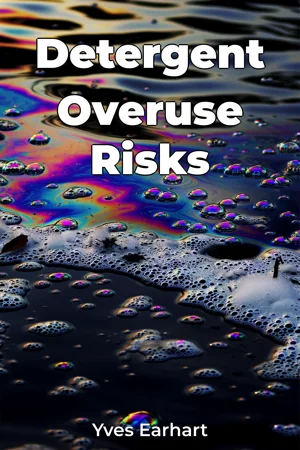
"Detergent Overuse Risks" examines the hidden consequences of excessive cleaning product use in households across developed nations, where the average family uses 30% more detergent than necessary for effective cleaning. This comprehensive analysis reveals how this common household practice impacts both human health and environmental systems. The book presents three core areas of investigation: chemical residue persistence in fabrics and dishware, the behavioral factors driving overuse, and the cumulative environmental effects in waterways. Through laboratory studies and environmental data, it demonstrates how surfactants and phosphates from excess detergent remain active long after washing cycles complete. Drawing from water quality research spanning 1990-2023, the text establishes crucial context about how modern detergent formulations interact with municipal water treatment systems. It explores how current wastewater processing techniques handle—or fail to handle—various detergent compounds, building on decades of environmental science research. The central thesis argues that current household detergent use patterns create unnecessary chemical exposure risks while contributing to watershed degradation. This argument is supported by multi-year studies from environmental protection agencies and independent research institutions, including water sample analyses from major urban centers and rural communities. Structured in three main sections, the book first examines the chemistry of common household detergents and their interaction with different materials. The second section presents research on residue accumulation and its effects on skin sensitivity and respiratory health. The final section analyzes environmental impact through case studies of affected waterways and marine ecosystems. The research methodology combines chemical analysis of treated fabrics and dishes, environmental sampling data, and long-term ecological impact studies. It features original research from water treatment facilities across multiple countries and collaborative studies with environmental scientists. The work connects environmental science with public health, chemistry, and behavioral economics, examining how consumer habits, marketing practices, and chemical engineering intersect in this issue. It incorporates recent advances in microplastic research and bioaccumulation studies to present a comprehensive view of detergent-related environmental challenges. Written in an analytical style that balances technical accuracy with accessibility, the book presents complex chemical concepts through practical, household-level examples. While maintaining scientific rigor, it provides clear explanations suitable for readers with basic science background. The target audience includes environmental professionals, public health officials, and educated consumers seeking to understand the broader impact of their household choices. The book serves as both a scientific reference and a practical guide for sustainable household management. The text addresses ongoing debates about chemical safety standards in consumer products and challenges industry-standard dosage recommendations. It examines conflicting studies about biodegradability claims and questions current wastewater treatment protocols. Practical applications include specific guidelines for optimal detergent use, methods for identifying residue problems, and techniques for minimizing environmental impact while maintaining cleaning effectiveness. The book provides actionable steps for both individual households and institutional users. The scope encompasses residential and commercial cleaning practices in developed nations, with particular focus on regions with advanced water treatment infrastructure. While it acknowledges varying international standards, it primarily addresses practices in North America and Europe. This analysis fills a critical gap in environmental literature by connecting everyday consumer behavior with broader ecological consequences, offering evidence-based solutions for more sustainable cleaning practices while maintaining modern hygiene standards.
"Detergent Overuse Risks" examines the hidden consequences of excessive cleaning product use in households across developed nations, where the average family uses 30% more detergent than necessary for effective cleaning. This comprehensive analysis reveals how this common household practice impacts both human health and environmental systems. The book presents three core areas of investigation: chemical residue persistence in fabrics and dishware, the behavioral factors driving overuse, and the cumulative environmental effects in waterways. Through laboratory studies and environmental data, it demonstrates how surfactants and phosphates from excess detergent remain active long after washing cycles complete. Drawing from water quality research spanning 1990-2023, the text establishes crucial context about how modern detergent formulations interact with municipal water treatment systems. It explores how current wastewater processing techniques handle—or fail to handle—various detergent compounds, building on decades of environmental science research. The central thesis argues that current household detergent use patterns create unnecessary chemical exposure risks while contributing to watershed degradation. This argument is supported by multi-year studies from environmental protection agencies and independent research institutions, including water sample analyses from major urban centers and rural communities. Structured in three main sections, the book first examines the chemistry of common household detergents and their interaction with different materials. The second section presents research on residue accumulation and its effects on skin sensitivity and respiratory health. The final section analyzes environmental impact through case studies of affected waterways and marine ecosystems. The research methodology combines chemical analysis of treated fabrics and dishes, environmental sampling data, and long-term ecological impact studies. It features original research from water treatment facilities across multiple countries and collaborative studies with environmental scientists. The work connects environmental science with public health, chemistry, and behavioral economics, examining how consumer habits, marketing practices, and chemical engineering intersect in this issue. It incorporates recent advances in microplastic research and bioaccumulation studies to present a comprehensive view of detergent-related environmental challenges. Written in an analytical style that balances technical accuracy with accessibility, the book presents complex chemical concepts through practical, household-level examples. While maintaining scientific rigor, it provides clear explanations suitable for readers with basic science background. The target audience includes environmental professionals, public health officials, and educated consumers seeking to understand the broader impact of their household choices. The book serves as both a scientific reference and a practical guide for sustainable household management. The text addresses ongoing debates about chemical safety standards in consumer products and challenges industry-standard dosage recommendations. It examines conflicting studies about biodegradability claims and questions current wastewater treatment protocols. Practical applications include specific guidelines for optimal detergent use, methods for identifying residue problems, and techniques for minimizing environmental impact while maintaining cleaning effectiveness. The book provides actionable steps for both individual households and institutional users. The scope encompasses residential and commercial cleaning practices in developed nations, with particular focus on regions with advanced water treatment infrastructure. While it acknowledges varying international standards, it primarily addresses practices in North America and Europe. This analysis fills a critical gap in environmental literature by connecting everyday consumer behavior with broader ecological consequences, offering evidence-based solutions for more sustainable cleaning practices while maintaining modern hygiene standards.
"Detergent Overuse Risks" delves into the concerning reality that modern households use 30% more cleaning products than necessary, exploring the cascading effects on both human health and environmental systems. This comprehensive investigation combines decades of water quality research (1990-2023) with current laboratory studies to reveal how excessive detergent use creates lasting impacts through chemical residue persistence and water system contamination. The book uniquely bridges the gap between everyday consumer behavior and environmental consequences by examining three critical areas: how chemical residues linger in fabrics and dishware, the psychological factors driving overconsumption, and the cumulative effects on waterways and marine ecosystems. Through a blend of technical analysis and accessible examples, it demonstrates how common household practices contribute to watershed degradation and potential health risks, while challenging industry-standard dosage recommendations. Progressing from the fundamental chemistry of household detergents to their interactions with various materials, the text builds a compelling case for more mindful consumption. The final section presents real-world case studies of affected waterways and marine ecosystems, offering practical solutions for maintaining cleanliness without compromising environmental health. This approach makes complex environmental science accessible to both professionals and conscious consumers, providing actionable guidelines for sustainable cleaning practices while maintaining modern hygiene standards.
Book Details
ISBN
9788233945442
Publisher
Publifye AS
Your Licenses
You don't own any licenses for this book
Purchase a license below to unlock this book and download the EPUB.
Purchase License
Select a tier to unlock this book
Need bulk licensing?
Contact us for enterprise agreements.