
About This Book
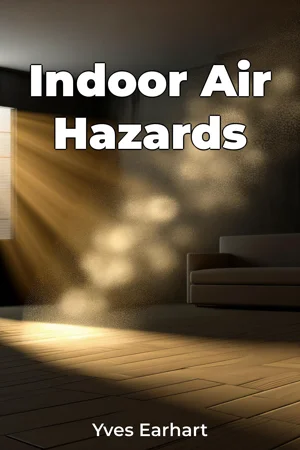
"Indoor Air Hazards" opens with a stark revelation: the air we breathe indoors often contains higher concentrations of pollutants than outdoor urban environments, affecting millions who spend up to 90% of their time inside buildings. This comprehensive guide examines the invisible threats present in our homes and workplaces, drawing from World Health Organization standards and current scientific research to present a clear picture of indoor air quality challenges and solutions. The book addresses three primary areas: common indoor pollutants and their sources, health impacts of poor air quality, and practical strategies for improving indoor environments. These topics are particularly relevant given the increasing awareness of sick building syndrome and the rise in respiratory conditions linked to indoor air quality. The text establishes its foundation with an overview of indoor air pollution's historical context, tracking the evolution of building practices from early ventilation systems to modern energy-efficient construction methods that can inadvertently trap pollutants inside. This background helps readers understand how current building practices influence indoor air quality. Central to the book's thesis is the assertion that indoor air quality significantly impacts human health, productivity, and well-being, supported by epidemiological studies and medical research. The argument emphasizes that understanding and controlling indoor air quality is as crucial as managing outdoor pollution. The content progresses logically through sections examining volatile organic compounds (VOCs), particulate matter, biological contaminants, and chemical pollutants commonly found indoors. Each chapter integrates current research data, including studies from environmental health organizations and academic institutions, presenting evidence through accessible graphs and data interpretations. The book connects environmental science, public health, and building engineering, demonstrating how these fields intersect in addressing indoor air quality. This interdisciplinary approach provides readers with a comprehensive understanding of both problems and solutions. Written in a clear, methodical style, the text balances technical information with practical applications, making it accessible to both professionals and general readers concerned about their indoor environment. The approach is evidence-based and solutions-oriented, avoiding alarmist language while maintaining scientific accuracy. The target audience includes homeowners, facility managers, health professionals, and anyone interested in creating healthier indoor environments. The content is particularly relevant for individuals with respiratory sensitivities, families with young children, and workplace decision-makers. Practical applications form a significant portion of the book, offering specific strategies for: - Identifying common pollutant sources - Implementing effective ventilation solutions - Selecting low-emission materials and products - Monitoring and maintaining indoor air quality The book acknowledges ongoing debates in the field, such as the optimal balance between energy efficiency and ventilation, and the varying international standards for indoor air quality. It presents multiple viewpoints while maintaining focus on established scientific consensus. Limitations are clearly stated, noting that the book focuses on non-industrial indoor environments and common pollutants rather than specialized industrial hazards. This scope allows for detailed coverage of issues most relevant to readers' daily lives. The work concludes with a forward-looking section on emerging concerns, including the impact of climate change on indoor air quality and the development of new building materials and technologies. Throughout, it maintains a fact-based approach, prioritizing practical solutions over theoretical discussions.
"Indoor Air Hazards" opens with a stark revelation: the air we breathe indoors often contains higher concentrations of pollutants than outdoor urban environments, affecting millions who spend up to 90% of their time inside buildings. This comprehensive guide examines the invisible threats present in our homes and workplaces, drawing from World Health Organization standards and current scientific research to present a clear picture of indoor air quality challenges and solutions. The book addresses three primary areas: common indoor pollutants and their sources, health impacts of poor air quality, and practical strategies for improving indoor environments. These topics are particularly relevant given the increasing awareness of sick building syndrome and the rise in respiratory conditions linked to indoor air quality. The text establishes its foundation with an overview of indoor air pollution's historical context, tracking the evolution of building practices from early ventilation systems to modern energy-efficient construction methods that can inadvertently trap pollutants inside. This background helps readers understand how current building practices influence indoor air quality. Central to the book's thesis is the assertion that indoor air quality significantly impacts human health, productivity, and well-being, supported by epidemiological studies and medical research. The argument emphasizes that understanding and controlling indoor air quality is as crucial as managing outdoor pollution. The content progresses logically through sections examining volatile organic compounds (VOCs), particulate matter, biological contaminants, and chemical pollutants commonly found indoors. Each chapter integrates current research data, including studies from environmental health organizations and academic institutions, presenting evidence through accessible graphs and data interpretations. The book connects environmental science, public health, and building engineering, demonstrating how these fields intersect in addressing indoor air quality. This interdisciplinary approach provides readers with a comprehensive understanding of both problems and solutions. Written in a clear, methodical style, the text balances technical information with practical applications, making it accessible to both professionals and general readers concerned about their indoor environment. The approach is evidence-based and solutions-oriented, avoiding alarmist language while maintaining scientific accuracy. The target audience includes homeowners, facility managers, health professionals, and anyone interested in creating healthier indoor environments. The content is particularly relevant for individuals with respiratory sensitivities, families with young children, and workplace decision-makers. Practical applications form a significant portion of the book, offering specific strategies for: - Identifying common pollutant sources - Implementing effective ventilation solutions - Selecting low-emission materials and products - Monitoring and maintaining indoor air quality The book acknowledges ongoing debates in the field, such as the optimal balance between energy efficiency and ventilation, and the varying international standards for indoor air quality. It presents multiple viewpoints while maintaining focus on established scientific consensus. Limitations are clearly stated, noting that the book focuses on non-industrial indoor environments and common pollutants rather than specialized industrial hazards. This scope allows for detailed coverage of issues most relevant to readers' daily lives. The work concludes with a forward-looking section on emerging concerns, including the impact of climate change on indoor air quality and the development of new building materials and technologies. Throughout, it maintains a fact-based approach, prioritizing practical solutions over theoretical discussions.
"Indoor Air Hazards" presents a critical examination of a startling reality: indoor air often contains higher pollutant concentrations than outdoor urban environments, affecting the millions who spend 90% of their time inside buildings. This comprehensive guide bridges environmental science, public health, and building engineering to explore the invisible threats in our homes and workplaces, while offering practical solutions for creating healthier indoor environments. The book systematically progresses from establishing historical context of indoor air pollution to examining specific contaminants, including volatile organic compounds (VOCs), particulate matter, and biological pollutants. Through accessible graphs and data interpretations, it demonstrates how modern building practices, while energy-efficient, can inadvertently trap pollutants inside. The text draws from World Health Organization standards and current scientific research to illustrate the significant impact of indoor air quality on human health, productivity, and overall well-being. What sets this guide apart is its balanced approach to technical information and practical applications, making it valuable for both professionals and general readers. The book provides specific, actionable strategies for identifying pollutant sources, implementing effective ventilation solutions, and selecting low-emission materials. While maintaining scientific accuracy, it addresses ongoing debates in the field, such as the balance between energy efficiency and ventilation, concluding with emerging concerns about climate change's impact on indoor air quality and new building technologies.
Book Details
ISBN
9788233945404
Publisher
Publifye AS
Your Licenses
You don't own any licenses for this book
Purchase a license below to unlock this book and download the EPUB.
Purchase License
Select a tier to unlock this book
Need bulk licensing?
Contact us for enterprise agreements.