
About This Book
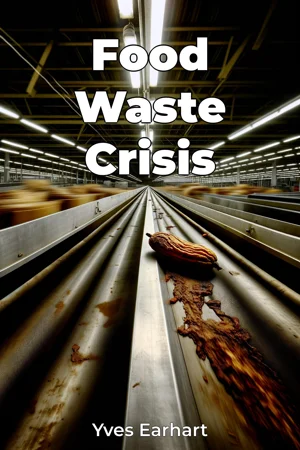
"Food Waste Crisis" opens with a stark revelation from UN data: one-third of all food produced globally never reaches consumers, representing an annual loss of $1 trillion and significant environmental damage. This comprehensive analysis examines the systemic inefficiencies in global food systems and their cascading effects on economies and ecosystems. The book structures its investigation around three core themes: production-level waste, distribution chain inefficiencies, and consumer disposal patterns. Through detailed case studies from both developed and developing nations, it demonstrates how food waste occurs at each stage of the supply chain, from harvest to table. The analysis draws on extensive UN research, agricultural studies, and economic reports to provide a data-driven perspective on this growing crisis. In examining production inefficiencies, the text explores how modern farming practices, market demands for aesthetically perfect produce, and rigid grading standards contribute to significant waste before food even leaves the farm. The distribution section analyzes cold chain failures, transportation losses, and storage inadequacies that result in substantial spoilage during transit and storage. The book's central argument posits that current food waste levels represent both a market failure and an environmental crisis that requires coordinated intervention across multiple sectors. This position is supported by extensive economic modeling showing how waste reduction could simultaneously address food security issues while creating new market opportunities. Technical analysis is balanced with practical solutions, as the book examines successful waste reduction initiatives from various countries. Case studies include Singapore's food waste reduction program, France's supermarket donation laws, and innovative storage solutions in India's agricultural sector. These examples demonstrate both the challenges and potential solutions to reducing waste throughout the supply chain. The research methodology combines quantitative analysis of waste patterns with qualitative assessments of behavioral and policy factors. The book integrates economic data with environmental impact studies, creating a comprehensive picture of both financial and ecological costs. It draws connections between food waste and related issues including climate change, water scarcity, and land use efficiency. Written in an analytical style that emphasizes data interpretation and practical application, the text maintains accessibility while providing thorough technical detail. It serves both as an academic resource and a practical guide for policymakers, business leaders, and professionals in the food industry. The scope encompasses both macro-level system analysis and micro-level waste reduction strategies, though it focuses primarily on large-scale commercial and industrial waste rather than household-level solutions. The book addresses ongoing debates about regulatory approaches versus market-based solutions in waste reduction, examining the evidence for various intervention strategies. This work is particularly relevant for environmental policy specialists, food industry professionals, and economists working on sustainability initiatives. It provides actionable insights for businesses seeking to reduce waste-related costs and environmental impact, while also serving as a comprehensive resource for researchers and students in environmental economics and sustainable development. The analysis concludes by presenting a framework for integrated waste reduction strategies, combining policy reforms, technological innovation, and behavioral change initiatives. It emphasizes the need for coordinated action across government, industry, and consumer sectors to address this complex challenge effectively.
"Food Waste Crisis" opens with a stark revelation from UN data: one-third of all food produced globally never reaches consumers, representing an annual loss of $1 trillion and significant environmental damage. This comprehensive analysis examines the systemic inefficiencies in global food systems and their cascading effects on economies and ecosystems. The book structures its investigation around three core themes: production-level waste, distribution chain inefficiencies, and consumer disposal patterns. Through detailed case studies from both developed and developing nations, it demonstrates how food waste occurs at each stage of the supply chain, from harvest to table. The analysis draws on extensive UN research, agricultural studies, and economic reports to provide a data-driven perspective on this growing crisis. In examining production inefficiencies, the text explores how modern farming practices, market demands for aesthetically perfect produce, and rigid grading standards contribute to significant waste before food even leaves the farm. The distribution section analyzes cold chain failures, transportation losses, and storage inadequacies that result in substantial spoilage during transit and storage. The book's central argument posits that current food waste levels represent both a market failure and an environmental crisis that requires coordinated intervention across multiple sectors. This position is supported by extensive economic modeling showing how waste reduction could simultaneously address food security issues while creating new market opportunities. Technical analysis is balanced with practical solutions, as the book examines successful waste reduction initiatives from various countries. Case studies include Singapore's food waste reduction program, France's supermarket donation laws, and innovative storage solutions in India's agricultural sector. These examples demonstrate both the challenges and potential solutions to reducing waste throughout the supply chain. The research methodology combines quantitative analysis of waste patterns with qualitative assessments of behavioral and policy factors. The book integrates economic data with environmental impact studies, creating a comprehensive picture of both financial and ecological costs. It draws connections between food waste and related issues including climate change, water scarcity, and land use efficiency. Written in an analytical style that emphasizes data interpretation and practical application, the text maintains accessibility while providing thorough technical detail. It serves both as an academic resource and a practical guide for policymakers, business leaders, and professionals in the food industry. The scope encompasses both macro-level system analysis and micro-level waste reduction strategies, though it focuses primarily on large-scale commercial and industrial waste rather than household-level solutions. The book addresses ongoing debates about regulatory approaches versus market-based solutions in waste reduction, examining the evidence for various intervention strategies. This work is particularly relevant for environmental policy specialists, food industry professionals, and economists working on sustainability initiatives. It provides actionable insights for businesses seeking to reduce waste-related costs and environmental impact, while also serving as a comprehensive resource for researchers and students in environmental economics and sustainable development. The analysis concludes by presenting a framework for integrated waste reduction strategies, combining policy reforms, technological innovation, and behavioral change initiatives. It emphasizes the need for coordinated action across government, industry, and consumer sectors to address this complex challenge effectively.
"Food Waste Crisis" presents a compelling examination of one of today's most pressing environmental and economic challenges: the staggering loss of one-third of global food production, resulting in $1 trillion in annual losses. Through a systematic analysis of the entire food supply chain, the book unveils how inefficiencies at every stage - from farm to table - contribute to this mounting crisis, while offering evidence-based solutions drawn from successful international initiatives. The book's investigation is structured around three fundamental areas: production waste, distribution chain problems, and consumer disposal patterns. By examining case studies from both developed and developing nations, it reveals how factors such as stringent aesthetic standards for produce, inadequate storage facilities, and inefficient cold chain systems contribute to massive food losses. Notable examples include Singapore's waste reduction programs and France's innovative supermarket donation laws, demonstrating practical approaches to addressing this complex issue. Building on extensive UN research and economic analysis, the book presents a comprehensive framework that combines policy reforms, technological solutions, and behavioral change initiatives. What sets this work apart is its balanced approach to technical analysis and practical implementation, making it valuable for both policy makers and industry professionals. The authors demonstrate how reducing food waste can simultaneously address food security challenges while creating new market opportunities, offering a roadmap for sustainable change in our global food systems.
Book Details
ISBN
9788233945350
Publisher
Publifye AS
Your Licenses
You don't own any licenses for this book
Purchase a license below to unlock this book and download the EPUB.
Purchase License
Select a tier to unlock this book
Need bulk licensing?
Contact us for enterprise agreements.