
About This Book
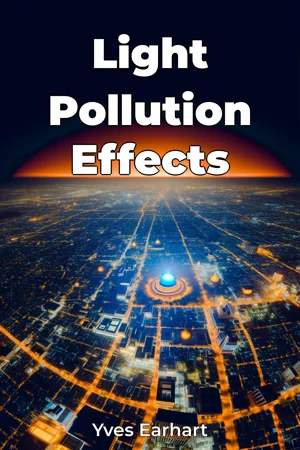
"Light Pollution Effects" opens with a striking observation: while artificial lighting has enabled 24/7 human activity, it has simultaneously disrupted ecological systems that evolved over millions of years of predictable day-night cycles. This comprehensive analysis examines the far-reaching consequences of artificial lighting on both natural ecosystems and human health, supported by extensive research from environmental agencies and scientific institutions. The book presents three primary areas of investigation: the disruption of wildlife behavior patterns, human physiological responses to artificial light exposure, and the broader environmental implications of excessive nighttime illumination. These interconnected topics reveal how light pollution affects everything from bird migration and insect populations to human sleep patterns and energy consumption. Drawing from decades of environmental research, the text establishes historical context by tracking the rapid increase in artificial lighting since the industrial revolution, with particular focus on the acceleration of light pollution over the past 50 years. This foundation helps readers understand both the scale and urgency of the issue. The central thesis argues that current lighting practices create unnecessary biological and ecological disruption, while also presenting evidence-based solutions for mitigating these effects. The book builds this argument through systematic analysis of data from environmental protection agencies, sleep research centers, and wildlife studies. The content progresses through four major sections: First, it examines the scientific principles of natural light cycles and their role in biological processes. Second, it presents case studies of ecological disruption, including declining firefly populations and sea turtle disorientation. Third, it analyzes human health impacts, focusing on circadian rhythm disruption and potential links to various health conditions. Finally, it offers practical solutions for individuals, urban planners, and policymakers. Research methodology includes long-term environmental monitoring data, satellite imagery of global light pollution, and clinical studies on human health effects. The book integrates findings from multiple disciplines, including astronomy, ecology, human biology, and urban planning, creating a comprehensive understanding of light pollution's impact. The text connects extensively with urban development, energy conservation, and public health policies, demonstrating how light pollution intersects with broader environmental and social challenges. It maintains an objective, data-driven approach while remaining accessible to general readers interested in environmental issues or public health. Written in a clear, methodical style, the book serves both general readers and professionals in related fields. It avoids technical jargon while maintaining scientific accuracy, making complex concepts understandable without oversimplification. The target audience includes environmental professionals, urban planners, policy makers, and concerned citizens seeking to understand and address light pollution in their communities. The book provides practical guidelines for implementing better lighting practices at individual and institutional levels. While global in scope, the book acknowledges varying regional challenges and regulatory frameworks. It addresses ongoing debates about balancing public safety with environmental protection and economic considerations in lighting policy. The text concludes with actionable recommendations for reducing light pollution while maintaining necessary illumination for human activities. These solutions range from individual choices about outdoor lighting to municipal-level policy changes and technological innovations in lighting design. This analysis represents a timely contribution to environmental science literature, offering a balanced examination of an often-overlooked form of environmental degradation while providing practical pathways toward improvement.
"Light Pollution Effects" opens with a striking observation: while artificial lighting has enabled 24/7 human activity, it has simultaneously disrupted ecological systems that evolved over millions of years of predictable day-night cycles. This comprehensive analysis examines the far-reaching consequences of artificial lighting on both natural ecosystems and human health, supported by extensive research from environmental agencies and scientific institutions. The book presents three primary areas of investigation: the disruption of wildlife behavior patterns, human physiological responses to artificial light exposure, and the broader environmental implications of excessive nighttime illumination. These interconnected topics reveal how light pollution affects everything from bird migration and insect populations to human sleep patterns and energy consumption. Drawing from decades of environmental research, the text establishes historical context by tracking the rapid increase in artificial lighting since the industrial revolution, with particular focus on the acceleration of light pollution over the past 50 years. This foundation helps readers understand both the scale and urgency of the issue. The central thesis argues that current lighting practices create unnecessary biological and ecological disruption, while also presenting evidence-based solutions for mitigating these effects. The book builds this argument through systematic analysis of data from environmental protection agencies, sleep research centers, and wildlife studies. The content progresses through four major sections: First, it examines the scientific principles of natural light cycles and their role in biological processes. Second, it presents case studies of ecological disruption, including declining firefly populations and sea turtle disorientation. Third, it analyzes human health impacts, focusing on circadian rhythm disruption and potential links to various health conditions. Finally, it offers practical solutions for individuals, urban planners, and policymakers. Research methodology includes long-term environmental monitoring data, satellite imagery of global light pollution, and clinical studies on human health effects. The book integrates findings from multiple disciplines, including astronomy, ecology, human biology, and urban planning, creating a comprehensive understanding of light pollution's impact. The text connects extensively with urban development, energy conservation, and public health policies, demonstrating how light pollution intersects with broader environmental and social challenges. It maintains an objective, data-driven approach while remaining accessible to general readers interested in environmental issues or public health. Written in a clear, methodical style, the book serves both general readers and professionals in related fields. It avoids technical jargon while maintaining scientific accuracy, making complex concepts understandable without oversimplification. The target audience includes environmental professionals, urban planners, policy makers, and concerned citizens seeking to understand and address light pollution in their communities. The book provides practical guidelines for implementing better lighting practices at individual and institutional levels. While global in scope, the book acknowledges varying regional challenges and regulatory frameworks. It addresses ongoing debates about balancing public safety with environmental protection and economic considerations in lighting policy. The text concludes with actionable recommendations for reducing light pollution while maintaining necessary illumination for human activities. These solutions range from individual choices about outdoor lighting to municipal-level policy changes and technological innovations in lighting design. This analysis represents a timely contribution to environmental science literature, offering a balanced examination of an often-overlooked form of environmental degradation while providing practical pathways toward improvement.
"Light Pollution Effects" presents a compelling examination of how artificial lighting has fundamentally altered our natural environment and biological systems. This comprehensive analysis reveals the dramatic consequences of disrupting the Earth's natural day-night cycles, which have governed life for millions of years. Through carefully structured chapters, the book explores three interconnected dimensions: wildlife disruption, human health impacts, and broader environmental consequences of excessive nighttime illumination. The book's unique strength lies in its ability to connect scientific research from multiple disciplines, presenting striking examples of light pollution's impact. From declining firefly populations and disoriented sea turtles to human circadian rhythm disruptions, the evidence builds a convincing case for urgent action. The analysis draws from decades of environmental monitoring data, satellite imagery, and clinical studies, making complex scientific concepts accessible to general readers while maintaining academic rigor. Moving from problem identification to practical solutions, the text offers actionable strategies for various stakeholders. It presents evidence-based approaches for individuals, urban planners, and policymakers to reduce light pollution while maintaining necessary illumination for human activities. By integrating environmental science with urban development and public health considerations, the book provides a comprehensive framework for understanding and addressing this growing environmental challenge, all while maintaining an objective, data-driven perspective that appeals to both general readers and environmental professionals.
Book Details
ISBN
9788233945305
Publisher
Publifye AS
Your Licenses
You don't own any licenses for this book
Purchase a license below to unlock this book and download the EPUB.
Purchase License
Select a tier to unlock this book
Need bulk licensing?
Contact us for enterprise agreements.