
About This Book
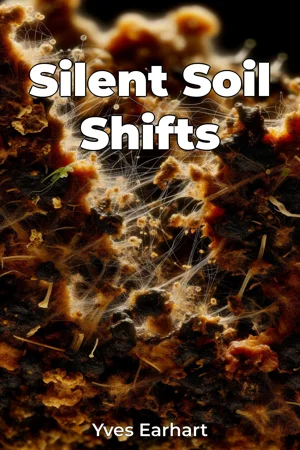
"Silent Soil Shifts" reveals the largely unseen transformation occurring within Earth's soil systems, presenting research-based evidence of how these changes affect global food security and ecosystem health. Through comprehensive analysis of long-term soil studies and recent scientific findings, this book examines the complex relationships between soil degradation, agricultural productivity, and environmental sustainability. The work centers on three interconnected themes: the acceleration of soil nutrient depletion in agricultural regions, the disruption of vital underground ecosystems, and the cascading effects on food production systems. Drawing from soil health assessments conducted across six continents, the book demonstrates how modern agricultural practices have altered soil composition and functionality over the past fifty years. The author presents compelling data from the Global Soil Biodiversity Initiative, revealing that 33% of Earth's soils are experiencing moderate to severe degradation. This degradation directly impacts the complex network of microorganisms, fungi, and invertebrates that maintain soil health. Through detailed microscopic imagery and field studies, readers gain insight into these intricate underground communities and their essential role in nutrient cycling. The book's structure progresses from fundamental soil science principles to current challenges and potential solutions. The first section establishes core concepts in soil ecology, including the role of organic matter, mineral cycles, and soil biota. The middle chapters examine specific threats to soil health, supported by case studies from agricultural regions worldwide. The final section presents evidence-based approaches to soil restoration and sustainable land management. Integration of multiple scientific disciplines strengthens the book's analysis, combining elements of microbiology, chemistry, and agricultural science. The author draws connections between soil health and climate change, demonstrating how soil degradation both contributes to and is affected by global environmental changes. The writing maintains an academic foundation while remaining accessible to non-specialists, using clear explanations and relevant examples to illustrate complex concepts. Technical terms are carefully defined, and scientific data is presented through informative graphics and charts that help readers visualize soil processes and trends. This work is particularly relevant for agricultural professionals, environmental scientists, and policymakers, though its practical implications extend to anyone involved in food production or land management. The author addresses ongoing debates in sustainable agriculture, presenting balanced evidence for various management approaches while acknowledging areas of scientific uncertainty. The book's scope encompasses both industrial and small-scale agricultural systems, though it focuses primarily on regions experiencing rapid soil change. Through examination of successful soil restoration projects, readers gain practical knowledge for implementing effective soil management strategies. The research draws from multiple sources, including long-term agricultural field trials, satellite imaging data, and soil microbiome studies. The author's access to recent findings from international soil research institutions provides current, relevant data that supports the book's central arguments. The work concludes by examining the economic implications of soil degradation and the potential costs of inaction, presenting a clear case for immediate attention to soil health. While maintaining scientific objectivity, the book emphasizes the urgent need for widespread adoption of soil conservation practices to ensure future agricultural productivity and ecosystem stability.
"Silent Soil Shifts" reveals the largely unseen transformation occurring within Earth's soil systems, presenting research-based evidence of how these changes affect global food security and ecosystem health. Through comprehensive analysis of long-term soil studies and recent scientific findings, this book examines the complex relationships between soil degradation, agricultural productivity, and environmental sustainability. The work centers on three interconnected themes: the acceleration of soil nutrient depletion in agricultural regions, the disruption of vital underground ecosystems, and the cascading effects on food production systems. Drawing from soil health assessments conducted across six continents, the book demonstrates how modern agricultural practices have altered soil composition and functionality over the past fifty years. The author presents compelling data from the Global Soil Biodiversity Initiative, revealing that 33% of Earth's soils are experiencing moderate to severe degradation. This degradation directly impacts the complex network of microorganisms, fungi, and invertebrates that maintain soil health. Through detailed microscopic imagery and field studies, readers gain insight into these intricate underground communities and their essential role in nutrient cycling. The book's structure progresses from fundamental soil science principles to current challenges and potential solutions. The first section establishes core concepts in soil ecology, including the role of organic matter, mineral cycles, and soil biota. The middle chapters examine specific threats to soil health, supported by case studies from agricultural regions worldwide. The final section presents evidence-based approaches to soil restoration and sustainable land management. Integration of multiple scientific disciplines strengthens the book's analysis, combining elements of microbiology, chemistry, and agricultural science. The author draws connections between soil health and climate change, demonstrating how soil degradation both contributes to and is affected by global environmental changes. The writing maintains an academic foundation while remaining accessible to non-specialists, using clear explanations and relevant examples to illustrate complex concepts. Technical terms are carefully defined, and scientific data is presented through informative graphics and charts that help readers visualize soil processes and trends. This work is particularly relevant for agricultural professionals, environmental scientists, and policymakers, though its practical implications extend to anyone involved in food production or land management. The author addresses ongoing debates in sustainable agriculture, presenting balanced evidence for various management approaches while acknowledging areas of scientific uncertainty. The book's scope encompasses both industrial and small-scale agricultural systems, though it focuses primarily on regions experiencing rapid soil change. Through examination of successful soil restoration projects, readers gain practical knowledge for implementing effective soil management strategies. The research draws from multiple sources, including long-term agricultural field trials, satellite imaging data, and soil microbiome studies. The author's access to recent findings from international soil research institutions provides current, relevant data that supports the book's central arguments. The work concludes by examining the economic implications of soil degradation and the potential costs of inaction, presenting a clear case for immediate attention to soil health. While maintaining scientific objectivity, the book emphasizes the urgent need for widespread adoption of soil conservation practices to ensure future agricultural productivity and ecosystem stability.
"Silent Soil Shifts" offers a compelling exploration of the critical transformations occurring within Earth's soil systems and their far-reaching implications for global food security and ecosystem stability. Drawing from extensive research across six continents, the book reveals alarming statistics, including that 33% of Earth's soils are experiencing moderate to severe degradation. This comprehensive analysis examines how modern agricultural practices have fundamentally altered soil composition and functionality over the past five decades, affecting the intricate network of microorganisms and invertebrates essential for soil health. The book uniquely combines insights from microbiology, chemistry, and agricultural science, presenting complex scientific concepts through accessible language and informative visualizations. Starting with fundamental soil science principles, it progresses through current challenges in soil health, supported by real-world case studies from agricultural regions worldwide. The final section offers practical, evidence-based approaches to soil restoration and sustainable land management, making it particularly valuable for agricultural professionals and environmental scientists. Through detailed microscopic imagery and field studies, readers gain unprecedented insight into the underground ecosystems that maintain soil fertility. The author skillfully connects soil health to broader environmental issues, including climate change, while maintaining scientific objectivity. The integration of recent findings from international soil research institutions, combined with data from long-term agricultural field trials and soil microbiome studies, provides a current and authoritative perspective on this crucial environmental challenge.
Book Details
ISBN
9788233945190
Publisher
Publifye AS
Your Licenses
You don't own any licenses for this book
Purchase a license below to unlock this book and download the EPUB.
Purchase License
Select a tier to unlock this book
Need bulk licensing?
Contact us for enterprise agreements.