
About This Book
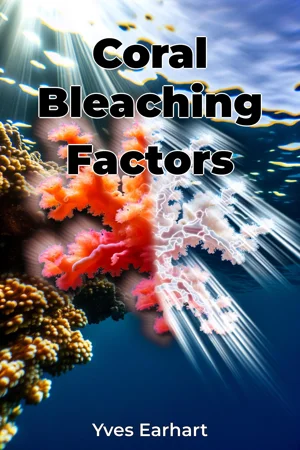
"Coral Bleaching Factors" presents a comprehensive examination of one of the most critical challenges facing marine ecosystems today. Through detailed analysis of long-term climate data and international research, this book reveals how rising ocean temperatures and environmental stressors trigger mass coral bleaching events, threatening the foundation of marine biodiversity. The book establishes three core themes: the biological mechanisms of coral bleaching, the cascading effects on marine ecosystems, and evidence-based conservation strategies. These interconnected topics provide readers with both the scientific understanding and practical knowledge needed to grasp the complexity of coral reef degradation. Drawing from two decades of marine biology research and data from the National Oceanic and Atmospheric Administration (NOAA), the text explores how thermal stress disrupts the symbiotic relationship between corals and zooxanthellae algae. This fundamental process is explained through detailed cellular biology and ecological perspectives, making complex scientific concepts accessible to informed readers. The central argument posits that coral bleaching represents an early warning system for broader oceanic changes. Through careful analysis of case studies from the Great Barrier Reef, Caribbean, and Indo-Pacific regions, the book demonstrates how localized bleaching events indicate global-scale environmental shifts. The content progresses systematically through four major sections: the mechanics of coral bleaching, environmental triggers, ecosystem impacts, and conservation approaches. Each chapter builds upon established research while incorporating recent findings from marine science institutes worldwide. The final section presents practical conservation frameworks based on successful initiatives in protected marine areas. Supporting evidence includes thermal mapping data, coral coverage surveys, and long-term monitoring studies from international research stations. The book features original research combining satellite imagery analysis with in-situ observations to create predictive models for bleaching events. The text connects marine biology with climate science, chemistry, and environmental policy, demonstrating how these fields collectively inform our understanding of coral reef ecosystems. This interdisciplinary approach helps readers understand both the immediate and long-term implications of coral bleaching. Written in a clear, scientific style, the book maintains academic rigor while remaining accessible to environmental professionals, marine biology students, and informed general readers. Technical terms are carefully defined and supported by illustrations and data visualizations. The work is particularly valuable for marine biology students, environmental professionals, and conservation practitioners who require a thorough understanding of coral bleaching mechanisms and their broader implications. It provides practical tools for identifying early warning signs and implementing protective measures. The book addresses ongoing debates about the relative impact of local versus global stressors on coral health, examining evidence for various contributing factors. It acknowledges the limitations of current research while highlighting promising areas for future study. Rather than presenting coral bleaching as an isolated phenomenon, the text demonstrates its connection to broader oceanic health indicators and climate patterns. This approach helps readers understand how coral reef preservation relates to larger environmental challenges and conservation efforts. The scope encompasses both established research and emerging studies, focusing on verifiable data rather than speculative projections. While global in perspective, the book provides specific regional case studies to illustrate key concepts and successful conservation initiatives. This work serves as both a scientific reference and a practical guide for understanding and addressing one of the most significant indicators of marine ecosystem health in our time.
"Coral Bleaching Factors" presents a comprehensive examination of one of the most critical challenges facing marine ecosystems today. Through detailed analysis of long-term climate data and international research, this book reveals how rising ocean temperatures and environmental stressors trigger mass coral bleaching events, threatening the foundation of marine biodiversity. The book establishes three core themes: the biological mechanisms of coral bleaching, the cascading effects on marine ecosystems, and evidence-based conservation strategies. These interconnected topics provide readers with both the scientific understanding and practical knowledge needed to grasp the complexity of coral reef degradation. Drawing from two decades of marine biology research and data from the National Oceanic and Atmospheric Administration (NOAA), the text explores how thermal stress disrupts the symbiotic relationship between corals and zooxanthellae algae. This fundamental process is explained through detailed cellular biology and ecological perspectives, making complex scientific concepts accessible to informed readers. The central argument posits that coral bleaching represents an early warning system for broader oceanic changes. Through careful analysis of case studies from the Great Barrier Reef, Caribbean, and Indo-Pacific regions, the book demonstrates how localized bleaching events indicate global-scale environmental shifts. The content progresses systematically through four major sections: the mechanics of coral bleaching, environmental triggers, ecosystem impacts, and conservation approaches. Each chapter builds upon established research while incorporating recent findings from marine science institutes worldwide. The final section presents practical conservation frameworks based on successful initiatives in protected marine areas. Supporting evidence includes thermal mapping data, coral coverage surveys, and long-term monitoring studies from international research stations. The book features original research combining satellite imagery analysis with in-situ observations to create predictive models for bleaching events. The text connects marine biology with climate science, chemistry, and environmental policy, demonstrating how these fields collectively inform our understanding of coral reef ecosystems. This interdisciplinary approach helps readers understand both the immediate and long-term implications of coral bleaching. Written in a clear, scientific style, the book maintains academic rigor while remaining accessible to environmental professionals, marine biology students, and informed general readers. Technical terms are carefully defined and supported by illustrations and data visualizations. The work is particularly valuable for marine biology students, environmental professionals, and conservation practitioners who require a thorough understanding of coral bleaching mechanisms and their broader implications. It provides practical tools for identifying early warning signs and implementing protective measures. The book addresses ongoing debates about the relative impact of local versus global stressors on coral health, examining evidence for various contributing factors. It acknowledges the limitations of current research while highlighting promising areas for future study. Rather than presenting coral bleaching as an isolated phenomenon, the text demonstrates its connection to broader oceanic health indicators and climate patterns. This approach helps readers understand how coral reef preservation relates to larger environmental challenges and conservation efforts. The scope encompasses both established research and emerging studies, focusing on verifiable data rather than speculative projections. While global in perspective, the book provides specific regional case studies to illustrate key concepts and successful conservation initiatives. This work serves as both a scientific reference and a practical guide for understanding and addressing one of the most significant indicators of marine ecosystem health in our time.
"Coral Bleaching Factors" delivers a comprehensive exploration of one of the ocean's most pressing environmental challenges, examining how rising ocean temperatures and environmental stressors threaten marine biodiversity through coral bleaching events. The book skillfully bridges the gap between complex marine biology and practical conservation, offering readers a deep dive into the symbiotic relationship between corals and zooxanthellae algae, and how this delicate balance can be disrupted by environmental changes. Through a systematic progression of four major sections, the book unveils the intricate mechanics of coral bleaching, from cellular-level processes to ecosystem-wide impacts. Drawing on two decades of research and NOAA data, it presents compelling case studies from the Great Barrier Reef, Caribbean, and Indo-Pacific regions. The text effectively demonstrates how local bleaching events serve as crucial indicators of broader oceanic changes, supporting this insight with thermal mapping data and coral coverage surveys from international research stations. What sets this work apart is its interdisciplinary approach, weaving together marine biology, climate science, and environmental policy to create a comprehensive understanding of coral reef ecosystems. While maintaining scientific rigor, the book remains accessible to a diverse audience, from marine biology students to environmental professionals. The final section provides practical conservation frameworks based on successful initiatives in protected marine areas, making it an invaluable resource for those actively involved in marine ecosystem preservation.
Book Details
ISBN
9788233945169
Publisher
Publifye AS
Your Licenses
You don't own any licenses for this book
Purchase a license below to unlock this book and download the EPUB.
Purchase License
Select a tier to unlock this book
Need bulk licensing?
Contact us for enterprise agreements.