
About This Book
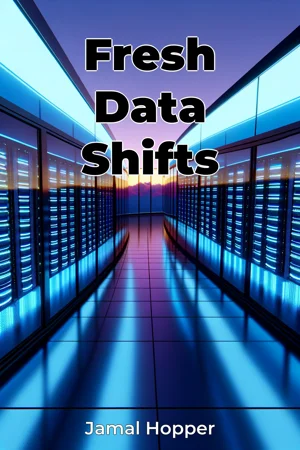
"Fresh Data Shifts" examines the fundamental transformation of data technologies and their impact on modern business, research, and society. As organizations navigate an increasingly complex digital landscape, understanding these shifts becomes crucial for informed decision-making and sustainable innovation. The book focuses on three interconnected domains: the evolution of artificial intelligence systems, the restructuring of cloud architectures, and emerging research methodologies in data science. These areas represent the core pillars of contemporary data infrastructure and shape how organizations process, analyze, and derive value from information. Drawing from extensive research spanning 2019-2023, the work presents empirical evidence from leading technology firms, research institutions, and government agencies. The central thesis argues that the convergence of AI capabilities, distributed computing, and advanced analytics is creating a new paradigm in data management that requires a fundamental rethinking of traditional approaches. The content is structured in three major sections. The first examines the technical foundations of modern AI systems, including neural network architectures, natural language processing, and computer vision advances. The second section analyzes cloud transformation patterns, focusing on hybrid architectures, edge computing, and serverless implementations. The final section synthesizes research findings on data governance, privacy frameworks, and ethical considerations in automated decision-making. Supporting evidence includes case studies from Fortune 500 companies, technical documentation from major cloud providers, and peer-reviewed research from leading universities. The book incorporates quantitative analysis of system performance metrics, cost-benefit studies, and implementation outcomes across various industries. The work establishes important connections with cybersecurity, organizational psychology, and environmental sustainability. It demonstrates how data technology choices influence security postures, team dynamics, and energy consumption patterns in data centers. The book's distinctive approach lies in its integration of theoretical frameworks with practical implementation strategies. Rather than focusing solely on technical specifications, it examines the broader ecosystem of data technologies and their interdependencies. Written in a structured, analytical style, the content balances technical depth with accessibility. Complex concepts are explained through practical examples and real-world applications, making it suitable for technology leaders, data professionals, and business strategists seeking to understand and implement modern data solutions. The target audience includes CIOs, data architects, technology managers, and graduate students in data science and computer science programs. The material assumes basic familiarity with data concepts but provides necessary context for more advanced topics. The scope encompasses current technologies and emerging trends, with particular attention to developments expected to mature within the next three to five years. While global in perspective, the book acknowledges regional variations in data regulations and technology adoption patterns. Practical applications are emphasized throughout, with implementation frameworks, decision matrices, and evaluation criteria for technology selection. Each chapter includes specific recommendations for scaling data operations, optimizing resource utilization, and maintaining compliance with evolving regulations. The work addresses ongoing debates in the field, including the role of automated decision-making in sensitive domains, the balance between data privacy and innovation, and the environmental impact of expanding data infrastructure. This comprehensive examination of data technology shifts provides readers with both theoretical understanding and practical tools for navigating the evolving landscape of data science, AI, and cloud computing.
"Fresh Data Shifts" examines the fundamental transformation of data technologies and their impact on modern business, research, and society. As organizations navigate an increasingly complex digital landscape, understanding these shifts becomes crucial for informed decision-making and sustainable innovation. The book focuses on three interconnected domains: the evolution of artificial intelligence systems, the restructuring of cloud architectures, and emerging research methodologies in data science. These areas represent the core pillars of contemporary data infrastructure and shape how organizations process, analyze, and derive value from information. Drawing from extensive research spanning 2019-2023, the work presents empirical evidence from leading technology firms, research institutions, and government agencies. The central thesis argues that the convergence of AI capabilities, distributed computing, and advanced analytics is creating a new paradigm in data management that requires a fundamental rethinking of traditional approaches. The content is structured in three major sections. The first examines the technical foundations of modern AI systems, including neural network architectures, natural language processing, and computer vision advances. The second section analyzes cloud transformation patterns, focusing on hybrid architectures, edge computing, and serverless implementations. The final section synthesizes research findings on data governance, privacy frameworks, and ethical considerations in automated decision-making. Supporting evidence includes case studies from Fortune 500 companies, technical documentation from major cloud providers, and peer-reviewed research from leading universities. The book incorporates quantitative analysis of system performance metrics, cost-benefit studies, and implementation outcomes across various industries. The work establishes important connections with cybersecurity, organizational psychology, and environmental sustainability. It demonstrates how data technology choices influence security postures, team dynamics, and energy consumption patterns in data centers. The book's distinctive approach lies in its integration of theoretical frameworks with practical implementation strategies. Rather than focusing solely on technical specifications, it examines the broader ecosystem of data technologies and their interdependencies. Written in a structured, analytical style, the content balances technical depth with accessibility. Complex concepts are explained through practical examples and real-world applications, making it suitable for technology leaders, data professionals, and business strategists seeking to understand and implement modern data solutions. The target audience includes CIOs, data architects, technology managers, and graduate students in data science and computer science programs. The material assumes basic familiarity with data concepts but provides necessary context for more advanced topics. The scope encompasses current technologies and emerging trends, with particular attention to developments expected to mature within the next three to five years. While global in perspective, the book acknowledges regional variations in data regulations and technology adoption patterns. Practical applications are emphasized throughout, with implementation frameworks, decision matrices, and evaluation criteria for technology selection. Each chapter includes specific recommendations for scaling data operations, optimizing resource utilization, and maintaining compliance with evolving regulations. The work addresses ongoing debates in the field, including the role of automated decision-making in sensitive domains, the balance between data privacy and innovation, and the environmental impact of expanding data infrastructure. This comprehensive examination of data technology shifts provides readers with both theoretical understanding and practical tools for navigating the evolving landscape of data science, AI, and cloud computing.
"Fresh Data Shifts" offers a comprehensive exploration of the rapidly evolving landscape of data technologies and their transformative impact across business, research, and society. The book uniquely weaves together three critical domains: artificial intelligence systems, cloud architecture evolution, and data science methodologies, presenting a holistic view of how these interconnected elements are reshaping our approach to information management and analysis. Drawing from extensive research conducted between 2019-2023, the book presents compelling evidence from leading technology firms and research institutions to support its central argument: the convergence of AI capabilities, distributed computing, and advanced analytics is creating an unprecedented paradigm shift in data management. The content progresses logically through three major sections, beginning with the technical foundations of modern AI systems, moving through cloud transformation patterns, and concluding with crucial insights into data governance and privacy frameworks. What sets this book apart is its balanced approach to complex technical concepts, making them accessible through practical examples and real-world applications. While maintaining technical accuracy, it provides actionable insights for technology leaders and data professionals, complete with implementation frameworks and decision matrices. The book's analysis of emerging trends, including edge computing, neural networks, and digital transformation, makes it an invaluable resource for anyone seeking to understand and navigate the future of data technologies.
Book Details
ISBN
9788233945077
Publisher
Publifye AS
Your Licenses
You don't own any licenses for this book
Purchase a license below to unlock this book and download the EPUB.
Purchase License
Select a tier to unlock this book
Need bulk licensing?
Contact us for enterprise agreements.