
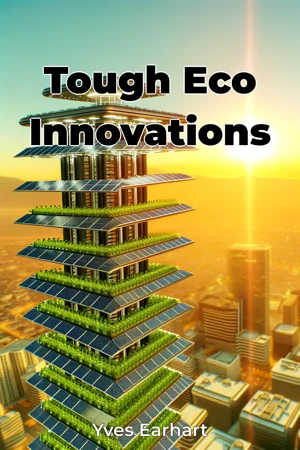
About This Book
"Tough Eco Innovations" tackles the critical challenge facing modern civilization: how to implement effective environmental solutions amid increasing resource constraints and climate pressures. The book presents a data-driven analysis of emerging technologies and infrastructure systems that are reshaping our approach to sustainability. The work examines three primary areas: advanced renewable energy systems, resilient urban infrastructure, and breakthrough materials science applications. These interconnected topics form the foundation for understanding how technological innovation can address environmental challenges while supporting economic growth. Drawing from ten years of research across multiple continents, the book provides detailed case studies of successful environmental solutions, including vertical farming implementations in Singapore, waste-to-energy systems in Denmark, and smart grid developments in Germany. These real-world examples demonstrate the practical application of theoretical concepts while highlighting both successes and initial failures that led to improved designs. The central thesis argues that environmental solutions require an integrated approach combining technological innovation, policy frameworks, and community engagement. This argument is supported by quantitative analysis from environmental impact assessments, economic feasibility studies, and long-term sustainability metrics. The book is structured in three main sections. The first establishes the current state of environmental challenges, supported by climate science data and resource consumption patterns. The second section examines specific technological solutions, including next-generation solar cells, advanced energy storage systems, and self-repairing infrastructure materials. The final section presents implementation frameworks for combining these solutions into cohesive environmental strategies. Research evidence includes peer-reviewed studies from leading environmental science journals, technical data from pilot projects, and economic analyses from international development organizations. The work incorporates findings from civil engineering, materials science, environmental biology, and urban planning, creating a comprehensive understanding of environmental solutions. The book maintains an analytical tone while remaining accessible to readers with basic scientific literacy. Technical concepts are explained through practical examples and clear illustrations, making complex ideas understandable to a broad audience of professionals, policymakers, and engaged citizens. Target readers include environmental professionals, urban planners, policy analysts, and business leaders involved in sustainability initiatives. The content is particularly relevant for those seeking to implement practical environmental solutions in their organizations or communities. The scope encompasses both immediate solutions that can be implemented with existing technology and emerging innovations that will become viable within the next decade. While the book focuses primarily on urban and industrial applications, it acknowledges the importance of rural environmental solutions and addresses how different approaches can be adapted for various contexts. A significant portion of the content addresses ongoing debates in environmental technology, including the role of nuclear power in clean energy transitions, the effectiveness of carbon capture technologies, and the balance between technological and behavioral solutions to environmental challenges. The work's unique contribution lies in its systematic analysis of how different environmental solutions can work together, supported by detailed technical specifications and implementation guidelines. Rather than presenting isolated technologies, it demonstrates how various innovations can be integrated into comprehensive environmental strategies. Practical applications include detailed implementation guidelines, cost-benefit analysis frameworks, and decision-making tools for evaluating environmental solutions. These resources enable readers to assess and adapt solutions for their specific contexts while understanding the technical and economic considerations involved.
"Tough Eco Innovations" tackles the critical challenge facing modern civilization: how to implement effective environmental solutions amid increasing resource constraints and climate pressures. The book presents a data-driven analysis of emerging technologies and infrastructure systems that are reshaping our approach to sustainability. The work examines three primary areas: advanced renewable energy systems, resilient urban infrastructure, and breakthrough materials science applications. These interconnected topics form the foundation for understanding how technological innovation can address environmental challenges while supporting economic growth. Drawing from ten years of research across multiple continents, the book provides detailed case studies of successful environmental solutions, including vertical farming implementations in Singapore, waste-to-energy systems in Denmark, and smart grid developments in Germany. These real-world examples demonstrate the practical application of theoretical concepts while highlighting both successes and initial failures that led to improved designs. The central thesis argues that environmental solutions require an integrated approach combining technological innovation, policy frameworks, and community engagement. This argument is supported by quantitative analysis from environmental impact assessments, economic feasibility studies, and long-term sustainability metrics. The book is structured in three main sections. The first establishes the current state of environmental challenges, supported by climate science data and resource consumption patterns. The second section examines specific technological solutions, including next-generation solar cells, advanced energy storage systems, and self-repairing infrastructure materials. The final section presents implementation frameworks for combining these solutions into cohesive environmental strategies. Research evidence includes peer-reviewed studies from leading environmental science journals, technical data from pilot projects, and economic analyses from international development organizations. The work incorporates findings from civil engineering, materials science, environmental biology, and urban planning, creating a comprehensive understanding of environmental solutions. The book maintains an analytical tone while remaining accessible to readers with basic scientific literacy. Technical concepts are explained through practical examples and clear illustrations, making complex ideas understandable to a broad audience of professionals, policymakers, and engaged citizens. Target readers include environmental professionals, urban planners, policy analysts, and business leaders involved in sustainability initiatives. The content is particularly relevant for those seeking to implement practical environmental solutions in their organizations or communities. The scope encompasses both immediate solutions that can be implemented with existing technology and emerging innovations that will become viable within the next decade. While the book focuses primarily on urban and industrial applications, it acknowledges the importance of rural environmental solutions and addresses how different approaches can be adapted for various contexts. A significant portion of the content addresses ongoing debates in environmental technology, including the role of nuclear power in clean energy transitions, the effectiveness of carbon capture technologies, and the balance between technological and behavioral solutions to environmental challenges. The work's unique contribution lies in its systematic analysis of how different environmental solutions can work together, supported by detailed technical specifications and implementation guidelines. Rather than presenting isolated technologies, it demonstrates how various innovations can be integrated into comprehensive environmental strategies. Practical applications include detailed implementation guidelines, cost-benefit analysis frameworks, and decision-making tools for evaluating environmental solutions. These resources enable readers to assess and adapt solutions for their specific contexts while understanding the technical and economic considerations involved.
"Tough Eco Innovations" presents a comprehensive analysis of cutting-edge environmental solutions that address today's most pressing sustainability challenges. Drawing from a decade of global research, the book explores the intricate connections between renewable energy systems, urban infrastructure development, and breakthrough materials science, demonstrating how these elements can work together to create effective environmental strategies. The book stands out through its practical approach, offering detailed case studies from around the world, including Singapore's vertical farming initiatives and Denmark's waste-to-energy systems. These real-world examples illuminate both successes and initial setbacks, providing valuable insights for implementation. The author's systematic analysis progresses from establishing current environmental challenges through climate science data, to examining specific technological solutions like next-generation solar cells and self-repairing infrastructure materials, before culminating in comprehensive implementation frameworks. What makes this work particularly valuable is its integrated perspective on environmental problem-solving, combining technological innovation with policy frameworks and community engagement. Technical concepts are presented in accessible language, supported by practical examples and clear illustrations, making it an invaluable resource for environmental professionals, urban planners, and policy analysts. The book's emphasis on both immediate solutions and emerging innovations provides readers with a roadmap for implementing sustainable practices across various contexts, from urban centers to industrial applications.
Book Details
ISBN
9788233945046
Publisher
Publifye AS
Your Licenses
You don't own any licenses for this book
Purchase a license below to unlock this book and download the EPUB.
Purchase License
Select a tier to unlock this book
Need bulk licensing?
Contact us for enterprise agreements.