
About This Book
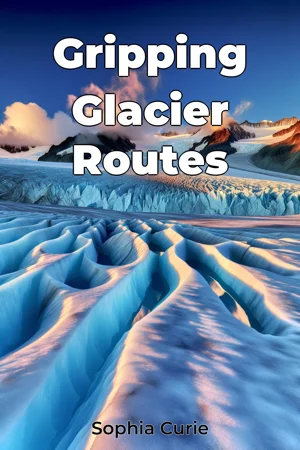
"Gripping Glacier Routes" opens with a critical question: How do changing glacial conditions affect the safety and viability of high-altitude routes? This comprehensive guide bridges the gap between scientific glacier research and practical mountaineering skills, providing climbers with evidence-based protocols for glacier travel. The book establishes three core themes: glacial mechanics and stability assessment, technical climbing methodology, and expedition planning. These interconnected elements form the foundation for safe glacier travel, supported by extensive field research and documented expedition experiences across major mountain ranges including the Alps, Andes, and Himalayas. Drawing from two decades of glaciology studies and climbing logs, the text presents detailed analyses of ice formation patterns, crevasse development, and seasonal variations in glacier conditions. This scientific framework helps readers understand the dynamic nature of glacier environments and their impact on route selection and climbing techniques. The book's central thesis maintains that successful glacier navigation requires an integrated approach combining scientific knowledge with technical climbing skills. This argument is developed through systematic presentation of evidence from both research institutions and professional climbing expeditions. Content is structured in three main sections: First, the fundamental principles of glacier formation and movement, incorporating recent climate data and its effects on traditional routes. Second, a detailed examination of climbing techniques specific to varying ice conditions, supported by equipment studies and accident analyses. Third, a comprehensive guide to expedition planning, including weather interpretation and risk assessment protocols. Research evidence includes data from ice core studies, satellite imagery, and documented case studies from major climbing expeditions. The methodology combines quantitative glaciology research with qualitative analysis of climbing techniques and route conditions. The text creates interdisciplinary connections between climatology, materials science, and sports medicine, particularly in discussing equipment selection and physiological responses to high-altitude glacier travel. These connections provide readers with a holistic understanding of glacier environments and their challenges. The book's unique approach lies in its integration of scientific data with practical climbing applications, using real-world examples to illustrate theoretical concepts. The writing style maintains technical accuracy while remaining accessible to both experienced climbers and newcomers to glacier travel. Target readers include professional mountaineers, climbing guides, and serious recreational climbers who seek to deepen their understanding of glacier environments. The content is particularly relevant for those planning extended trips on glaciated terrain. The scope encompasses both technical climbing skills and scientific understanding, though it deliberately focuses on glaciated terrain above 3,000 meters. The book addresses current debates regarding climate change impacts on traditional climbing routes and the evolution of safety protocols in glacier travel. Practical applications include detailed protocols for assessing ice stability, selecting appropriate equipment, and planning rescue procedures. The text provides specific guidance for adapting techniques to varying glacier conditions, supported by detailed illustrations and case studies. The book acknowledges ongoing debates in the climbing community regarding the balance between traditional techniques and modern technology in glacier travel, presenting evidence-based analyses of both approaches. This work serves as a vital resource for understanding and navigating glaciated terrain, combining academic rigor with practical expedition experience to create a comprehensive guide for modern glacier travel.
"Gripping Glacier Routes" opens with a critical question: How do changing glacial conditions affect the safety and viability of high-altitude routes? This comprehensive guide bridges the gap between scientific glacier research and practical mountaineering skills, providing climbers with evidence-based protocols for glacier travel. The book establishes three core themes: glacial mechanics and stability assessment, technical climbing methodology, and expedition planning. These interconnected elements form the foundation for safe glacier travel, supported by extensive field research and documented expedition experiences across major mountain ranges including the Alps, Andes, and Himalayas. Drawing from two decades of glaciology studies and climbing logs, the text presents detailed analyses of ice formation patterns, crevasse development, and seasonal variations in glacier conditions. This scientific framework helps readers understand the dynamic nature of glacier environments and their impact on route selection and climbing techniques. The book's central thesis maintains that successful glacier navigation requires an integrated approach combining scientific knowledge with technical climbing skills. This argument is developed through systematic presentation of evidence from both research institutions and professional climbing expeditions. Content is structured in three main sections: First, the fundamental principles of glacier formation and movement, incorporating recent climate data and its effects on traditional routes. Second, a detailed examination of climbing techniques specific to varying ice conditions, supported by equipment studies and accident analyses. Third, a comprehensive guide to expedition planning, including weather interpretation and risk assessment protocols. Research evidence includes data from ice core studies, satellite imagery, and documented case studies from major climbing expeditions. The methodology combines quantitative glaciology research with qualitative analysis of climbing techniques and route conditions. The text creates interdisciplinary connections between climatology, materials science, and sports medicine, particularly in discussing equipment selection and physiological responses to high-altitude glacier travel. These connections provide readers with a holistic understanding of glacier environments and their challenges. The book's unique approach lies in its integration of scientific data with practical climbing applications, using real-world examples to illustrate theoretical concepts. The writing style maintains technical accuracy while remaining accessible to both experienced climbers and newcomers to glacier travel. Target readers include professional mountaineers, climbing guides, and serious recreational climbers who seek to deepen their understanding of glacier environments. The content is particularly relevant for those planning extended trips on glaciated terrain. The scope encompasses both technical climbing skills and scientific understanding, though it deliberately focuses on glaciated terrain above 3,000 meters. The book addresses current debates regarding climate change impacts on traditional climbing routes and the evolution of safety protocols in glacier travel. Practical applications include detailed protocols for assessing ice stability, selecting appropriate equipment, and planning rescue procedures. The text provides specific guidance for adapting techniques to varying glacier conditions, supported by detailed illustrations and case studies. The book acknowledges ongoing debates in the climbing community regarding the balance between traditional techniques and modern technology in glacier travel, presenting evidence-based analyses of both approaches. This work serves as a vital resource for understanding and navigating glaciated terrain, combining academic rigor with practical expedition experience to create a comprehensive guide for modern glacier travel.
"Gripping Glacier Routes" presents a groundbreaking synthesis of scientific glacier research and practical mountaineering expertise, addressing the critical challenges faced by high-altitude climbers in an era of changing glacial conditions. This comprehensive guide uniquely bridges the gap between technical climbing skills and glaciology, offering evidence-based protocols derived from two decades of research across the world's major mountain ranges, including the Alps, Andes, and Himalayas. The book systematically develops its content through three interconnected sections, beginning with fundamental principles of glacier formation and movement, incorporating recent climate data that affects traditional climbing routes. Readers then explore detailed climbing techniques specific to various ice conditions, supported by equipment studies and real-world accident analyses. The final section provides comprehensive expedition planning guidance, including weather interpretation and risk assessment protocols, making the content particularly valuable for both professional mountaineers and serious recreational climbers. What sets this guide apart is its innovative integration of scientific data with practical applications, using actual expedition experiences to illustrate complex concepts. Through detailed case studies and documented field research, the book offers specific protocols for assessing ice stability, selecting appropriate equipment, and planning rescue procedures. This approach makes advanced glaciology concepts accessible while maintaining the technical accuracy necessary for safe high-altitude glacier travel, particularly relevant for those planning extended trips on glaciated terrain above 3,000 meters.
Book Details
ISBN
9788233944940
Publisher
Publifye AS
Your Licenses
You don't own any licenses for this book
Purchase a license below to unlock this book and download the EPUB.
Purchase License
Select a tier to unlock this book
Need bulk licensing?
Contact us for enterprise agreements.