
About This Book
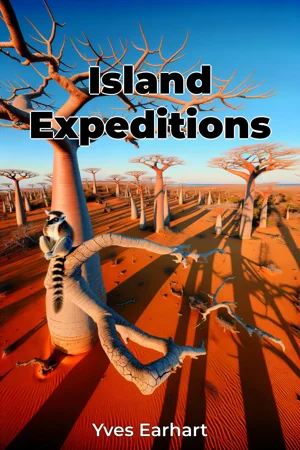
"Island Expeditions" begins with a stark revelation: isolated islands, comprising just 5% of Earth's land mass, host 20% of all known terrestrial species. This numerical disparity sets the stage for a detailed exploration of the world's most scientifically significant island ecosystems and their critical role in understanding evolution, adaptation, and biodiversity. The book presents three main sections, beginning with Madagascar's diverse landscapes, from rainforests to spiny deserts, home to species like the aye-aye and over 100 lemur species found nowhere else on Earth. The second section examines the Galapagos Islands, where Darwin's finches continue to provide new insights into adaptive radiation. The final section covers lesser-known but equally significant island ecosystems, including New Zealand's flightless bird havens and Hawaii's unique volcanic habitats. Through extensive field research and collaboration with local scientists, the book documents current conservation efforts and their outcomes. It details specific projects, such as Madagascar's community-based forest management programs and the Galapagos' marine protected areas, providing data on population recovery of threatened species and habitat restoration success rates. The central argument establishes that island ecosystems serve as natural laboratories for understanding broader ecological principles and climate change impacts. The book presents evidence showing how islands often experience environmental changes first, making them early warning systems for global ecological trends. Supporting research draws from multiple disciplines, including genetics, climatology, and anthropology. The text incorporates recent findings from DNA analysis of island species, satellite tracking of migration patterns, and long-term population studies. These data sources combine to create a comprehensive picture of island ecosystem dynamics and their broader implications for conservation science. The book connects environmental science with economics, examining how sustainable tourism and conservation can coexist. It explores the intersection of local cultural practices with modern conservation methods, demonstrating how traditional ecological knowledge enhances scientific understanding of these environments. The writing maintains an academic foundation while employing narrative techniques to describe field research experiences and local conservation initiatives. Technical concepts are explained through practical examples and case studies, making the content accessible to both scientific and general audiences. Target readers include conservation professionals, environmental students, and informed general readers interested in biodiversity and ecosystem preservation. The book serves as both a scientific reference and a practical guide for understanding island conservation challenges and solutions. Practical applications include protocols for ecosystem monitoring, guidelines for sustainable tourism development, and frameworks for community-based conservation programs. The book addresses ongoing debates about conservation priorities, including the balance between species preservation and economic development, and the role of managed relocation in the face of climate change. The scope focuses specifically on volcanic and continental islands, examining their unique geological histories and resulting biodiversity. While maintaining scientific rigor, the book acknowledges the limitations of current research and highlights areas requiring further study. By examining these isolated ecosystems, "Island Expeditions" provides insights into species adaptation, evolution, and resilience, offering lessons applicable to conservation efforts worldwide. The book concludes by presenting a practical framework for preserving these natural laboratories while supporting sustainable development and local communities.
"Island Expeditions" begins with a stark revelation: isolated islands, comprising just 5% of Earth's land mass, host 20% of all known terrestrial species. This numerical disparity sets the stage for a detailed exploration of the world's most scientifically significant island ecosystems and their critical role in understanding evolution, adaptation, and biodiversity. The book presents three main sections, beginning with Madagascar's diverse landscapes, from rainforests to spiny deserts, home to species like the aye-aye and over 100 lemur species found nowhere else on Earth. The second section examines the Galapagos Islands, where Darwin's finches continue to provide new insights into adaptive radiation. The final section covers lesser-known but equally significant island ecosystems, including New Zealand's flightless bird havens and Hawaii's unique volcanic habitats. Through extensive field research and collaboration with local scientists, the book documents current conservation efforts and their outcomes. It details specific projects, such as Madagascar's community-based forest management programs and the Galapagos' marine protected areas, providing data on population recovery of threatened species and habitat restoration success rates. The central argument establishes that island ecosystems serve as natural laboratories for understanding broader ecological principles and climate change impacts. The book presents evidence showing how islands often experience environmental changes first, making them early warning systems for global ecological trends. Supporting research draws from multiple disciplines, including genetics, climatology, and anthropology. The text incorporates recent findings from DNA analysis of island species, satellite tracking of migration patterns, and long-term population studies. These data sources combine to create a comprehensive picture of island ecosystem dynamics and their broader implications for conservation science. The book connects environmental science with economics, examining how sustainable tourism and conservation can coexist. It explores the intersection of local cultural practices with modern conservation methods, demonstrating how traditional ecological knowledge enhances scientific understanding of these environments. The writing maintains an academic foundation while employing narrative techniques to describe field research experiences and local conservation initiatives. Technical concepts are explained through practical examples and case studies, making the content accessible to both scientific and general audiences. Target readers include conservation professionals, environmental students, and informed general readers interested in biodiversity and ecosystem preservation. The book serves as both a scientific reference and a practical guide for understanding island conservation challenges and solutions. Practical applications include protocols for ecosystem monitoring, guidelines for sustainable tourism development, and frameworks for community-based conservation programs. The book addresses ongoing debates about conservation priorities, including the balance between species preservation and economic development, and the role of managed relocation in the face of climate change. The scope focuses specifically on volcanic and continental islands, examining their unique geological histories and resulting biodiversity. While maintaining scientific rigor, the book acknowledges the limitations of current research and highlights areas requiring further study. By examining these isolated ecosystems, "Island Expeditions" provides insights into species adaptation, evolution, and resilience, offering lessons applicable to conservation efforts worldwide. The book concludes by presenting a practical framework for preserving these natural laboratories while supporting sustainable development and local communities.
"Island Expeditions" reveals the extraordinary significance of Earth's island ecosystems, which harbor 20% of known terrestrial species on just 5% of the planet's land mass. This comprehensive exploration takes readers through three distinct geographical regions - Madagascar's diverse landscapes, the evolutionary laboratory of the Galapagos Islands, and lesser-known but equally fascinating locations like New Zealand and Hawaii. Through meticulous research and collaboration with local scientists, the book illuminates how these isolated environments serve as natural laboratories for understanding evolution, adaptation, and the broader implications of climate change. The book skillfully weaves together multiple scientific disciplines, from genetics to climatology, while maintaining accessibility through practical examples and engaging case studies. Readers discover fascinating details about Madagascar's hundred-plus lemur species, the ongoing evolution of Darwin's finches, and the unique adaptations of New Zealand's flightless birds. The text particularly excels in demonstrating how island ecosystems often act as early warning systems for global environmental changes, making them crucial indicators of broader ecological trends. What sets this work apart is its holistic approach to conservation, combining rigorous scientific analysis with real-world applications. The authors examine successful conservation initiatives, such as Madagascar's community-based forest management and the Galapagos' marine protected areas, while thoughtfully addressing the delicate balance between preservation and sustainable development. This practical framework makes the book invaluable for both conservation professionals and engaged general readers interested in understanding and protecting these unique natural laboratories of biodiversity.
Book Details
ISBN
9788233944452
Publisher
Publifye AS
Your Licenses
You don't own any licenses for this book
Purchase a license below to unlock this book and download the EPUB.
Purchase License
Select a tier to unlock this book
Need bulk licensing?
Contact us for enterprise agreements.