
About This Book
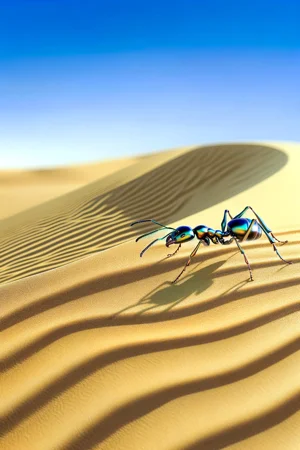
"Desert Encounters" explores the intricate mechanisms of survival in Earth's most challenging arid environments, combining field research with scientific analysis to reveal how life persists in conditions that appear hostile to existence. The book presents three major desert ecosystems—the Sahara, Gobi, and Sonoran—as living laboratories where evolution has crafted remarkable adaptations. Through systematic examination of these regions, readers discover how species modification, behavioral patterns, and ecological relationships form complex networks that maintain biodiversity in extreme conditions. Drawing from ten years of field observations and environmental studies, the work develops its narrative across three main sections. The first examines the geological and climatic factors that create and maintain desert ecosystems, including wind patterns, precipitation cycles, and soil composition. The second section analyzes specific adaptations of flora and fauna, from the Saharan silver ant's heat-reflective coating to the Sonoran Desert's nurse plant relationships. The final section synthesizes these observations to identify common survival strategies across different desert regions. The research methodology combines traditional field studies with modern technology, including satellite imaging, soil analysis, and genetic sampling. This multi-faceted approach provides readers with comprehensive data on temperature variations, precipitation patterns, and species distribution across these arid landscapes. The book connects environmental science with evolution, climatology, and conservation biology. It demonstrates how desert ecosystems serve as indicators of climate change, offering insights into potential future environmental scenarios. The work also explores the archaeological evidence of human adaptation in these regions, linking anthropology with environmental studies. Written in an academic yet accessible style, the text balances technical information with clear explanations suitable for readers with a basic science background. Each chapter includes detailed maps, photographs, and data visualizations that support the written content. The target audience includes environmental scientists, geography students, conservation professionals, and informed readers interested in desert ecology. The book serves as both a scholarly reference and a practical guide for field researchers. The work addresses several ongoing debates in desert ecology, including the impact of climate change on arid regions and the role of desertification in global environmental changes. It presents current research on these topics while acknowledging areas where scientific consensus is still developing. The scope encompasses both macro and micro perspectives, from broad ecosystem dynamics to detailed examinations of specific species adaptations. While focused primarily on the three featured deserts, the book draws comparative examples from other arid regions to establish global patterns. Practical applications include conservation strategies, sustainable development approaches for arid regions, and methods for studying desert ecosystems. The work provides frameworks for environmental assessment and monitoring that can be applied in various arid environments. The book's unique contribution lies in its integration of long-term observational data with current research methodologies, offering a comprehensive view of desert ecosystem dynamics. It challenges common perceptions of deserts as barren wastelands, revealing them instead as complex, dynamic systems that demonstrate life's capacity for adaptation and resilience.
"Desert Encounters" explores the intricate mechanisms of survival in Earth's most challenging arid environments, combining field research with scientific analysis to reveal how life persists in conditions that appear hostile to existence. The book presents three major desert ecosystems—the Sahara, Gobi, and Sonoran—as living laboratories where evolution has crafted remarkable adaptations. Through systematic examination of these regions, readers discover how species modification, behavioral patterns, and ecological relationships form complex networks that maintain biodiversity in extreme conditions. Drawing from ten years of field observations and environmental studies, the work develops its narrative across three main sections. The first examines the geological and climatic factors that create and maintain desert ecosystems, including wind patterns, precipitation cycles, and soil composition. The second section analyzes specific adaptations of flora and fauna, from the Saharan silver ant's heat-reflective coating to the Sonoran Desert's nurse plant relationships. The final section synthesizes these observations to identify common survival strategies across different desert regions. The research methodology combines traditional field studies with modern technology, including satellite imaging, soil analysis, and genetic sampling. This multi-faceted approach provides readers with comprehensive data on temperature variations, precipitation patterns, and species distribution across these arid landscapes. The book connects environmental science with evolution, climatology, and conservation biology. It demonstrates how desert ecosystems serve as indicators of climate change, offering insights into potential future environmental scenarios. The work also explores the archaeological evidence of human adaptation in these regions, linking anthropology with environmental studies. Written in an academic yet accessible style, the text balances technical information with clear explanations suitable for readers with a basic science background. Each chapter includes detailed maps, photographs, and data visualizations that support the written content. The target audience includes environmental scientists, geography students, conservation professionals, and informed readers interested in desert ecology. The book serves as both a scholarly reference and a practical guide for field researchers. The work addresses several ongoing debates in desert ecology, including the impact of climate change on arid regions and the role of desertification in global environmental changes. It presents current research on these topics while acknowledging areas where scientific consensus is still developing. The scope encompasses both macro and micro perspectives, from broad ecosystem dynamics to detailed examinations of specific species adaptations. While focused primarily on the three featured deserts, the book draws comparative examples from other arid regions to establish global patterns. Practical applications include conservation strategies, sustainable development approaches for arid regions, and methods for studying desert ecosystems. The work provides frameworks for environmental assessment and monitoring that can be applied in various arid environments. The book's unique contribution lies in its integration of long-term observational data with current research methodologies, offering a comprehensive view of desert ecosystem dynamics. It challenges common perceptions of deserts as barren wastelands, revealing them instead as complex, dynamic systems that demonstrate life's capacity for adaptation and resilience.
"Desert Encounters" offers a compelling exploration of life's remarkable adaptations in Earth's most challenging arid environments, focusing on the Sahara, Gobi, and Sonoran deserts as living laboratories of evolution and survival. Through a combination of decade-long field observations and cutting-edge scientific analysis, the book reveals how seemingly hostile environments support complex networks of life through fascinating adaptations and ecological relationships. The book progresses systematically from the fundamental elements of desert formation, including wind patterns and soil composition, to specific evolutionary innovations like the Saharan silver ant's heat-reflective coating and nurse plant relationships in the Sonoran Desert. What makes this work particularly valuable is its integration of traditional field studies with modern technology, including satellite imaging and genetic sampling, providing readers with a comprehensive understanding of desert ecosystems and their intricate dynamics. By connecting environmental science with evolution and climatology, the book demonstrates how desert ecosystems serve as crucial indicators of climate change while challenging the perception of deserts as lifeless wastelands. The accessible academic writing style, supported by detailed maps and data visualizations, makes complex scientific concepts understandable to readers with basic science knowledge, whether they're environmental scientists, students, or nature enthusiasts interested in understanding how life thrives in Earth's most extreme environments.
Book Details
ISBN
9788233944445
Publisher
Publifye AS
Your Licenses
You don't own any licenses for this book
Purchase a license below to unlock this book and download the EPUB.
Purchase License
Select a tier to unlock this book
Need bulk licensing?
Contact us for enterprise agreements.