
About This Book
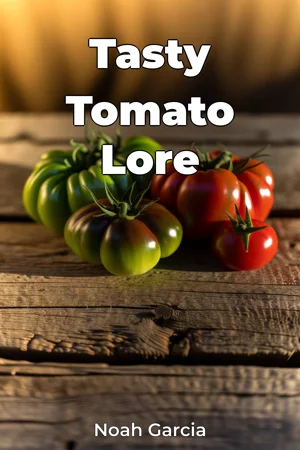
"Tasty Tomato Lore" delves into the complex world of tomatoes, tracing their journey from wild Andean fruit to global agricultural staple, while providing readers with comprehensive cultivation knowledge and cultural insights backed by scientific research. The book examines three primary areas: genetic diversity among tomato varieties, historical and cultural significance across civilizations, and evidence-based growing techniques. These topics interweave to create a thorough understanding of this versatile crop that accounts for over 180 million tons of annual global production. The narrative begins with a foundation in botanical science, explaining the tomato's classification within the Solanaceae family and its relationship to other nightshade plants. This context helps readers understand the plant's biological characteristics and growth requirements. The book draws from agricultural surveys spanning five continents and nutritional studies conducted by major research institutions. The central thesis demonstrates how understanding tomato diversity and cultural practices leads to more successful cultivation and appreciation of this crop's role in global food security. This argument is supported by data from international seed banks, documenting over 10,000 varieties, each with distinct characteristics and optimal growing conditions. The content progresses through systematic chapters covering genetic diversity, historical cultivation practices, and modern growing techniques. The book presents extensive research on soil chemistry, climate effects, and pest management, incorporating findings from agricultural extension services and university studies. It includes detailed analyses of traditional growing methods from Mediterranean and Native American cultures, comparing their effectiveness with contemporary approaches. Technical information is balanced with practical applications, providing readers with actionable growing guides based on their specific climate zones and available space. The book connects botanical science with cultural anthropology and nutritional biochemistry, offering insights into how tomato cultivation has influenced human society and health. The writing maintains an informative yet accessible tone, using clear language to explain complex concepts while avoiding oversimplification. It serves both home gardeners seeking comprehensive knowledge and agricultural professionals requiring technical information. Unique aspects include detailed mapping of tomato variety adaptation to different climates and a systematic analysis of traditional growing techniques' effectiveness. The book addresses current debates in sustainable agriculture, including the role of heirloom varieties in maintaining genetic diversity and the impact of climate change on tomato cultivation. The target audience encompasses both experienced gardeners and newcomers to cultivation, with particular appeal to those interested in food history and sustainable agriculture. The content aligns with current gardening literature while incorporating broader historical and scientific perspectives. The scope covers both small-scale garden cultivation and commercial farming principles, though it focuses primarily on techniques applicable to home and community gardens. It addresses ongoing discussions about organic versus conventional growing methods, presenting research-based evidence for various approaches. Real-world applications include detailed growing calendars, troubleshooting guides for common problems, and preservation techniques based on food science research. The book maintains scientific accuracy while remaining practical and implementable for readers at various experience levels. Limitations are clearly stated, particularly regarding regional specificity and the evolving nature of agricultural research. The work acknowledges areas where scientific consensus is still developing, particularly in emerging organic growing techniques and climate adaptation strategies.
"Tasty Tomato Lore" delves into the complex world of tomatoes, tracing their journey from wild Andean fruit to global agricultural staple, while providing readers with comprehensive cultivation knowledge and cultural insights backed by scientific research. The book examines three primary areas: genetic diversity among tomato varieties, historical and cultural significance across civilizations, and evidence-based growing techniques. These topics interweave to create a thorough understanding of this versatile crop that accounts for over 180 million tons of annual global production. The narrative begins with a foundation in botanical science, explaining the tomato's classification within the Solanaceae family and its relationship to other nightshade plants. This context helps readers understand the plant's biological characteristics and growth requirements. The book draws from agricultural surveys spanning five continents and nutritional studies conducted by major research institutions. The central thesis demonstrates how understanding tomato diversity and cultural practices leads to more successful cultivation and appreciation of this crop's role in global food security. This argument is supported by data from international seed banks, documenting over 10,000 varieties, each with distinct characteristics and optimal growing conditions. The content progresses through systematic chapters covering genetic diversity, historical cultivation practices, and modern growing techniques. The book presents extensive research on soil chemistry, climate effects, and pest management, incorporating findings from agricultural extension services and university studies. It includes detailed analyses of traditional growing methods from Mediterranean and Native American cultures, comparing their effectiveness with contemporary approaches. Technical information is balanced with practical applications, providing readers with actionable growing guides based on their specific climate zones and available space. The book connects botanical science with cultural anthropology and nutritional biochemistry, offering insights into how tomato cultivation has influenced human society and health. The writing maintains an informative yet accessible tone, using clear language to explain complex concepts while avoiding oversimplification. It serves both home gardeners seeking comprehensive knowledge and agricultural professionals requiring technical information. Unique aspects include detailed mapping of tomato variety adaptation to different climates and a systematic analysis of traditional growing techniques' effectiveness. The book addresses current debates in sustainable agriculture, including the role of heirloom varieties in maintaining genetic diversity and the impact of climate change on tomato cultivation. The target audience encompasses both experienced gardeners and newcomers to cultivation, with particular appeal to those interested in food history and sustainable agriculture. The content aligns with current gardening literature while incorporating broader historical and scientific perspectives. The scope covers both small-scale garden cultivation and commercial farming principles, though it focuses primarily on techniques applicable to home and community gardens. It addresses ongoing discussions about organic versus conventional growing methods, presenting research-based evidence for various approaches. Real-world applications include detailed growing calendars, troubleshooting guides for common problems, and preservation techniques based on food science research. The book maintains scientific accuracy while remaining practical and implementable for readers at various experience levels. Limitations are clearly stated, particularly regarding regional specificity and the evolving nature of agricultural research. The work acknowledges areas where scientific consensus is still developing, particularly in emerging organic growing techniques and climate adaptation strategies.
"Tasty Tomato Lore" offers a fascinating journey through the evolution and cultivation of one of the world's most important crops, seamlessly blending scientific research with practical growing advice. This comprehensive guide traces tomatoes from their wild Andean origins to their current status as a global agricultural staple, producing over 180 million tons annually. The book uniquely combines botanical science, cultural history, and modern growing techniques, making complex agricultural concepts accessible to both novice gardeners and experienced horticulturists. The narrative unfolds through three main areas: the vast genetic diversity of tomatoes (with over 10,000 documented varieties), their rich historical significance across different civilizations, and evidence-based cultivation methods. Readers learn how understanding tomato diversity and cultural practices contributes to successful growing, while gaining insights into the plant's crucial role in global food security. The book's approach to presenting information balances technical accuracy with practical application, offering specific growing guides adapted to different climate zones and garden spaces. As the chapters progress from basic botanical science to advanced growing techniques, readers discover the fascinating intersection of traditional wisdom and modern agricultural science. The book explores everything from soil chemistry and climate effects to pest management, incorporating both time-tested Mediterranean and Native American growing methods alongside contemporary approaches. Special attention is given to sustainable gardening practices and the preservation of heirloom varieties, making this an invaluable resource for anyone interested in both the science and practice of tomato cultivation.
Book Details
ISBN
9788233944346
Publisher
Publifye AS
Your Licenses
You don't own any licenses for this book
Purchase a license below to unlock this book and download the EPUB.
Purchase License
Select a tier to unlock this book
Need bulk licensing?
Contact us for enterprise agreements.