
About This Book
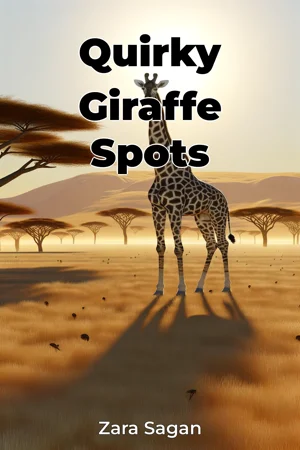
"Quirky Giraffe Spots" delves into the intricate world of giraffe coat patterns, revealing how these distinctive markings serve as both natural identifiers and survival adaptations in African ecosystems. Through comprehensive zoological research and field observations, this book uncovers the complex relationship between giraffe genetics, habitat requirements, and their unique spot patterns. The book presents three core topics: the genetic basis of spot pattern inheritance, the role of these patterns in giraffe social structures, and the specific habitat requirements that support healthy giraffe populations. These elements combine to demonstrate how spot patterns contribute to species survival and social organization, while highlighting the critical need for habitat preservation. Drawing from fifty years of zoological records across African reserves and recent genetic studies, the text establishes a scientific foundation for understanding pattern development in giraffes. The research incorporates data from multiple subspecies, examining how environmental factors influence coat pattern variations across different regions. The central thesis argues that giraffe spot patterns represent more than random genetic variations—they serve as crucial elements in individual recognition, mate selection, and thermal regulation. This understanding proves vital for conservation efforts and habitat management strategies. The book's structure progresses from basic pattern analysis through advanced genetic studies to practical conservation applications. Early chapters examine pattern formation during fetal development, while later sections explore how spots function in social interactions and habitat adaptation. The final portion addresses conservation implications and future research directions. Evidence comes from multiple sources: DNA analysis, thermal imaging studies, behavioral observations, and long-term population monitoring. The research methodology combines traditional field studies with modern genetic analysis and machine learning pattern recognition. Interdisciplinary connections link zoology with climate science, examining how changing environmental conditions affect pattern development, and with computer science through pattern recognition algorithms used in individual identification. The book also explores connections to conservation biology and habitat management. The text employs an analytical yet accessible approach, presenting complex scientific concepts through clear explanations and relevant examples. Technical terms are carefully defined, making the content appropriate for both academic readers and informed general audiences. Target readers include wildlife biologists, conservation professionals, and educated nature enthusiasts. The book serves as a valuable reference for those involved in African wildlife management or interested in animal adaptation mechanisms. The scope encompasses all known giraffe subspecies while focusing primarily on well-studied populations in Eastern and Southern Africa. This limitation allows for detailed analysis of thoroughly documented groups while acknowledging gaps in current knowledge. Practical applications include improved methods for individual identification in field studies, habitat management strategies, and conservation planning. The book provides specific guidelines for wildlife photographers and researchers conducting giraffe population studies. Current debates addressed include the influence of climate change on pattern development and the classification of giraffe subspecies based on pattern variations. The text presents multiple viewpoints while maintaining scientific objectivity. Written in a scholarly yet engaging style, the book balances rigorous scientific content with clear explanations and relevant examples. Each chapter includes detailed photographs, diagrams, and data visualizations to support key concepts. The book concludes by examining future research directions and conservation implications, emphasizing the importance of understanding these unique patterns for species preservation and habitat protection.
"Quirky Giraffe Spots" delves into the intricate world of giraffe coat patterns, revealing how these distinctive markings serve as both natural identifiers and survival adaptations in African ecosystems. Through comprehensive zoological research and field observations, this book uncovers the complex relationship between giraffe genetics, habitat requirements, and their unique spot patterns. The book presents three core topics: the genetic basis of spot pattern inheritance, the role of these patterns in giraffe social structures, and the specific habitat requirements that support healthy giraffe populations. These elements combine to demonstrate how spot patterns contribute to species survival and social organization, while highlighting the critical need for habitat preservation. Drawing from fifty years of zoological records across African reserves and recent genetic studies, the text establishes a scientific foundation for understanding pattern development in giraffes. The research incorporates data from multiple subspecies, examining how environmental factors influence coat pattern variations across different regions. The central thesis argues that giraffe spot patterns represent more than random genetic variations—they serve as crucial elements in individual recognition, mate selection, and thermal regulation. This understanding proves vital for conservation efforts and habitat management strategies. The book's structure progresses from basic pattern analysis through advanced genetic studies to practical conservation applications. Early chapters examine pattern formation during fetal development, while later sections explore how spots function in social interactions and habitat adaptation. The final portion addresses conservation implications and future research directions. Evidence comes from multiple sources: DNA analysis, thermal imaging studies, behavioral observations, and long-term population monitoring. The research methodology combines traditional field studies with modern genetic analysis and machine learning pattern recognition. Interdisciplinary connections link zoology with climate science, examining how changing environmental conditions affect pattern development, and with computer science through pattern recognition algorithms used in individual identification. The book also explores connections to conservation biology and habitat management. The text employs an analytical yet accessible approach, presenting complex scientific concepts through clear explanations and relevant examples. Technical terms are carefully defined, making the content appropriate for both academic readers and informed general audiences. Target readers include wildlife biologists, conservation professionals, and educated nature enthusiasts. The book serves as a valuable reference for those involved in African wildlife management or interested in animal adaptation mechanisms. The scope encompasses all known giraffe subspecies while focusing primarily on well-studied populations in Eastern and Southern Africa. This limitation allows for detailed analysis of thoroughly documented groups while acknowledging gaps in current knowledge. Practical applications include improved methods for individual identification in field studies, habitat management strategies, and conservation planning. The book provides specific guidelines for wildlife photographers and researchers conducting giraffe population studies. Current debates addressed include the influence of climate change on pattern development and the classification of giraffe subspecies based on pattern variations. The text presents multiple viewpoints while maintaining scientific objectivity. Written in a scholarly yet engaging style, the book balances rigorous scientific content with clear explanations and relevant examples. Each chapter includes detailed photographs, diagrams, and data visualizations to support key concepts. The book concludes by examining future research directions and conservation implications, emphasizing the importance of understanding these unique patterns for species preservation and habitat protection.
"Quirky Giraffe Spots" presents a fascinating exploration of how giraffe coat patterns serve as more than just beautiful markings—they're sophisticated biological systems crucial for survival and social interaction. This comprehensive study combines fifty years of zoological records with cutting-edge genetic research to reveal how these distinctive patterns function as natural identifiers and thermal regulators in African ecosystems. The book progresses logically from basic pattern analysis through advanced genetic studies, examining how spots develop during fetal growth and influence social behaviors. Particularly intriguing is the revelation that spot patterns play a vital role in individual recognition and mate selection, while also helping giraffes adapt to their specific habitats. Through a combination of DNA analysis, thermal imaging studies, and behavioral observations, the research demonstrates the complex relationship between genetics, environment, and pattern development. Employing an analytical yet accessible approach, the text bridges the gap between academic research and practical conservation applications. By connecting zoology with climate science and computer technology, it offers valuable insights for wildlife biologists, conservation professionals, and nature enthusiasts. The book's unique value lies in its comprehensive examination of all known giraffe subspecies, while providing specific guidelines for wildlife management and population studies, making it an essential resource for anyone involved in African wildlife conservation.
Book Details
ISBN
9788233944308
Publisher
Publifye AS
Your Licenses
You don't own any licenses for this book
Purchase a license below to unlock this book and download the EPUB.
Purchase License
Select a tier to unlock this book
Need bulk licensing?
Contact us for enterprise agreements.