
About This Book
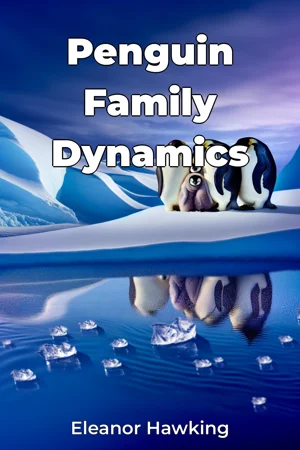
"Penguin Family Dynamics" presents a detailed examination of penguin colonial breeding behaviors, offering insights into one of nature's most intricate parental systems. Through decades of field research across multiple Antarctic and sub-Antarctic locations, this comprehensive study illuminates the complex social structures that enable penguin species to thrive in Earth's most challenging environments. The book explores three primary themes: the hierarchical organization of penguin colonies, the physiological and behavioral adaptations that facilitate successful breeding, and the impact of environmental factors on chick survival rates. These interconnected elements provide readers with a complete understanding of how penguin communities maintain population stability despite harsh conditions. Drawing from forty years of collaborative research data, including contributions from major Antarctic research stations, the work presents statistical analyses of breeding success rates across different species, from Emperor penguins to Gentoos. The research incorporates modern tracking technologies, satellite imagery, and long-term population studies to create a detailed picture of penguin breeding dynamics. The central thesis demonstrates how penguin colonies operate as integrated social networks, where collective behaviors significantly influence individual breeding success. This understanding carries implications for species conservation and provides insights into the evolution of social breeding strategies in other species. The book's structure progresses from colony formation through the breeding cycle to chick fledging, examining each stage through multiple scientific lenses. Key chapters focus on pair bonding mechanisms, egg incubation strategies, and chick-rearing behaviors. The work concludes with an analysis of how climate change affects these established patterns. Research methodology combines traditional observational studies with contemporary techniques, including genetic analysis, thermal imaging, and automated monitoring systems. This multi-faceted approach provides readers with both macro and micro perspectives on penguin breeding behaviors. The content connects with multiple scientific disciplines, including climatology, behavioral ecology, and evolutionary biology. These intersections help readers understand how penguin breeding strategies represent adaptive responses to environmental pressures over evolutionary time scales. Written in a systematic, data-driven style that maintains accessibility for educated general readers, the book presents complex scientific concepts through clear explanations and relevant examples. While technical terminology is present, each concept is carefully defined and contextualized. The target audience includes wildlife biologists, conservation specialists, and informed readers interested in animal behavior and Antarctic ecosystems. The book serves as both a comprehensive reference for professionals and an informative resource for nature enthusiasts. Particular attention is given to current debates in the field, such as the impact of commercial fishing on penguin feeding ranges and the effects of tourism on colony behavior. The work addresses these controversies through objective analysis of available data rather than advocacy. The scope encompasses all seventeen penguin species, with focused attention on those facing significant environmental challenges. While primarily concerned with breeding behaviors, the book acknowledges the broader context of penguin ecology and conservation. This work contributes to both theoretical understanding and practical conservation efforts, providing insights that inform wildlife management policies and conservation strategies. The research presented helps predict how penguin populations might respond to environmental changes and identifies critical areas for conservation focus. The book maintains scientific rigor while making complex behavioral ecology accessible to a broader audience, offering a balanced perspective on both the resilience and vulnerability of penguin breeding systems in a changing world.
"Penguin Family Dynamics" presents a detailed examination of penguin colonial breeding behaviors, offering insights into one of nature's most intricate parental systems. Through decades of field research across multiple Antarctic and sub-Antarctic locations, this comprehensive study illuminates the complex social structures that enable penguin species to thrive in Earth's most challenging environments. The book explores three primary themes: the hierarchical organization of penguin colonies, the physiological and behavioral adaptations that facilitate successful breeding, and the impact of environmental factors on chick survival rates. These interconnected elements provide readers with a complete understanding of how penguin communities maintain population stability despite harsh conditions. Drawing from forty years of collaborative research data, including contributions from major Antarctic research stations, the work presents statistical analyses of breeding success rates across different species, from Emperor penguins to Gentoos. The research incorporates modern tracking technologies, satellite imagery, and long-term population studies to create a detailed picture of penguin breeding dynamics. The central thesis demonstrates how penguin colonies operate as integrated social networks, where collective behaviors significantly influence individual breeding success. This understanding carries implications for species conservation and provides insights into the evolution of social breeding strategies in other species. The book's structure progresses from colony formation through the breeding cycle to chick fledging, examining each stage through multiple scientific lenses. Key chapters focus on pair bonding mechanisms, egg incubation strategies, and chick-rearing behaviors. The work concludes with an analysis of how climate change affects these established patterns. Research methodology combines traditional observational studies with contemporary techniques, including genetic analysis, thermal imaging, and automated monitoring systems. This multi-faceted approach provides readers with both macro and micro perspectives on penguin breeding behaviors. The content connects with multiple scientific disciplines, including climatology, behavioral ecology, and evolutionary biology. These intersections help readers understand how penguin breeding strategies represent adaptive responses to environmental pressures over evolutionary time scales. Written in a systematic, data-driven style that maintains accessibility for educated general readers, the book presents complex scientific concepts through clear explanations and relevant examples. While technical terminology is present, each concept is carefully defined and contextualized. The target audience includes wildlife biologists, conservation specialists, and informed readers interested in animal behavior and Antarctic ecosystems. The book serves as both a comprehensive reference for professionals and an informative resource for nature enthusiasts. Particular attention is given to current debates in the field, such as the impact of commercial fishing on penguin feeding ranges and the effects of tourism on colony behavior. The work addresses these controversies through objective analysis of available data rather than advocacy. The scope encompasses all seventeen penguin species, with focused attention on those facing significant environmental challenges. While primarily concerned with breeding behaviors, the book acknowledges the broader context of penguin ecology and conservation. This work contributes to both theoretical understanding and practical conservation efforts, providing insights that inform wildlife management policies and conservation strategies. The research presented helps predict how penguin populations might respond to environmental changes and identifies critical areas for conservation focus. The book maintains scientific rigor while making complex behavioral ecology accessible to a broader audience, offering a balanced perspective on both the resilience and vulnerability of penguin breeding systems in a changing world.
"Penguin Family Dynamics" offers a groundbreaking exploration of penguin colonial breeding behaviors, based on forty years of comprehensive Antarctic research. The book unveils the intricate social networks and survival strategies that enable these remarkable birds to thrive in Earth's most challenging environments. Through a combination of traditional field observations and cutting-edge technology, including satellite imagery and thermal monitoring, the work presents a complete picture of how penguin colonies function as integrated communities. The study progresses logically from colony formation through breeding cycles to chick fledging, examining critical aspects such as pair bonding, egg incubation, and chick-rearing behaviors. Particularly fascinating are the findings on hierarchical organization within colonies and the sophisticated parental systems that ensure species survival. The research reveals how collective behaviors significantly influence individual breeding success, demonstrating the remarkable adaptability of penguin communities in response to environmental pressures. This accessible yet scientifically rigorous work connects multiple disciplines, from behavioral ecology to climatology, making it valuable for both professionals and nature enthusiasts. The book's unique strength lies in its comprehensive analysis of all seventeen penguin species, with special attention to those facing environmental challenges. By combining statistical analyses with real-world observations, it provides crucial insights for wildlife conservation while illuminating the fascinating world of penguin social structures and breeding strategies.
Book Details
ISBN
9788233944155
Publisher
Publifye AS
Your Licenses
You don't own any licenses for this book
Purchase a license below to unlock this book and download the EPUB.
Purchase License
Select a tier to unlock this book
Need bulk licensing?
Contact us for enterprise agreements.