
About This Book
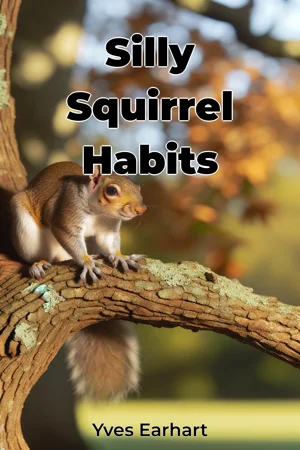
"Silly Squirrel Habits" delves into the intricate world of squirrel behavior, presenting research-based findings that challenge common assumptions about these highly adaptive urban and woodland creatures. The book examines how squirrels make complex decisions about food storage, territory management, and social interactions, backed by decades of ecological research and contemporary urban wildlife studies. The text primarily focuses on three key areas: foraging strategies, caching behaviors, and spatial memory capabilities. Through detailed observations and scientific data, readers learn how squirrels employ sophisticated decision-making processes when selecting, storing, and retrievaging food items. The book presents evidence from multiple long-term studies showing that squirrels can remember thousands of cache locations and make rapid cost-benefit analyses when deciding whether to eat or store found food. Drawing from both historical naturalist accounts and modern GPS tracking studies, the work establishes a comprehensive timeline of our understanding of squirrel behavior. The research incorporates findings from urban ecology programs across North America and Europe, providing comparative data on how squirrels adapt their natural behaviors to city environments. The book's central thesis argues that squirrel behaviors, often dismissed as random or simplistic, represent complex adaptive strategies that have evolved over millions of years. This argument is supported by recent cognitive studies, behavioral experiments, and field observations documented through both traditional and technological methods. Structured in three main sections, the book begins with foundational concepts in squirrel biology and ecology, progresses through detailed analyses of foraging and storage behaviors, and concludes with implications for urban wildlife management and conservation. Each chapter integrates research findings from multiple disciplines, including behavioral ecology, cognitive science, and urban wildlife studies. The evidence presented includes data from multi-year field studies, controlled experiments, and citizen science initiatives. The book features research conducted using RFID tracking, motion-sensitive cameras, and GPS monitoring, providing unprecedented insights into squirrel movement patterns and decision-making processes. This work connects to urban planning, cognitive biology, and climate science, demonstrating how squirrel behavior studies inform our understanding of animal adaptation to changing environments. The research methodology introduces innovative approaches to studying wild animal behavior in human-modified landscapes. Written in a clear, systematic style that balances scientific rigor with accessibility, the book serves both academic and general audiences interested in wildlife behavior and urban ecology. The text maintains a formal tone while incorporating engaging observational details that illuminate the research findings. The target audience includes wildlife biologists, urban ecologists, conservation practitioners, and informed general readers with an interest in natural history and animal behavior. The book provides practical applications for wildlife management professionals and urban planners working to maintain healthy wildlife populations in developed areas. The scope encompasses both rural and urban squirrel populations, focusing primarily on gray squirrels while acknowledging behavioral variations among different species. The work addresses current debates in urban wildlife management and the effects of climate change on animal behavior patterns. This research contributes to ongoing discussions about urban wildlife adaptation, animal intelligence, and the impact of human development on natural behaviors. The book provides guidelines for wildlife-friendly urban planning and suggests methods for conducting citizen science projects focused on local squirrel populations.
"Silly Squirrel Habits" delves into the intricate world of squirrel behavior, presenting research-based findings that challenge common assumptions about these highly adaptive urban and woodland creatures. The book examines how squirrels make complex decisions about food storage, territory management, and social interactions, backed by decades of ecological research and contemporary urban wildlife studies. The text primarily focuses on three key areas: foraging strategies, caching behaviors, and spatial memory capabilities. Through detailed observations and scientific data, readers learn how squirrels employ sophisticated decision-making processes when selecting, storing, and retrievaging food items. The book presents evidence from multiple long-term studies showing that squirrels can remember thousands of cache locations and make rapid cost-benefit analyses when deciding whether to eat or store found food. Drawing from both historical naturalist accounts and modern GPS tracking studies, the work establishes a comprehensive timeline of our understanding of squirrel behavior. The research incorporates findings from urban ecology programs across North America and Europe, providing comparative data on how squirrels adapt their natural behaviors to city environments. The book's central thesis argues that squirrel behaviors, often dismissed as random or simplistic, represent complex adaptive strategies that have evolved over millions of years. This argument is supported by recent cognitive studies, behavioral experiments, and field observations documented through both traditional and technological methods. Structured in three main sections, the book begins with foundational concepts in squirrel biology and ecology, progresses through detailed analyses of foraging and storage behaviors, and concludes with implications for urban wildlife management and conservation. Each chapter integrates research findings from multiple disciplines, including behavioral ecology, cognitive science, and urban wildlife studies. The evidence presented includes data from multi-year field studies, controlled experiments, and citizen science initiatives. The book features research conducted using RFID tracking, motion-sensitive cameras, and GPS monitoring, providing unprecedented insights into squirrel movement patterns and decision-making processes. This work connects to urban planning, cognitive biology, and climate science, demonstrating how squirrel behavior studies inform our understanding of animal adaptation to changing environments. The research methodology introduces innovative approaches to studying wild animal behavior in human-modified landscapes. Written in a clear, systematic style that balances scientific rigor with accessibility, the book serves both academic and general audiences interested in wildlife behavior and urban ecology. The text maintains a formal tone while incorporating engaging observational details that illuminate the research findings. The target audience includes wildlife biologists, urban ecologists, conservation practitioners, and informed general readers with an interest in natural history and animal behavior. The book provides practical applications for wildlife management professionals and urban planners working to maintain healthy wildlife populations in developed areas. The scope encompasses both rural and urban squirrel populations, focusing primarily on gray squirrels while acknowledging behavioral variations among different species. The work addresses current debates in urban wildlife management and the effects of climate change on animal behavior patterns. This research contributes to ongoing discussions about urban wildlife adaptation, animal intelligence, and the impact of human development on natural behaviors. The book provides guidelines for wildlife-friendly urban planning and suggests methods for conducting citizen science projects focused on local squirrel populations.
"Silly Squirrel Habits" unveils the sophisticated world of squirrel behavior, revealing these seemingly simple creatures as masters of complex decision-making and adaptation. Through a combination of traditional field observations and cutting-edge technology like GPS tracking and RFID monitoring, the book dismantles common misconceptions about squirrel behavior, presenting evidence that these animals can remember thousands of food cache locations and make split-second decisions about resource management. The book progresses from fundamental squirrel biology through to intricate analyses of their foraging strategies and storage behaviors, culminating in practical applications for urban wildlife management. One of the most fascinating revelations is how squirrels adapt their natural behaviors to city environments, demonstrating remarkable flexibility in their survival strategies. The research draws from decades of ecological studies across North America and Europe, incorporating both historical naturalist accounts and modern scientific data to paint a comprehensive picture of squirrel intelligence and adaptation. What sets this work apart is its integration of multiple scientific disciplines, including behavioral ecology, cognitive science, and urban wildlife studies, while maintaining accessibility for both academic and general readers. The presentation balances rigorous scientific evidence with engaging observational details, making complex behavioral patterns understandable to anyone interested in wildlife behavior. This approach provides valuable insights for wildlife management professionals while remaining engaging for nature enthusiasts curious about the sophisticated lives of these common yet remarkable creatures.
Book Details
ISBN
9788233944100
Publisher
Publifye AS
Your Licenses
You don't own any licenses for this book
Purchase a license below to unlock this book and download the EPUB.
Purchase License
Select a tier to unlock this book
Need bulk licensing?
Contact us for enterprise agreements.