
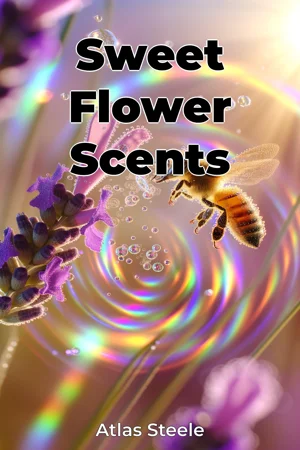
About This Book
"Sweet Flower Scents" unveils the intricate chemical language of floral aromas and their fundamental role in plant-pollinator relationships, revealing how these invisible messengers have shaped the evolution of flowering plants and their ecological partnerships. The book examines three primary areas: the biochemistry of floral scent production, the co-evolution of plants and their pollinators, and the practical applications of floral volatiles in agriculture and conservation. These topics intersect to demonstrate how floral scents serve as sophisticated communication systems that maintain biodiversity and ensure plant reproduction. Drawing from recent advances in analytical chemistry and molecular biology, the text presents comprehensive research on how plants synthesize and release specific scent compounds. Historical perspectives trace the development of our understanding of floral volatiles, from early botanical observations to modern gas chromatography-mass spectrometry techniques that can identify hundreds of distinct molecular components in a single flower's fragrance. The central thesis establishes that floral scents are not mere byproducts of plant metabolism but rather precisely engineered signals that have evolved through millions of years of plant-pollinator interactions. The book demonstrates how these chemical signals influence pollinator behavior, plant reproductive success, and ultimately, species survival. Structured in three parts, the content progresses from molecular mechanisms to ecological relationships and practical applications. Part one details the biosynthetic pathways and genetic controls of scent production. Part two explores the ecological context, examining how different pollinators perceive and respond to various scent compounds. Part three addresses the implications for agriculture, conservation, and climate change adaptation. The research presented combines field studies from multiple continents, laboratory analyses of scent compounds, and behavioral experiments with diverse pollinator species. The book features original data from long-term studies and synthesizes findings from leading laboratories worldwide. Interdisciplinary connections link plant biology with neuroscience, examining how pollinator brains process scent signals, and with chemistry, exploring the complex organic compounds that comprise floral scents. The text also connects to climate science, discussing how environmental changes affect scent production and transmission. The book employs a systematic approach to building knowledge, beginning with basic concepts and progressing to complex interactions. Technical information is presented through clear explanations, detailed illustrations, and real-world examples. Written in an academic yet accessible style, the text serves researchers, students, and practitioners in botany, ecology, and agricultural sciences. Specialized terminology is carefully introduced and explained, making the content accessible to readers with a basic science background. The scope encompasses both theoretical understanding and practical applications, though it focuses primarily on angiosperms and their major pollinator groups. The book addresses current debates about the impact of atmospheric pollution on scent transmission and the potential effects of climate change on plant-pollinator communication. Practical applications include techniques for measuring and analyzing floral scents, methods for manipulating crop plant attractiveness to pollinators, and strategies for conservation of endangered plant-pollinator relationships. This comprehensive examination of floral scents provides essential insights for those working in plant sciences, ecology, and agriculture, while offering valuable knowledge for anyone interested in understanding the chemical ecology of plant-pollinator interactions.
"Sweet Flower Scents" unveils the intricate chemical language of floral aromas and their fundamental role in plant-pollinator relationships, revealing how these invisible messengers have shaped the evolution of flowering plants and their ecological partnerships. The book examines three primary areas: the biochemistry of floral scent production, the co-evolution of plants and their pollinators, and the practical applications of floral volatiles in agriculture and conservation. These topics intersect to demonstrate how floral scents serve as sophisticated communication systems that maintain biodiversity and ensure plant reproduction. Drawing from recent advances in analytical chemistry and molecular biology, the text presents comprehensive research on how plants synthesize and release specific scent compounds. Historical perspectives trace the development of our understanding of floral volatiles, from early botanical observations to modern gas chromatography-mass spectrometry techniques that can identify hundreds of distinct molecular components in a single flower's fragrance. The central thesis establishes that floral scents are not mere byproducts of plant metabolism but rather precisely engineered signals that have evolved through millions of years of plant-pollinator interactions. The book demonstrates how these chemical signals influence pollinator behavior, plant reproductive success, and ultimately, species survival. Structured in three parts, the content progresses from molecular mechanisms to ecological relationships and practical applications. Part one details the biosynthetic pathways and genetic controls of scent production. Part two explores the ecological context, examining how different pollinators perceive and respond to various scent compounds. Part three addresses the implications for agriculture, conservation, and climate change adaptation. The research presented combines field studies from multiple continents, laboratory analyses of scent compounds, and behavioral experiments with diverse pollinator species. The book features original data from long-term studies and synthesizes findings from leading laboratories worldwide. Interdisciplinary connections link plant biology with neuroscience, examining how pollinator brains process scent signals, and with chemistry, exploring the complex organic compounds that comprise floral scents. The text also connects to climate science, discussing how environmental changes affect scent production and transmission. The book employs a systematic approach to building knowledge, beginning with basic concepts and progressing to complex interactions. Technical information is presented through clear explanations, detailed illustrations, and real-world examples. Written in an academic yet accessible style, the text serves researchers, students, and practitioners in botany, ecology, and agricultural sciences. Specialized terminology is carefully introduced and explained, making the content accessible to readers with a basic science background. The scope encompasses both theoretical understanding and practical applications, though it focuses primarily on angiosperms and their major pollinator groups. The book addresses current debates about the impact of atmospheric pollution on scent transmission and the potential effects of climate change on plant-pollinator communication. Practical applications include techniques for measuring and analyzing floral scents, methods for manipulating crop plant attractiveness to pollinators, and strategies for conservation of endangered plant-pollinator relationships. This comprehensive examination of floral scents provides essential insights for those working in plant sciences, ecology, and agriculture, while offering valuable knowledge for anyone interested in understanding the chemical ecology of plant-pollinator interactions.
"Sweet Flower Scents" delves into the fascinating world of floral aromas, revealing how these invisible chemical messengers orchestrate complex relationships between plants and their pollinators. The book explores the sophisticated communication systems that flowers have developed over millions of years, demonstrating how specific scent compounds influence pollinator behavior and ensure plant survival. Through a combination of field studies, laboratory analyses, and behavioral experiments, the text illuminates the crucial role these aromatic signals play in maintaining biodiversity and plant reproduction. The book's three-part structure guides readers from the molecular foundations of scent production through ecological relationships to practical applications in agriculture and conservation. Beginning with the biochemistry of how plants synthesize and release specific scent compounds, it progresses to examine how different pollinators perceive and respond to these chemical signals. The journey from early botanical observations to modern analytical techniques showcases how our understanding of floral volatiles has evolved, incorporating cutting-edge research from laboratories worldwide. What sets this work apart is its comprehensive approach to linking plant biology with neuroscience and chemistry, while remaining accessible to readers with basic scientific knowledge. The text addresses current environmental challenges, including how climate change and atmospheric pollution affect scent transmission and plant-pollinator communication. For researchers, students, and practitioners in botanical and agricultural sciences, this book offers both theoretical insights and practical applications, from measuring floral scents to developing strategies for conservation of endangered plant-pollinator relationships.
Book Details
ISBN
9788233943905
Publisher
Publifye AS
Your Licenses
You don't own any licenses for this book
Purchase a license below to unlock this book and download the EPUB.
Purchase License
Select a tier to unlock this book
Need bulk licensing?
Contact us for enterprise agreements.