
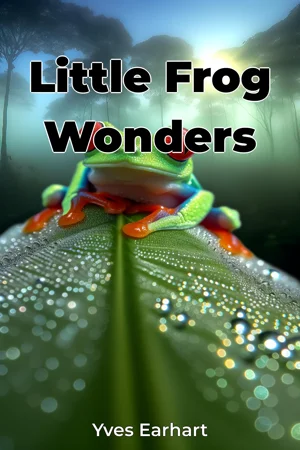
About This Book
"Little Frog Wonders" opens with a fundamental question: How do frogs, as sentinel species, signal the health of our global ecosystems? Through rigorous scientific research and field observations, this comprehensive guide explores the intricate world of amphibians and their critical role in maintaining environmental balance. The book presents three core themes: frog biodiversity and adaptation, habitat interconnectivity, and conservation challenges in the 21st century. These topics build upon decades of herpetological research, providing readers with current scientific understanding of how frogs serve as indicators of ecosystem health and climate change impacts. Drawing from global habitat studies across six continents, the text examines frog species from the Amazon rainforest to Arctic regions, demonstrating how these amphibians have evolved unique adaptations to survive in diverse environments. The research incorporates findings from leading herpetologists, environmental scientists, and conservation biologists, supported by long-term population studies and habitat assessments. The book's structure progresses through four main sections: First, it establishes the evolutionary history of frogs and their anatomical adaptations. Second, it explores various habitat types and the specialized frog species within them. Third, it examines the complex relationships between frogs and their ecosystems, including their roles in food webs and pest control. Finally, it addresses conservation efforts and practical solutions for habitat preservation. Scientific evidence is presented through case studies, demographic data, and habitat analysis, utilizing both traditional field research methods and modern technologies such as environmental DNA sampling and acoustic monitoring. The book synthesizes findings from multiple disciplines, connecting herpetology with climate science, ecology, and environmental chemistry. The content maintains a balanced approach between technical detail and accessibility, making it suitable for both university students and informed general readers interested in environmental science. Technical terms are clearly defined, and concepts are illustrated with detailed diagrams and field photographs. The book's unique contribution lies in its integration of traditional ecological knowledge with cutting-edge research methods, providing a comprehensive understanding of frog ecology and conservation. It addresses current debates in conservation biology, including the effectiveness of various habitat restoration approaches and the impact of climate change on amphibian populations. The text maintains a formal yet engaging tone, presenting scientific information clearly while avoiding sensationalism. It emphasizes practical applications, including habitat conservation techniques, citizen science opportunities, and local conservation initiatives that readers can support or implement. Particular attention is given to emerging challenges in frog conservation, including habitat fragmentation, disease spread, and chemical contamination. The book presents these issues objectively, backed by peer-reviewed research and long-term studies. "Little Frog Wonders" serves as both an educational resource and a call to action, providing readers with the knowledge needed to understand and contribute to amphibian conservation efforts. It connects directly to environmental policy, public health, and ecosystem management, demonstrating how frog conservation intersects with broader environmental challenges. The book concludes by examining future research directions and conservation strategies, emphasizing the ongoing need for habitat protection and species monitoring. It provides readers with practical tools and knowledge to engage in local conservation efforts while understanding their global context.
"Little Frog Wonders" opens with a fundamental question: How do frogs, as sentinel species, signal the health of our global ecosystems? Through rigorous scientific research and field observations, this comprehensive guide explores the intricate world of amphibians and their critical role in maintaining environmental balance. The book presents three core themes: frog biodiversity and adaptation, habitat interconnectivity, and conservation challenges in the 21st century. These topics build upon decades of herpetological research, providing readers with current scientific understanding of how frogs serve as indicators of ecosystem health and climate change impacts. Drawing from global habitat studies across six continents, the text examines frog species from the Amazon rainforest to Arctic regions, demonstrating how these amphibians have evolved unique adaptations to survive in diverse environments. The research incorporates findings from leading herpetologists, environmental scientists, and conservation biologists, supported by long-term population studies and habitat assessments. The book's structure progresses through four main sections: First, it establishes the evolutionary history of frogs and their anatomical adaptations. Second, it explores various habitat types and the specialized frog species within them. Third, it examines the complex relationships between frogs and their ecosystems, including their roles in food webs and pest control. Finally, it addresses conservation efforts and practical solutions for habitat preservation. Scientific evidence is presented through case studies, demographic data, and habitat analysis, utilizing both traditional field research methods and modern technologies such as environmental DNA sampling and acoustic monitoring. The book synthesizes findings from multiple disciplines, connecting herpetology with climate science, ecology, and environmental chemistry. The content maintains a balanced approach between technical detail and accessibility, making it suitable for both university students and informed general readers interested in environmental science. Technical terms are clearly defined, and concepts are illustrated with detailed diagrams and field photographs. The book's unique contribution lies in its integration of traditional ecological knowledge with cutting-edge research methods, providing a comprehensive understanding of frog ecology and conservation. It addresses current debates in conservation biology, including the effectiveness of various habitat restoration approaches and the impact of climate change on amphibian populations. The text maintains a formal yet engaging tone, presenting scientific information clearly while avoiding sensationalism. It emphasizes practical applications, including habitat conservation techniques, citizen science opportunities, and local conservation initiatives that readers can support or implement. Particular attention is given to emerging challenges in frog conservation, including habitat fragmentation, disease spread, and chemical contamination. The book presents these issues objectively, backed by peer-reviewed research and long-term studies. "Little Frog Wonders" serves as both an educational resource and a call to action, providing readers with the knowledge needed to understand and contribute to amphibian conservation efforts. It connects directly to environmental policy, public health, and ecosystem management, demonstrating how frog conservation intersects with broader environmental challenges. The book concludes by examining future research directions and conservation strategies, emphasizing the ongoing need for habitat protection and species monitoring. It provides readers with practical tools and knowledge to engage in local conservation efforts while understanding their global context.
"Little Frog Wonders" presents a fascinating exploration of frogs as sentinel species, revealing how these remarkable amphibians serve as crucial indicators of ecosystem health across the globe. Through a blend of scientific research and field observations, the book illuminates the intricate connections between frog populations and environmental well-being, offering readers a comprehensive understanding of why these creatures matter more than ever in our changing world. The narrative unfolds across four carefully structured sections, beginning with evolutionary history and anatomical adaptations before delving into diverse habitat types and their specialized frog species. Drawing from studies spanning six continents, the book showcases extraordinary examples of amphibian adaptation, from the steamy Amazon rainforest to the frigid Arctic regions. Particularly compelling are the book's revelations about how frogs contribute to pest control and maintain crucial positions in complex food webs, demonstrating their outsized impact on ecosystem stability. What sets this work apart is its masterful integration of traditional ecological knowledge with cutting-edge research methods, including environmental DNA sampling and acoustic monitoring. While maintaining scientific rigor, the book remains accessible to both academic and general audiences, offering practical insights into conservation efforts and actionable steps for habitat preservation. The examination of emerging challenges, from habitat fragmentation to climate change impacts, provides readers with a clear understanding of the urgent need for amphibian conservation while highlighting opportunities for meaningful involvement in protection efforts.
Book Details
ISBN
9788233943899
Publisher
Publifye AS
Your Licenses
You don't own any licenses for this book
Purchase a license below to unlock this book and download the EPUB.
Purchase License
Select a tier to unlock this book
Need bulk licensing?
Contact us for enterprise agreements.